

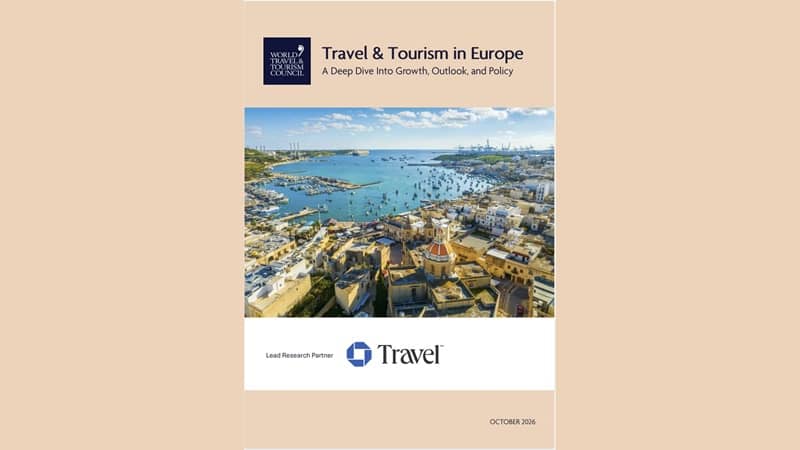
Europe has everything the world wants to see. Unfortunately, it also has a remarkable talent for making life difficult for those who wish to see it. Now, a blunt warning from tourism’s global leadership suggests the continent’s greatest enemy may not be its competitors, but its own complacency.
Something about Europe is wonderfully reassuring.
The French still believe civilisation begins at their borders. The Italians remain convinced that life is best enjoyed slowly, preferably over lunch. The Greeks have welcomed strangers since before most countries figured out how to build a decent road, while the British continue their heroic determination to discuss the weather no matter what else is happening in the world.
And thank heavens for all of them.
Europe’s magnificent collection of cultures, characters, ancient cities and glorious contradictions has captivated travellers for generations. It is a continent where history lives around practically every corner and where even a modest village can possess more character than an entire modern metropolis.
But for all its splendour, Europe has developed an unfortunate habit.
It seems to believe that because the world has always wanted to visit, it always will.
That comfortable assumption has just received a rather uncomfortable examination from the World Travel & Tourism Council (WTTC).
At its 26th Global Summit in Valletta, Malta, on 9 October 2026, WTTC unveiled eight strategic priorities designed to protect Europe’s position as the world’s leading international tourism region.
Behind the diplomatic language lies a warning every European capital should hear.
The continent may possess an extraordinary tourism inheritance, but it cannot continue relying on yesterday’s reputation to secure tomorrow’s prosperity.
And frankly, with US$3 trillion and more than 40 million livelihoods at stake, this is a costly moment to take things for granted.
Three Trillion Dollars, Forty Million Jobs Yet Tourism Still Has to Beg
It’s almost comical that governments need reminding of the importance of an industry that contributes nearly US$3 trillion to their regional economy.
One might imagine such a contribution would guarantee tourism a permanent seat at the most important economic tables.
Apparently not.
WTTC’s latest research reveals that Travel & Tourism contributed almost US$3 trillion to Europe’s GDP in 2025, representing 9.4% of the region’s economy and supporting 40.7 million jobs.
It is forecast to grow another 3.1% in 2026, comfortably ahead of the 1.1% anticipated for Europe’s wider economy.
Consider those employment figures for a moment.
Forty million livelihoods are not simply an entry in an economic spreadsheet.
They are the hotel receptionist in Vienna who still knows what genuine hospitality means. The Portuguese fisherman who now shares his coastal heritage with visitors. The family running a modest Tuscan guesthouse, where the welcome is warmer than the afternoon sunshine and the food better than anything the marketing brochure promises.
They are young people discovering careers, parents supporting families and communities whose prosperity depends upon visitors arriving, spending and, hopefully, returning.
There is dignity in their work. There is pride in their service.
And there is something profoundly wrong when the economic wellbeing of so many people remains vulnerable to political indifference.
That, surely, is the human story behind WTTC’s statistics.
Gloria Guevara’s Warning Deserves More Than Polite Applause
WTTC President and CEO Gloria Guevara has never seemed particularly interested in letting tourism remain the poor relation at the government’s economic dinner table.
Her latest message carries a sense of urgency.
“Europe already welcomes almost half of the world’s international travellers,” Guevara said.
But those impressive numbers offer little protection against future competition.
Guevara argues that Europe must act now on visas, international marketing, investment, and workforce development if it wants to retain its leadership.
She also sees a rare political opportunity.
The European Commission is preparing the EU’s first dedicated tourism strategy, while negotiations over the 2028–2034 long-term budget offer the chance to place tourism more firmly among the continent’s economic priorities.
One hopes Europe’s political establishment is listening.
Brussels has demonstrated over the years that it can produce regulations, strategies and committee papers with breathtaking efficiency.
Turning ambitious declarations into practical improvements for travellers and tourism businesses is, unfortunately, much harder.
And that is where the real test begins.
First, Stop Making Visitors Jump Through Hoops
Europe is like a magnificent old hotel that advertises an exceptionally warm welcome, then requires guests to complete six forms before handing over the room key.
An exaggeration, perhaps.
But not entirely without merit.
Schengen countries issued 5.3 million multiple-entry visas during 2025, approximately 40% fewer than in 2019.
WTTC believes Europe must accelerate digital visa processing, restore greater use of multiple-entry permits and develop trusted traveller arrangements that recognise established international security programmes.
Nobody seriously disputes the need for secure borders.
But security and efficiency are not sworn enemies.
The international traveller who has spent considerable money visiting Europe should not feel that obtaining permission to enter is an exercise designed to test character, patience and the limits of human endurance.
For Australian travel advisers, anything that simplifies legitimate international journeys is welcome news.
After all, selling the romance of Europe is considerably easier than explaining its administrative complications.
The World Is Bigger Than Europe’s Backyard
Here is a figure that should have tourism marketers reaching for a very strong coffee.
Almost three-quarters of Europe’s international arrivals in 2025 came from within Europe itself.
Precisely 74.3%, according to WTTC.
Europeans, it seems, remain exceptionally fond of holidaying with their neighbours.
Nothing wrong with that.
But while Europe enjoys its own company, competition for long-haul visitors is growing increasingly intense.
Arrivals from Asia-Pacific were still 4.8% below their 2019 levels. China remained a remarkable 43.2% behind its pre-pandemic performance, with Japan and South Korea also substantially below previous levels.
Those missing visitors represent more than empty seats on aircraft.
They represent lost hotel nights, restaurant bookings, shopping expenditure, regional tours and income that would otherwise flow into communities throughout Europe.
For Australia’s outbound travel industry, the implications are particularly interesting.
A Europe determined to restore its appeal in distant markets may present attractive opportunities for Australian tour operators, wholesalers, airlines and travel advisers.
But Europe will have to work for that business.
The Australians who once regarded a European holiday as the unquestioned centrepiece of international travel now have a world of alternatives.
Japan, Southeast Asia, the Middle East and other regions are competing energetically for their attention.
Europe’s extraordinary heritage remains a powerful attraction.
It is not, however, a substitute for competitive pricing, convenient access and good service.
The Price of Neglect Is Always Higher Than the Cost of Care
Tourism investment is another area where WTTC believes Europe’s policymakers need a firm reminder.
Investment reached US$259 billion in 2025, up 7.1% on the previous year.
Encouraging, until one discovers it remained 3.6% below 2019 levels.
Asia-Pacific, meanwhile, recorded US$395 billion in tourism investment, while North America attracted US$273 billion.
The figures tell an uncomfortable story.
While Europe debates maintaining its tourism leadership, competitors are investing substantial sums to build theirs.
And infrastructure, unlike a good bottle of Bordeaux, seldom improves merely by growing older.
Airports require modernisation. Hotels need refurbishment. Regional transport connections demand investment. Smaller tourism enterprises require access to finance.
The magnificent old European hotel may possess chandeliers worthy of Versailles, but guests are considerably less impressed when the plumbing dates from roughly the same period.
WTTC wants tourism recognised as a strategic economic sector within the EU’s next financial framework, with better access to investment and greater regulatory certainty.
It is not asking governments to abandon financial discipline.
It is asking them to understand that prosperity requires maintenance.
The Mediterranean Cannot Survive on Sunshine Alone
Another uncomfortable reality confronts Europe’s tourism leadership.
The continent’s most beautiful destinations are also among its most vulnerable.
Mediterranean destinations account for 52.2% of Europe’s international visitor spending.
That extraordinary success comes with considerable pressure.
Water shortages, extreme heat, overcrowding, and strain on local services threaten destinations that have spent generations building their international reputations.
WTTC estimates that Travel & Tourism accounted for 6.3% of Europe’s greenhouse gas emissions in 2024, although emissions intensity declined 14.8% between 2019 and 2024.
The organisation wants investment in climate adaptation, sustainable fuels, better environmental management and the protection of natural attractions.
Quite rightly.
But sustainability must mean something more than another beautifully worded commitment accompanied by photographs of smiling tourists standing beside impossibly blue water.
It means ensuring those destinations remain healthy, liveable and welcoming.
And that brings us to a subject tourism has sometimes approached with all the enthusiasm of a hotel manager receiving a complaint about the breakfast buffet.
The rights of the people who actually live there.
A destination is not a stage set built solely to entertain visitors.
Those charming streets are somebody’s neighbourhood. The waterfront restaurants support the local economy. The historic town squares are places where generations of families have gathered.
Tourism should strengthen those communities, not make everyday life increasingly difficult.
With European international arrivals forecast to reach 1.14 billion by 2036, WTTC is urging governments to move beyond simply celebrating visitor numbers.
The real measurement of success should be what tourism contributes to communities.
A destination that welcomes millions of visitors while losing its residents’ goodwill has achieved far less than its statistics suggest.
The People Who Make Hospitality Special Are Disappearing
Of all WTTC’s findings, none should concern the industry more deeply than its warning about workforce shortages.
By 2035, tourism labour supply in Germany and Greece could fall 26% and 27% short of demand, respectively.
Those are alarming projections.
And they strike at the very heart of what makes travel worthwhile.
Ask experienced travellers about their most memorable hotel stays, and they seldom begin by describing the television screen, the marble bathroom or the manufacturer’s name on the mattress.
They remember people.
The concierge who made the impossible possible. The restaurant manager who welcomed them like old friends. The housekeeper whose thoughtful little gestures transformed an ordinary room into somewhere special.
They remember kindness.
They remember being treated as individuals, not reservation numbers.
That wonderful tradition of personal service has sustained European hospitality for generations.
Yet too often, the employees who provide it are treated as an operating expense rather than an industry’s most valuable asset.
WTTC wants better apprenticeships, skills recognition and career opportunities for young people.
It is an admirable ambition.
But recruitment alone will not solve the problem.
The industry must also offer careers worth pursuing, wages that recognise responsibility, and working conditions that keep good people.
Because no amount of architectural splendour can compensate for hospitality stripped of its humanity.
And no machine, however sophisticated, has yet mastered the genuine pleasure of welcoming an old friend back through the door.
Artificial Intelligence: Brilliant Servant, Questionable Host
Artificial intelligence is another of WTTC’s eight priorities.
Its extraordinary potential is undeniable.
AI can improve operational efficiency, help predict demand, simplify bookings, and help smaller businesses compete in an increasingly digital marketplace.
WTTC wants governments to provide targeted support through grants, training and access to shared technology.
Sensibly so.
But let us not become so dazzled by the digital revolution that we forget what tourism actually sells.
A computer may recommend a restaurant in Florence, book a table and translate the menu into seventeen languages.
Very clever.
But it cannot genuinely share the proprietor’s pride in a family recipe handed down through generations.
Technology should make hospitality easier to deliver, not remove the humanity that makes it memorable.
Europe’s tourism leaders would do well to remember the distinction.
Europe Must Also Remember How to Connect
Finally, WTTC wants stronger air, rail, maritime and road connectivity.
It sounds elementary.
Yet anyone who has attempted to coordinate a complicated European itinerary involving several countries and transport operators will appreciate the wisdom of the recommendation.
Europe possesses an extraordinary wealth of lesser-known destinations that deserve a greater share of international tourism.
But persuading visitors to venture beyond the familiar capitals requires practical transport connections, accessible booking systems and reliable information.
WTTC wants better integrated ticketing and more seamless multimodal journeys.
The benefits would extend well beyond visitor convenience.
Improved connectivity could support regional employment, disperse tourism expenditure and ease pressure on destinations already struggling with excessive demand.
And surely that is preferable to concentrating ever more visitors into the same celebrated streets while equally wonderful destinations remain largely undiscovered.
Malta Understands Tourism’s True Value
The location of WTTC’s summit was particularly appropriate.
International visitor spending reached US$3.9 billion, up about 47.5% from 2019.
Tourism’s economic contribution grew 16.8% in 2025, compared with 4% for the wider national economy.
Those figures are impressive.
But Malta’s achievement also illustrates something more important.
Tourism is not merely a collection of pleasant holidays and attractive hotels.
For thousands of families, it represents security, opportunity and pride in sharing their homeland with the world.
That is an economic contribution no government should underestimate.
A Crown Worth Keeping But Nobody Gets to Keep It for Free
Looking ahead, WTTC forecasts that Europe’s travel and tourism economy could reach US$3.8 trillion by 2036, supporting more than 50 million jobs.
It is a magnificent prospect.
But there is a world of difference between forecasting prosperity and creating the conditions required to achieve it.
Europe does not lack attractions.
Good heavens, it has more than enough extraordinary cities, landscapes, historic monuments and cultural treasures to keep generations of travellers happily occupied.
It cannot afford the dangerous belief that those assets make it immune to competition.
The world is changing.
Other destinations are investing, innovating and improving their appeal. Travellers are becoming more demanding, and tourism businesses must work harder to earn their loyalty.
Europe’s governments therefore face a decision.
They can recognise tourism as the strategic economic force it has become and provide the leadership, investment and practical reforms necessary to protect it.
Or they can congratulate themselves on another successful year, commission another collection of worthy reports and hope the continent’s old magic continues doing the heavy lifting.
History suggests Europe is remarkably good at surviving crises.
But history also teaches us that great powers rarely notice the precise moment when complacency begins to erode their advantage.
The WTTC has delivered its warning.
The figures are formidable. The opportunities are extraordinary. The responsibilities are enormous.
Behind every one of those millions of jobs stands a human being whose future deserves far more than another political promise.
Europe’s beauty may be timeless. Its tourism leadership is not.
The continent has spent centuries teaching the world the pleasures of travel, discovery and genuine hospitality.
It would be a dreadful irony if, having given the world so many reasons to visit, Europe allowed bureaucracy, underinvestment and complacency to give those same travellers a reason to go somewhere else.
That would be one European tragedy even the finest glass of French champagne could not make more palatable.
By: Jill Walsh – © 2026.
Read Time: 12 minutes.
Author Bio:
 Jill Walsh has always kept a pen close and a suitcase closer. She started in media releases, then learned the trade by escorting press trips around the world, discovering which stories travel well and which need a sharper edit.
Before long, she wasn’t just promoting destinations; she was representing them, translating civic ambition and local pride into words people actually wanted to read. These days, semi-retired and happily so, Jill has traded departure boards for deadlines, joining old friend and colleague Stephen at EGT Media on a casual basis.
Her patch is the business end of wanderlust: balance sheets, route maps, tender wins and the numbers that quietly decide where travellers go. She writes with dry humour, clean prose and an old-school respect for facts a steady voice when the market starts shouting.











