

Okinawa is laying down more than concrete at Naha Port. It is laying down a sizeable marker in Asia’s increasingly competitive cruise market.
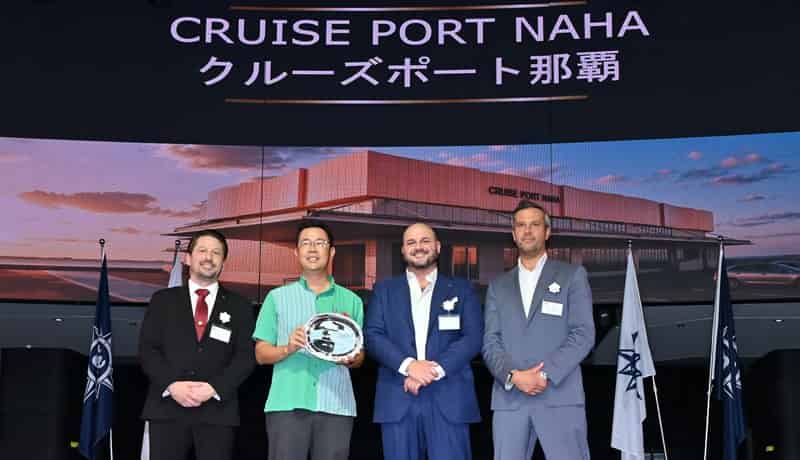
Naha Port Authority, Cruise Port Naha G.K., MSC Cruises and Royal Caribbean Group have broken ground on a new purpose-built cruise terminal at Naha Port, with completion and operations targeted for March 2028. The project gives two of the world’s biggest cruise interests a direct stake in the next chapter of Okinawa’s visitor economy and gives Naha a stronger platform from which to compete for the ships, itineraries and passengers reshaping Asian cruising.
Cruise Port Naha G.K. is a joint venture between CTL Maritime and RCL Cruises Ltd., representing the interests of MSC Cruises and Royal Caribbean Group respectively. Under a Cruise Hub Formation Agreement concluded with Naha Port Authority in August 2026, the joint venture will develop and operate the new terminal.
That matters because cruise infrastructure is no longer simply a place to tie up a ship and point passengers toward the gangway. New-generation vessels bring thousands of guests, tighter turnaround demands, and higher expectations for terminal processing, transport connections, and the first and last impression of a destination.
The partners say the new facility will provide modern passenger infrastructure, improve operational efficiency and support long-term cruise growth in Okinawa. Naha’s geographic position gives it obvious strategic appeal for itineraries linking Japan with other East Asian destinations, while its subtropical climate and established tourism appeal give cruise planners something rather useful: a destination that can work across much of the year.
Royal Caribbean Group chairman and chief executive Jason Liberty described Japan as “one of the most important cruise markets in Asia”, adding that the company was investing in infrastructure intended to benefit the local community for years to come.
His broader message was significant. Cruise lines increasingly want a hand not just in deploying ships, but in shaping the port infrastructure that supports them. For destinations, that can bring investment, operating expertise and greater confidence around future ship calls. For cruise companies, it can create a more dependable guest experience ashore.
The trick, as always, is ensuring the visitor economy also works for the people who live there.
MSC Group Cruises Division executive chairman Pierfrancesco Vago said Okinawa was “uniquely positioned at the crossroads” of some of Asia’s most exciting cruise destinations. He also linked the development to MSC’s longer-term regional ambitions, including opportunities for guests of MSC Cruises and Explora Journeys to travel in Asia year-round.
The partnership is especially notable because Royal Caribbean Group and MSC Cruises are fierce competitors at sea. On land, however, the arithmetic looks quite different.
Building cruise infrastructure is capital intensive, operationally complex and most effective when ports can attract a reliable pipeline of calls. In Naha, commercial rivalry has made room for practical collaboration, proof that even cruise giants occasionally discover the virtues of sharing the gangway.
Japan’s cruise strategy comes ashore
The project also has deeper public-policy roots.
Japan’s Ministry of Land, Infrastructure, Transport and Tourism designated Naha Port as an International Cruise Ship Hub Formation Port in 2019. Japan’s cruise-hub framework was designed to encourage public-private cooperation, pairing port infrastructure with private investment in passenger facilities and more predictable access for participating cruise operators.
Japan’s official Cruise Port Guide describes Naha as a longstanding maritime gateway linking Okinawa with China, Southeast Asia, Korea and the rest of Japan. Today, it is also a tourism gateway, with central Naha attractions including Kokusai-dori within easy reach of the existing cruise facilities.
For Okinawa, the economic opportunity reaches well beyond the terminal doors.
More cruise calls can feed demand for local transport, tour operators, attractions, restaurants, shops and hospitality businesses. Yet the strongest destinations manage growth carefully, spreading passenger spending beyond a narrow waterfront corridor and ensuring infrastructure keeps pace with visitor numbers.
That will be one measure by which Naha’s new terminal should ultimately be judged.
Gleaming halls are welcome, but ports earn their reputations through smooth processing, sensible transport, attractive shore experiences and the ability to handle busy days without turning a holiday into an endurance event.
Ceremony marks a serious statement of intent
The groundbreaking was marked by a traditional Japanese ceremony at the future terminal site, attended by Okinawa Governor Genta Koja, representatives of Japan’s Cabinet Office and executives from Naha Port Authority, Cruise Port Naha G.K., MSC Cruises and Royal Caribbean Group.
Importantly, the official announcement does not provide a construction cost, terminal floor area or forecast annual passenger throughput. Those details will be worth watching as the project moves from ceremony to steel and concrete.
What is clear is the timetable: Cruise Port Naha G.K. is targeting March 2028 for completion and the start of operations.
For the wider cruise industry, Naha is another sign that Asia’s infrastructure race is gathering pace.
Cruise lines can move ships; ports cannot move coastlines. Destinations that invest early, process passengers well, and create compelling regional itineraries are likely to hold the stronger hand when deployment decisions are made.
Okinawa already has the scenery, culture and strategic location. By 2028, it intends to have a cruise terminal designed to match the ambition.
And in the business of cruising, where first impressions often arrive before breakfast, that is no small thing.
By: Octavia Koo – © 2026.
Read Time: 4 minutes.
Author Bio:
 Octavia Koo arrived in Australia in the early eighties with little fuss and a good eye. Sydney suited her. At UNSW, she studied Arts, then found her footing in graphic design before drifting, quite naturally, into the digital side of things, building websites and shaping words that made people want to stay.
Singapore followed, and with it, the fast pace of tourism platforms and ITB Asia. Long before SEO became a buzzword, Octavia understood how stories travelled online. That’s where she met Stephen, and the seed for something more was planted.
A few years later, she joined Stephen’s EGT Media.
Today, Octavia works with quiet assurance, blending art, instinct and experience to produce stories that don’t shout; they simply work and linger.











