

Minor Hotels has turned a difficult trading quarter into a modest but meaningful gain, lifting second-quarter core profit by 2 per cent year on year to THB 2.8 billion, about US$84.3 million. In a year when geopolitics has been an uninvited guest at far too many hotel tables, steady earnings are worth more than a flourish of corporate confetti.
The group’s Q2 2026 results show core revenue rising 1 per cent to THB 35.8 billion, while EBITDA advanced 2 per cent to THB 7.5 billion. Cost discipline did much of the heavy lifting, with strong trading in Europe and the Americas helping to absorb disruption in the Middle East.
It was not a champagne-cork quarter. It was something hotel owners often value more: a sound set of numbers produced in unsound conditions.
Europe checks in with the strongest result
System-wide revenue per available room, or RevPAR, was flat in Q2. A 1 per cent rise in average daily rate was largely offset by a 1-percentage-point fall in occupancy to 68 per cent.
Europe and the Americas led the portfolio with 5 per cent RevPAR growth, supported by Spain, Central Europe and Italy. That performance reflects resilient leisure demand, busy event calendars, and the group’s ability to hold room rates, even though discounting might have filled a few more beds but weakened the bottom line.
The Middle East was the principal drag. Softer conditions also affected the broader reporting region covering Asia, the Indian Ocean, Australasia, the Middle East and Africa. Even so, luxury hotels in Thailand found clear blue water, recording a 7 per cent rise in Q2 RevPAR on stronger rates.
That contrast matters. Minor Hotels is spread across markets, brands and price points, so one region’s stumble need not send the whole portfolio searching for the handrail. Diversification is not especially glamorous, but neither is an umbrella until it rains.
Rate discipline pays through the first half
The first-half figures offer a clearer view of the underlying direction. System-wide RevPAR rose 3 per cent, driven by a 4 per cent increase in average daily rate. Occupancy slipped by one percentage point to 66 per cent, reinforcing the group’s decision to defend pricing rather than chase volume at any cost.
Europe and the Americas delivered 5 per cent RevPAR growth for the half. Thailand rose 6 per cent, while the wider Asia and Indian Ocean portfolio advanced 10 per cent. Those gains helped counter continuing pressure in the Middle East.
Core first-half revenue increased 3 per cent to THB 66.2 billion, and EBITDA rose 2 per cent to THB 10.9 billion. Core profit, however, declined 4 per cent to THB 2.2 billion. Minor attributed that fall to major renovation work at owned hotels and an unrealised foreign-exchange loss.
Renovations are a familiar hospitality paradox: spend money, close rooms and endure noise today so that guests will pay more tomorrow. The short-term figures may wince, but tired hotels rarely improve by being left politely alone.
Minor International’s investor disclosures provide the wider parent-company context and confirm that hotels remain the principal earnings engine within a geographically diversified business.
Twenty Q2 deals put expansion into faster gear
The more consequential story may be beyond the quarterly profit line. Minor Hotels signed hotel management agreements for 20 properties during Q2, taking its first-half tally to 29 hotels and 2,165 keys. That pace puts the group within reach of surpassing the record 40 signings achieved in 2025.
The signings span Sharjah, Austria, Saudi Arabia and the Caribbean. They also include several strategic flag-planting projects: Anantara Miami Resort & Residences will introduce Anantara to the United States; three Anantara hotels are planned for India; and the company is entering Türkiye.
In New York, The Wolseley Hotel will be the first property announced under The Wolseley Hotels banner. In Japan, Avani Kyoto will mark the Avani brand’s national debut.
This is Minor’s “asset-right” strategy at work. The phrase is more useful than fashionable: rather than insisting on a single ownership model, the group aims for a balanced mix of owned, managed, and franchised hotels. Management agreements expand fee income and brand reach without requiring Minor to own every brick, bed and breakfast buffet.
For hotel owners, 29 signed agreements are also a vote of confidence in the group’s distribution, operating systems and brands. A management contract is not a casual courtship; it is a long marriage with budgets, brand standards and the occasional disagreement about the lobby carpet.
Openings bring the strategy to life
Minor Hotels opened 11 properties with 1,167 keys during the first half. Additions included Tivoli Palazzo 1880 Lecce Hotel, market debuts in Slovenia and Croatia, and NH Hua Hin in Thailand.
Australia supplied one of the more visible openings. Avani Mooloolaba Beach Hotel became the Sunshine Coast’s first internationally branded new-build hotel in more than four decades—a long wait in a destination where the sun, surf and airport had not exactly been keeping quiet.
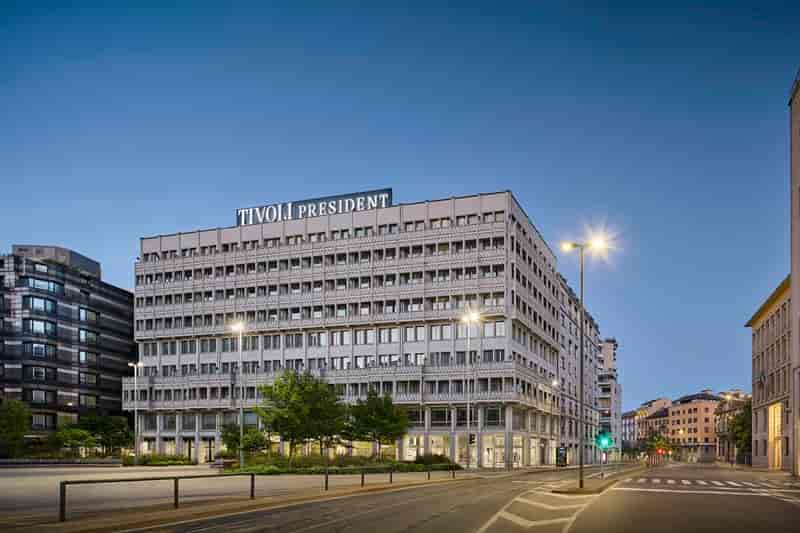
The group also repositioned existing properties. Porta Rossa Hotel Firenze became the first member of the new Colbert Collection; Tivoli President Milano joined Minor’s Italian luxury portfolio; and three hotels in Spain and Germany converted to iStay Hotels by NH.
Meanwhile, Anantara Vacation Club has evolved into Minor Vacation Club, creating a multi-brand vacation ownership platform. Two club resorts are scheduled to open in Japan later in 2026.
Discipline before drama
Dillip Rajakarier, Group CEO of Minor International, said: “This was a resilient quarter given the environment we’re operating in, and it underscores the value of a diversified portfolio. Our teams across all regions stayed disciplined on rate and costs, which allowed us to protect profitability even as performance diverged across markets. Geopolitical tensions, currency volatility and shifting travel patterns remain factors we’re monitoring closely. We expect demand to stay uneven through the rest of 2026, and we’ll continue to track forward bookings for the second half as conditions evolve.”
That caution is warranted. Demand remains uneven, currency movements can inflate or deflate reported results, and the outlook for the Middle East is uncertain. Still, Minor enters the second half with rate strength, a widening fee-based business and a development pipeline gathering pace.
The numbers do not shout. They make a firmer point: in a volatile hotel market, disciplined pricing, controlled costs and carefully chosen expansion can be more valuable than growth for growth’s sake. Minor Hotels is not betting the house. It is adding rooms to it and, so far, keeping the accounts in order.
By: Maysa Punchanit – © 2026.
Read Time: 5 minutes.
Author Bio:
 May Marclay’s career hasn’t followed a straight line, and she’s better for it. She began in real estate, then moved into hospitality, finding her rhythm with Centara in the Maldives. There, she worked the Asian markets the old-fashioned way: building trust, closing deals, and turning conversations into lasting business.
The UAE sharpened its focus. At IHG, supporting an Area General Manager, she saw the machinery of a major travel hub from the inside, no gloss, just how things actually get done.
Now, with her sights set on healthcare, May brings a broader lens than most. She speaks three languages, reads widely, travels with intent, and writes with the calm assurance of someone who understands both the detail and the bigger picture without needing to say so too loudly.











