

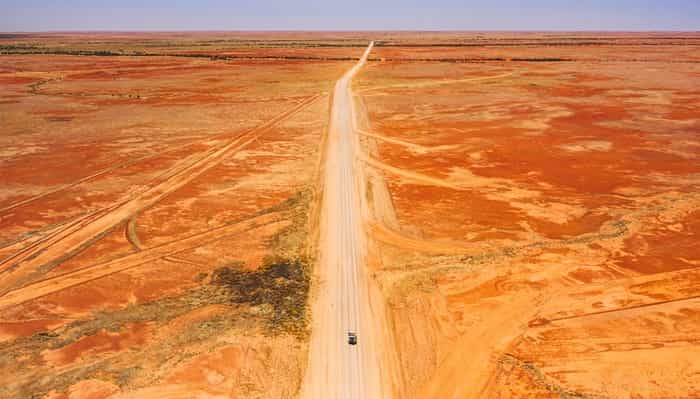
Australia’s red heart has flicked the “open” sign back on although nobody should mistake it for a suburban drive-through.
Queensland’s Munga-Thirri National Park reopened to visitors on 22 July 2026 after months of rain, flooding and waterlogged tracks kept one of the nation’s great four-wheel-drive journeys out of reach. The reopening restores access from the Birdsville side of the Simpson Desert and gives touring operators, accommodation providers and remote communities a timely lift before the spring travel season.
It also places one of Australia’s most demanding overland adventures back on the itinerary while the Channel Country is putting on a rare natural performance. Rivers are running, wetlands are busy and green growth is pushing through country better known for red sand, hard horizons and a sun with all the tact of a blowtorch.
A bucket-list journey returns
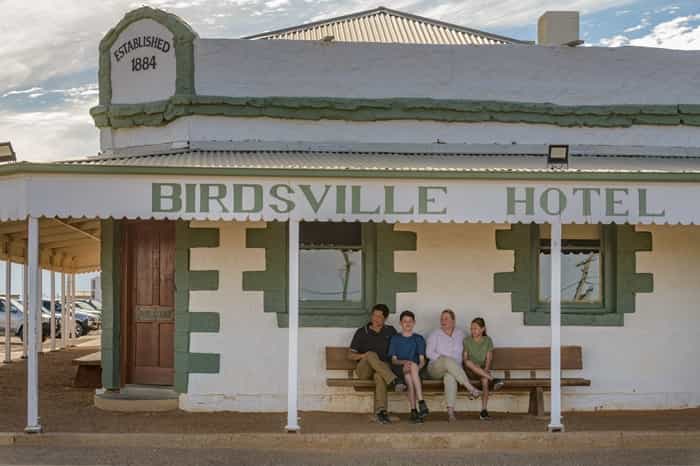
Birdsville -Birdsville Hotel – Global Headquarters
For experienced four-wheel-drive travellers, the Simpson Desert crossing is not merely a road trip. It is a test of planning, patience and machinery, played out across long lines of dunes and vast country where mobile reception is more rumour than service.
Munga-Thirri National Park covers about one million hectares in Queensland and follows the QAA Line west towards Poeppel Corner, where Queensland, South Australia and the Northern Territory meet. The wider Simpson Desert spans more than 17 million hectares and contains parallel dune systems that can run for hundreds of kilometres.
The Queensland reopening removes a major obstacle for travellers approaching from Birdsville. South Australia’s adjoining Munga-Thirri–Simpson Desert National Park is also open with limited access following heavy rain. Anyone planning a complete east-to-west or west-to-east crossing should still check the alerts issued by both states immediately before departure. In the outback, yesterday’s road report is useful mainly as a historical document.
The important detour
The usual passage around Eyre Creek remains affected by flood conditions. Queensland Parks advice directs travellers to follow the signs and exercise caution while traversing Stony Crossing and the Eyre Creek bypass on the QAA Line. Conditions can change quickly, even after a track has reopened.
This is high-clearance four-wheel-drive country. Queensland Parks advises that visitors should be experienced in remote-area travel and carry reliable long-range communications, such as a UHF or HF radio, satellite phone or personal locator beacon.
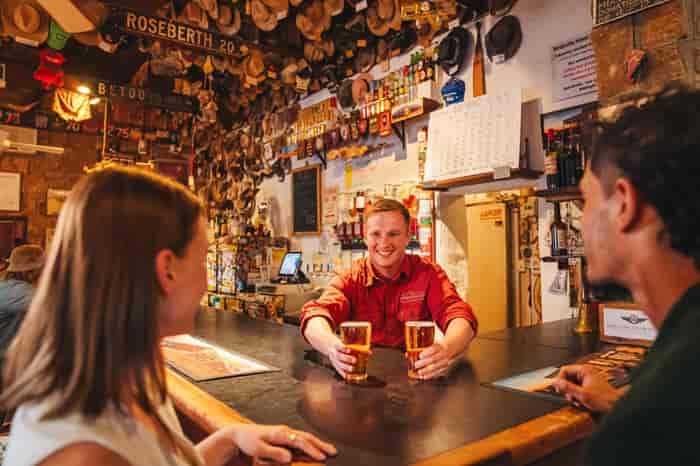
Birdsville The Birdsville Hotel – Reuben Nutt Wild Place
There are no toilets or formal facilities along the Queensland section. Camping is permitted only within 100 metres of the QAA Line, and mobile phone coverage is unavailable. In other words, this is not the place to discover that the satellite phone is still sitting on the kitchen bench.
Travellers continuing into the South Australian desert parks require a valid Desert Parks Pass. Queensland camping must also be booked through the state’s national parks booking service. Fuel, water, food, recovery equipment, spare parts and a realistic margin for delay are not optional extras. They are the admission price for sensible desert travel.
Outback Queensland’s rare green season
The reopening would be welcome in any year. In 2026, it carries extra weight.
Exceptional rainfall across the Channel Country has sent water through the Georgina, Diamantina and Cooper systems towards Kati Thanda–Lake Eyre. In late June, fresh floodwaters were still moving south, leaving a flourishing landscape behind them and creating bodies of water between the dunes of the Simpson Desert.
Around Birdsville, Bedourie and Betoota, the result is a striking reversal of the usual palette. Fresh vegetation has appeared across plains and channels. Pelicans, black swans, brolgas, wading birds and large flocks of budgerigars may be encountered where temporary wetlands and new food sources have formed.
Flocks of Australian pelicans have already been recorded over the Simpson Desert, while tourism operators report abundant birdlife around Eyre Creek, Lake Machattie and the wider floodplain system.
Wildflowers can also follow substantial inland rain, although their timing and density depend on local conditions. Travellers may encounter Sturt’s desert pea, desert rose, paper daisies, bluebells, dampiera, goodenia and flowering emu bush.
Mitchell grass seed heads are less theatrical, but they are an equally important sign that the country is recovering. Not every botanical performer needs sequins.
The desert has not installed a garden. It has done something far more impressive: briefly revealing the life that has been waiting beneath the dust.
Birdsville expects a strong season
Birdsville Hotel general manager Ben Fullagar said the region was ready to welcome returning travellers and first-time visitors.
“There’s no better season to visit the region! Channel Country has certainly turned on a remarkable show for 2026 and we are genuinely excited to showcase the region, it’s the best its looked in decades! Three major channel systems have become alive with strong flows of water generating life and revitalising the entire region!” he said. “All that water has one final destination and that’s the legendary Kati Thanda – Lake Eyre!”
“Kati Thanda Lake Eyre is experiencing its best fill since 1974 and it’s a real bucket list experience to witness this “inland sea” from the air. Scenic flights depart from the Birdsville Hotel daily 7 days a week and our beer is icy cold! We can’t wait for returning visitors and first timers to see this place!”
Fullagar’s final assurance may be the easiest part of the itinerary to verify. The Birdsville Hotel has built a fair reputation for keeping the beer cold, even when the country outside appears determined to roast the hinges off the esky.
Scenic flights now provide several ways to view the transformed landscape. Available routes include Birdsville, Big Red and Eyre Creek, the Diamantina River and Goyder Lagoon, Lake Machattie, and longer journeys to Kati Thanda–Lake Eyre and William Creek.
A commercial boost beyond the dunes
The Simpson Desert reopening matters well beyond the four-wheel-drive fraternity.
Birdsville, Bedourie and Betoota depend heavily on long-distance touring traffic, events, aviation, accommodation, hospitality and fuel sales. A restored desert route can spread visitor spending across the Diamantina, western Queensland and northern South Australia.
For travel advisers and tour operators, the season presents a powerful sales story: a renowned overland route, a major inland flood event and the possibility of wildflowers and abundant birdlife.
It also demands careful qualification. This is not a destination to package with vague assurances and a cheery “she’ll be right”.
Operators should build flexible itineraries, allow spare days, confirm vehicle and communications requirements and direct clients to official road and park information. Scenic flights from Birdsville offer a valuable alternative for travellers who want to see the flooded channels and Kati Thanda–Lake Eyre without attempting a complete desert crossing.
Wildflowers and birds to watch for
Among the better-known plants that may appear after favourable rain are Sturt’s desert pea, desert rose, paper daisies, native bluebells, dampiera, goodenia and emu bush.
Birdwatchers should look for pelicans, black swans, brolgas, emus, budgerigars, corellas, cockatoos, herons, stilts, sandpipers, whistling kites and black kites.
Sightings cannot be guaranteed. That is rather the point. The pleasure lies in meeting the landscape on its own terms, not demanding that a pelican report for duty at 9.15 precisely.
The great drive is back with conditions
The reopening of Munga-Thirri National Park is a genuine milestone for Outback Queensland. It restores access to a journey that sits near the top of Australia’s touring canon and arrives during an exceptional season of water, growth and wildlife.
Yet the best desert stories begin with preparation, not bravado.
Check the alerts. Read the latest road reports. Carry more water than you think you need. Respect closures, signed detours and fragile country. Leave the landscape as you found it.
Do that, and the reward could be remarkable: red dunes rising above fresh vegetation, pelicans wheeling over temporary water and the great inland country looking, for a short and memorable time, almost impossibly alive.
Official travel and safety links
Queensland Parks – Munga-Thirri visitor information
Queensland Parks – current park alerts
Diamantina Shire Council – current road report
The Diamantina – getting to Birdsville, Bedourie and Betoota
South Australian Parks – Desert Parks Pass
By: Anne Keam – © 2026.
Read Time: 6 minutes.
Author Bio:
 Anne Keam’s story begins in Queensland, on a grain farm in the state’s wide western reaches, where the days were long and the lessons simple: work hard, look after your own, and don’t make a fuss. Those early years left their mark.
She later studied Arts at the University of Queensland, before doing what felt natural at the time, heading back home to the family property. But the world was calling. Anne packed a backpack and went looking, spending years on the road and finding herself most alive in South America. She wrote everything down along the way. Those notebooks, full of dust, colour, and curiosity, eventually became her blog, a quiet, personal record of seeing the world and learning from it.











