

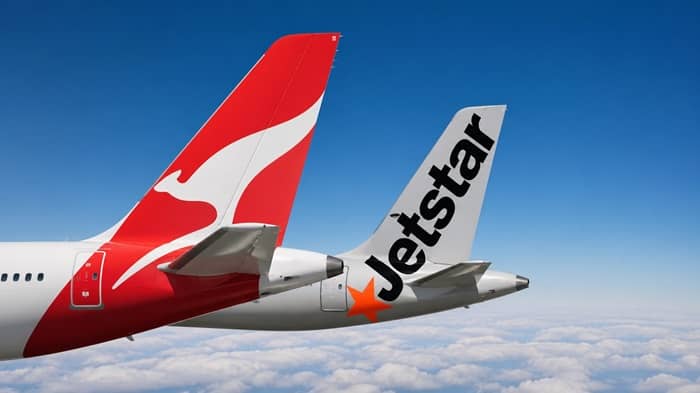
There’s nothing quite like a geopolitical headache to sharpen an airline’s thinking, and right now, the Qantas Group has a few of those swirling at cruising altitude.
Between tensions in the Middle East and fuel prices that refuse to behave, the Flying Kangaroo has opted for a steady, almost old-school response: adjust, don’t overreact. And so, the Group has quietly extended its schedule tweaks into the first quarter of FY27, covering the July-September stretch.
No fanfare. No chest-beating. Just a pragmatic reshuffle.
Europe is still calling the shots
If there’s one constant in all this, it’s Europe. Australians are still heading there in droves, apparently undeterred by exchange rates, airfares or the odd global wobble.
Qantas has responded by nudging more aircraft onto European routes, doubling down where the demand is real rather than theoretical. The Perth–Rome service, which has been ticking along nicely, gets another three-month lease on life through to late October.
Paris? It settles into a more modest but reliable three-times-weekly service via Singapore from Sydney. Less glamour, perhaps, but dependable, and that counts.
All told, the changes add roughly 2,000 extra seats a week to Europe. Not a flood, but certainly a meaningful top-up in a market that continues to outperform expectations.
Trimming where it makes sense
Elsewhere, the pruning shears are out.
Sydney to Bengaluru takes a temporary pause from August before returning at the tail end of October, a seasonal breather rather than a retreat. Across the Tasman, both Qantas and Jetstar Airways have eased capacity slightly, reflecting softer pockets of demand and the ever-present need to keep costs in check.
The net effect? International capacity comes back by about two percentage points for the quarter. Hardly drastic, but then again, airlines rarely advertise the fine print of restraint.
Domestic network: steady, not flashy
Closer to home, the story is similar. Capacity reductions of around five percentage points, flagged earlier, are now locked in through to the end of September, particularly on busy capital city routes.
It’s not about empty planes. It’s about the smarter ones.
Airlines learned long ago that chasing load factors without regard for yield is a quick path to trouble. Qantas, for its part, seems content to keep things disciplined.
Passengers kept in the loop
For travellers, there’s no great drama. Those affected are being contacted directly and offered alternative flights or refunds, as standard practice, but this is still essential in maintaining goodwill.
A measured response in a volatile world
There’s a temptation in aviation to swing hard when conditions shift to add capacity in a rush, or cut it just as quickly. Qantas has resisted both instincts.
Instead, this feels like a carrier playing the long game. Adjusting where needed. Holding firm where it counts. And, perhaps most importantly, keeping one eye on Europe because right now, that’s where the action is.
Not flashy. Not loud. But quietly effective.
And in this business, that’s often what separates the survivors from the rest.
by May Marclay – (c) 2026.
Read Time: 2 minutes.
About the Author.
 May Marclay’s career hasn’t followed a straight line, and she’s better for it. She began in real estate, then moved into hospitality, finding her rhythm with Centara in the Maldives. There, she worked the Asian markets the old-fashioned way: building trust, closing deals, and turning conversations into lasting business.
The UAE sharpened its focus. At IHG, supporting an Area General Manager, she saw the machinery of a major travel hub from the inside, no gloss, just how things actually get done.
Now, with her sights set on healthcare, May brings a broader lens than most. She speaks three languages, reads widely, travels with intent, and writes with the calm assurance of someone who understands both the detail and the bigger picture without needing to say so too loudly.











