

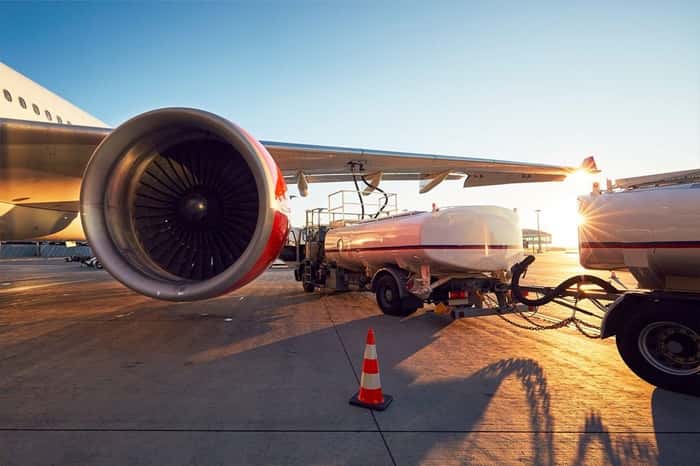
There’s a familiar truth in aviation: when the world turns uneasy, airlines feel it first and pay for it fastest.
That reality is now landing squarely on the Qantas Group’s balance sheet, which has issued a measured but telling update to the market as tensions in the Middle East ripple through global fuel markets.
No theatrics, no grandstanding, just the numbers, and they are doing most of the talking.
Fuel: The Old Enemy Returns
Airlines can hedge, plan and optimise until the spreadsheets glow, but fuel has always had the final word.
Since Qantas last briefed the market on its half-year results, jet fuel prices have more than doubled. That alone would be enough to rattle any operator. What’s more unsettling is the surge in refining margins, the gap between crude oil and the finished jet fuel airlines actually pay for, which has blown out from about US$20 a barrel in February to peaks near US$120.
That is not a gentle rise. That is a step change.
Qantas has sensibly hedged around 90 per cent of its crude exposure for the second half of FY26, but hedging doesn’t cover everything. Refining margins remain largely outside that safety net, and they are now the problem child.
The result: expected fuel costs for the second half are sitting between $3.1 billion and $3.3 billion.
It’s a reminder, if one were needed, that aviation margins are built on sand when energy markets turn hostile.
Keeping the Tanks Full
To its credit, Qantas has moved quickly to steady the narrative. The airline is working closely with government and suppliers, signalling confidence in fuel availability through April and into May.
That matters. Supply shocks, not just price spikes, are what keep airline executives awake at night.
Still, the language is careful. No airline commits too heavily to certainty in a market like this. Not anymore.
A Network That Bends, Not Breaks
If fuel is the cost story, capacity is the response.
Qantas has quietly begun reshaping its network, no dramatic cuts, no headlines about grounded fleets, but a steady recalibration. Domestic capacity will be trimmed by roughly five percentage points in the fourth quarter, a modest adjustment on paper but a meaningful one in operational terms.
Passengers affected are being rebooked or refunded. It’s business as usual, handled without fuss.
Internationally, the airline is playing a different hand.
Europe Steps Into the Spotlight
While the situation in the Middle East has disrupted parts of the global network, it has also redirected demand. And right now, that demand is flowing towards Europe.
Qantas has responded as seasoned operators do, swiftly and without sentiment. Capacity has been shifted away from the United States and from parts of the domestic network and redirected to European routes, particularly Paris and Rome.
It’s not opportunistic. It’s practical.
Travellers still want to go somewhere, and Europe remains a safe bet culturally, commercially and operationally.
The revenue figures reflect that. International unit revenue growth for the second half is now expected to sit between 4 and 6 per cent, roughly double earlier guidance. A useful buffer, particularly given that around half of fourth-quarter revenue was secured before the current tensions escalated.
Domestic revenue is holding steady as well, with growth hovering around 5 per cent.
In short, demand hasn’t disappeared. It has simply shifted.
Fares Edge Higher Quietly
No airline absorbs a fuel shock of this magnitude without passing some of it on. Qantas has already begun adjusting fares, though without fanfare.
It’s the sort of incremental pricing shift that regular travellers notice only after the second or third booking.
There’s little choice. Fuel at these levels demands it.
Financial Discipline, With One Eye on the Horizon
Beyond the operational adjustments, Qantas is keeping a firm grip on its financial settings.
Capital expenditure for FY26 is now expected to come in at or below $4.1 billion, the lower end of its previous range. That’s not retrenchment; it’s restraint.
Shareholders will still receive a $300 million interim dividend, paid mid-April. But the planned $150 million share buyback has been shelved for now, a sensible pause rather than a retreat.
Net debt is tracking towards the middle of the airline’s target range by the end of June, suggesting the balance sheet remains intact, if not entirely relaxed.
A Familiar Playbook in Unfamiliar Times
There’s nothing particularly novel about Qantas’ response here. And that may be the point.
Aviation has seen this before oil shocks, geopolitical flare-ups, and demand shifts that arrive without warning. The playbook is well-worn: adjust capacity, manage costs, follow demand, protect the balance sheet.
What feels different is the speed. Markets are moving faster, shocks are sharper, and recovery windows are less predictable.
Qantas, for its part, is keeping its options open. Management has made it clear that further adjustments remain on the table should conditions worsen.
That flexibility is not a strategy in itself, but it is a necessary condition for survival.
The View Ahead
The Middle East conflict has once again exposed aviation’s oldest vulnerability: its dependence on fuel it does not control, priced in markets it cannot influence.
And yet, the demand story remains stubbornly positive.
People are still travelling. Europe is still drawing crowds. Aircraft are still filling.
For Qantas, the task now is not to chase growth at any cost, but to manage it carefully, balancing opportunity against risk, as airlines have always done.
Because in this business, the skies may be open, but the margins rarely are.












