

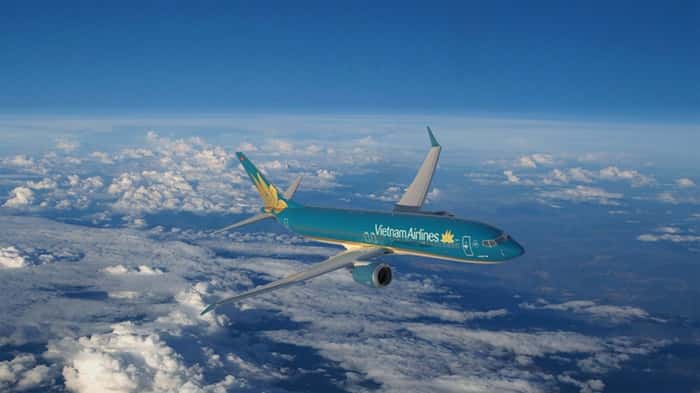
There’s something reassuringly old-school about a national carrier placing a big aircraft order. It signals confidence, intent, and in the best cases, a touch of swagger. Vietnam Airlines has delivered all three, locking in a US$8.1 billion order for 50 Boeing 737-8 aircraft, a move that clearly signals the airline is thinking long term again.
The signing, staged in Washington, D.C., during a high-profile visit by a Vietnamese delegation, was heavy on symbolism but even heavier on strategy. For Vietnam Airlines, the message is simple: the rebuild is complete, and growth is back on the agenda.
And not the tentative kind.
Playing the long game
Fleet decisions define airlines. Routes come and go, marketing ebbs and flows, but aircraft orders linger for decades. That makes this one particularly telling.
Vietnam Airlines plans to take delivery of the new narrow-body jets between 2030 and 2032, part of a broader modernisation push expected to lift its fleet to roughly 151 aircraft by the turn of the decade. It’s a sizeable leap for a carrier that, not so long ago, was navigating pandemic turbulence and financial repair.
Chairman Dang Ngoc Hoa framed the move as more than a fleet refresh.
“Vietnam Airlines is taking a comprehensive and forward-looking approach to strengthening its capabilities, spanning fleet modernization, financial resilience and the development of high quality talent, to support our long term growth ambitions,” he said.
“The investment in 50 Boeing 737-8 aircraft marks a significant step in building a modern, fuel efficient fleet while enhancing operational performance and elevating service standards to meet international benchmarks.”
Measured words, but the intent lands clearly; this is about lifting the airline’s global standing.
Why narrowbodies matter again
If wide-bodies once carried the glamour, narrow-bodies now carry the growth, particularly in Asia. Shorter routes, higher frequency and rising middle-class demand have made single-aisle aircraft the real workhorses of regional aviation.
The 737-8 fits neatly into that equation. With a range of about 6,500 kilometres and seating up to 200 passengers, it gives Vietnam Airlines flexibility across domestic trunk routes and busy regional corridors exactly where the growth curve is steepest.
Boeing, unsurprisingly, welcomed the reaffirmed partnership.
“We are proud to build on our partnership with Vietnam Airlines and support them as they pair the 737 MAX with the 787 Dreamliner to further scale regional networks and strengthen connectivity across Asia,” said Stephanie Pope, President and CEO of Boeing Commercial Aeroplanes.
“The 737 8’s capabilities, economics and passenger experience make it an ideal airplane to support Vietnam Airlines’ growth plans.”
Corporate speak, yes but not inaccurate.

Vietnam Airlines Unveils
The sustainability dividend
Modern fleet orders now carry a second storyline: emissions. The 737-8 promises roughly 20 per cent lower fuel burn compared with the aircraft it replaces, thanks to LEAP-1B engines and aerodynamic tweaks. In practical terms, that translates to meaningful cost savings and a lighter environmental footprint.
Each aircraft is expected to cut around 8 million pounds of CO₂ annually, a figure that matters as airlines navigate tighter sustainability expectations and sharper investor scrutiny.
Passengers, meanwhile, will notice subtler changes. Boeing’s Sky Interior mood lighting, bigger bins, and cleaner cabin lines have become a quiet but effective upgrade in perceived quality. Not revolutionary, but certainly noticeable.
Money talks, and so do lenders
An order of this size inevitably raises the financing question. Vietnam Airlines has already been lining up funding conversations, engaging both domestic lenders and major U.S. institutions, including EXIM Bank and Citi.
That blend of local and international backing reflects a broader shift: airlines are increasingly treating fleet investment as a structured financial strategy rather than a simple purchase. For Vietnam Airlines, it also signals restored credibility in global capital markets.
Not a small milestone.
Asia’s tailwind
Timing helps. Vietnam remains one of Asia’s most compelling aviation growth stories, driven by a swelling middle class, surging inbound tourism and stronger regional trade ties. The airline has already been testing that momentum, rolling out a record 14 new international routes in recent months.
The new narrow-body fleet will underpin that expansion, enabling higher-frequency flying and deeper schedules across short- and medium-haul markets.
In plain English: more flights, more seats, more flexibility.
Eyes on five-star status
Perhaps the most telling detail sits in the airline’s long-term ambition to become a five-star carrier by 2030. That’s a lofty club, and not one entered lightly.
Aircraft alone won’t secure the badge. Service consistency, operational reliability and brand polish will matter far more. But modern hardware is a necessary starting point, and Vietnam Airlines now has that box firmly ticked.
A confident signal
In aviation, big orders are rarely just about metal. They’re signals to competitors, investors and passengers alike. This one says Vietnam Airlines believes its future is firmly upward.
The carrier is no longer simply recovering; it’s repositioning. A refreshed fleet, deeper ties to Boeing, and a buoyant home market give it a credible platform for the decade ahead.
Whether that translates into five-star status remains to be seen. But one thing is certain: airlines don’t place billion-dollar bets unless they believe their best years are still ahead.
And right now, Vietnam Airlines looks like it’s betting on exactly that.
by My Thanh Pham – (c) 2026.
Read Time: 4 minutes.
About the Writer.
 My Thanh Pham has led a more travel-intensive life than most people. After studying tourism, she went straight into the work of building journeys across South-East Asia, temples, beaches, night trains, and all, quietly fixing the messy bits so others could enjoy the ride.
She was never meant to stay behind a desk. Airline life followed, dividing her days between reservations and the airport floor, right where travel shows its true colours. Missed flights, tight hugs, frayed tempers, sudden joy, she saw it all, close up.
Now at Global Travel Media, My Thanh has traded ticket stubs for a keyboard. She writes the way she once worked: steady, clear-eyed and respectful of the road’s unpredictable rhythm, guiding readers through a world she knows from the inside.











