

Deadly strikes and airline suspensions pose a tough commercial test for Saudi Arabia: keeping visitors connected, informed, and confident.
Saudi Arabia’s tourism ambitions face a sobering test after deadly attacks on Riyadh’s main airport disrupted flights and brought regional conflict to one of the kingdom’s most important international gateways.
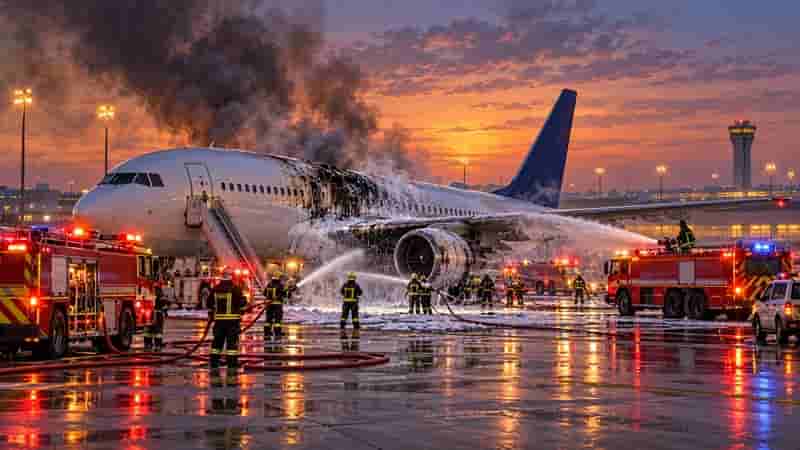
Saudi authorities said three Saudi citizens were killed in two attacks on King Khalid International Airport on Thursday, 8 October 2026. Several others were injured. A Saudia aircraft was damaged on the ground, with no passengers aboard, according to the airline statement reported by AP. Yemen’s Iran-backed Houthis claimed responsibility. Airport traffic subsequently resumed, Reuters reported.
That distinction matters. These were attacks claimed by the Houthis, an Iran-backed group operating from Yemen. Describing them simply as an attack “by Iran” would go beyond the evidence in the reporting reviewed.
For the travel industry, the immediate question is whether passengers can reach their destination. The larger question is whether they will still want to.
An airport can restart operations relatively quickly. Confidence follows no published timetable.
A reopened airport does not mean every flight returns
The disruption has already moved beyond Riyadh’s departure boards.
Reuters reported that Lufthansa Group suspended flights to and from the Saudi capital through 16 October. In announcements reported on 8 October, IndiGo cancelled Riyadh services until 9 October, while Air India and Akasa Air cancelled flights until 10 October.
Those dates describe announced arrangements, not a guarantee that services will restart immediately afterwards. Airline decisions remain subject to security assessments and changing conditions.
For passengers, the practical consequence is straightforward: an airport may be operating while their particular flight is not.
For travel advisers, it means checking the complete itinerary rather than treating an airport reopening as an all-clear. A revised arrival can upset transfers, hotel check-in, tours and onward flights. Separate tickets can complicate the repair work.
The familiar holiday instruction to pack light now comes with an unwelcome companion: read the conditions carefully.
Behind each cancelled service are people trying to return home, attend meetings or begin journeys planned months earlier. The human consequences deserve more attention than a neat tally of disrupted flights.
Tourism’s weak point is reliable access
The commercial vulnerability is clear, even though its financial scale is not yet known.
A hotel may have excellent staff, immaculate rooms and a breakfast buffet worthy of diplomatic negotiations. None of that helps a guest whose flight never leaves.
Air access links destination marketing to an actual booking. Interrupt it and the effects can spread through accommodation, ground transport, restaurants, guides and attractions.
That is an economic mechanism, not proof that every Saudi tourism business is now losing trade. The sources reviewed for this report do not establish a national decline in bookings, hotel occupancy or visitor spending attributable to these attacks.
Nor do they support a claim that Saudi tourism has collapsed.
The responsible conclusion is narrower: confirmed aviation disruption creates an immediate operational problem and a credible risk to demand.
Measuring the damage will require evidence from airlines, hotels, tour operators and tourism authorities. Cancellation rates, forward bookings and the length of service suspensions will tell a more useful story than speculation dressed up as a forecast.
A difficult moment for Saudi Arabia’s ambitions
Tourism is part of Saudi Arabia’s wider Vision 2030 agenda. Official Saudi sources say the kingdom aims to reach 150 million annual tourist visits by 2030, including domestic and international travel.
That target illustrates the scale of the kingdom’s aspirations. It counts domestic and international tourism activity, not 150 million distinct overseas visitors.
The attacks do not, by themselves, establish that the ambition is unattainable. They expose the conditions on which growth depends.
Visitors need dependable transport. Airlines need confidence in operations. Travel sellers need information they can pass to customers without immediately having to correct it.
Marketing can introduce a destination. It cannot make those requirements disappear.
For an emerging holiday choice, uncertainty may weigh particularly heavily. A traveller still deciding where to go can postpone the decision or choose somewhere else. A promotional offer may attract attention, but price alone cannot address security concerns.
The challenge is therefore both practical and reputational: restore reliable journeys while giving prospective visitors a clear account of what has changed.
The Australian warning deserves prominence
For Australian readers, the most relevant official reference is the Department of Foreign Affairs and Trade’s Smartraveller advice.
As checked on 9 October, Australia continued to advise travellers to “Reconsider your need to travel” to Saudi Arabia overall. Smartraveller also warns that regional military conflict can cause airspace closures and flight cancellations.
The advisory also says do not travel to Asir, Jazan and Najran provinces, or to areas within 30 kilometres of the Yemen border. The overall advisory does not mean every location has the same risk. Travellers should read the full destination advice, including regional warnings, rather than relying on a headline or an old screenshot.
Those already in the kingdom should follow local authorities’ instructions and keep in contact with their airline or travel provider. Those planning to depart should check current advice and their actual flight status before heading to the airport.
This is information that belongs near the top of the conversation between adviser and client.
A departure time on a booking confirmation is a plan. In a changing security environment, it is not a promise.
Business travel faces a different calculation
Leisure visitors can often choose another destination. Business travellers may have fewer alternatives.
Meetings, contracts and events can tie a journey to a particular city and date. Even then, employers and organisers must consider whether travel remains appropriate and whether the itinerary can be completed reliably.
Potential consequences include remote attendance, postponed meetings and reduced participation. These are scenarios to assess, not confirmed outcomes across Riyadh’s events sector.
Organisers should communicate directly with delegates about access, schedule changes and cancellation arrangements. Hotels and transport providers need the same information to manage arrivals sensibly.
A clear update is more useful than a reassuring adjective.
For corporate travel teams, the issue reaches beyond getting someone to a meeting. It includes the ability to support that traveller if conditions change during the visit.
Travel advisers earn their keep in the details
This is precisely the kind of situation where good travel advice becomes valuable.
Clients need to know which parts of their trip are affected, what alternatives exist and what their booking terms allow. A general statement about Saudi flights cannot answer those individual questions.
Advisers should establish whether a service is cancelled, delayed or still scheduled, then check the airline’s current arrangements for changes or refunds. Accommodation and tour conditions require separate attention.
Travellers should also ask their insurer how the advisory and the circumstances affect their specific policy. Coverage cannot be assumed from the existence of a policy number.
No sound basis exists to promise that all disruption costs will be covered, or that every passenger has the same refund rights.
The paperwork may lack the glamour of a destination brochure. When a journey unravels, it becomes considerably more interesting.
Confidence will require evidence
Saudi tourism businesses have a difficult communications task: acknowledge the seriousness of the attacks while providing useful, current information about services.
That means distinguishing an airport’s operating status from an airline’s schedule, and confirmed damage from unverified claims. Updates should carry dates and times so travellers can judge whether they remain relevant.
Broad assurances are unlikely to settle specific concerns. Customers will want to know whether their flight is operating, whether their transfer is available and whom to contact if plans change.
Recovery is possible, but we cannot responsibly predict its pace from an airport reopening alone.
For now, the deaths and injuries are the most serious consequence. The commercial story is pressure on access and confidence, with tourism losses still to be measured.
Saudi Arabia’s tourism ambitions have not vanished. They face an immediate test that no campaign slogan can resolve.
The industry’s strongest response will be dependable operations, clear advice and patient work to restore trust. Travellers may admire bold ambitions. Before booking, they still want confidence that they can complete the journey there and home safely.
By: Stephen Peters – © 2026.
Read Time: 8 minutes.
Author Bio:
 Stephen Peters has spent much of his career proving that the straight-and-narrow path is considerably overrated. Armed with a Bachelor’s degree in Technology from the University of Queensland and a Master’s in Management, he first ventured into hospitality, working in and helping open several five-star hotels across Sydney and Asia.
After deciding he’d had enough of five-star hospitality from the operational side of the desk, Stephen returned to technology, working with major US tech companies while based between Australia and Asia.
Then came the ultimate change of scenery. Stephen built his own yacht and, with his family aboard, sailed from Florida through the United States and its Great Lakes before crossing the Pacific to Asia. Several memorable years followed as they explored Indonesian waters before the Peters family eventually returned to Australia with far more sea miles, stories, and perspective than when they left.











