


British Airways has thrown open the curtain on the future of its Airbus A380 fleet and, for once, “refurbishment” seems far too modest a word.
The British flag carrier is preparing to return its biggest aircraft to the skies with an almost nose-to-tail reinvention: a new First suite, an evolved Club Suite business-class product, a substantially upgraded World Traveller Plus cabin and a redesigned World Traveller economy experience.
Even the galleys and stairways are getting attention.
For an aircraft sometimes accused of belonging to aviation’s recent past, Heathrow’s message is unmistakable: British Airways believes the A380 still has plenty of future left in it.
The first refurbished superjumbo is expected to enter service on selected routes in the coming months, although British Airways has not yet announced exactly which services will receive the new aircraft first.
That uncertainty will keep frequent flyers hovering over schedules with the enthusiasm normally reserved for an airport upgrade list.

British Airways’ Club World cabin on A380 aircraft
What is already clear is the scale of the work.
British Airways says more than 35,000 individual parts will be installed on each A380 during the retrofit, making this one of the most extensive cabin transformations undertaken by an airline.
The project sits within the carrier’s much broader £7 billion transformation programme, covering aircraft, airport lounges, technology, connectivity, operational performance and the customer experience.
And BA is not merely changing the curtains.
This is a substantial rethink of how its largest aircraft earns its living.
Business Class Takes Over the Upper Deck
The headline act, at least commercially, is Club World.
British Airways plans to put 106 Club Suite business-class seats across the entire A380 upper deck, creating what the airline describes as the world’s largest business-class cabin.
That is a serious amount of flat-bed real estate.
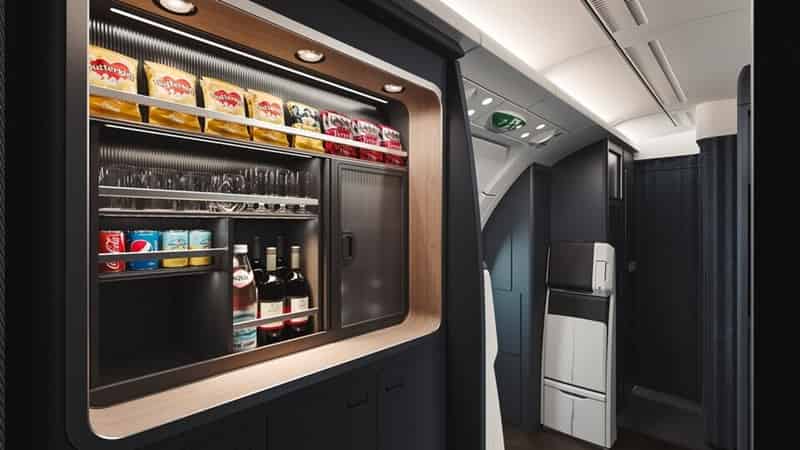
Club Kitchen in British Airways’ business class cabin
BA’s Club Suite, first introduced in 2019, already represented a major break from the airline’s older business-class layout. Direct aisle access and a closing privacy door moved British Airways into a much more competitive position against the best international long-haul carriers.
On the refurbished A380, the concept evolves again.
The suites will feature revised trims, extra storage, improved functionality and a contemporary colour palette built around British Airways’ familiar blue, red and cream.
Importantly, the 106 seats will not simply stretch across the upper deck like one enormous airborne dormitory.
The space will be divided into four distinct cabin zones, designed to create a more intimate atmosphere. BA is also incorporating dedicated dwell areas, redesigned galleys and Club Kitchens where passengers can collect snacks and refreshments between meal services.
It is an interesting balancing act.
One hundred and six business-class passengers sounds less like a cabin and more like the guest list for a particularly successful London reception.
Breaking the upper deck into smaller zones should help preserve some sense of privacy and exclusivity, which is essential when an airline asks passengers to pay premium fares.
For corporate travellers, high-end leisure passengers and travel advisers selling long-haul comfort, however, the bigger point is simple.
British Airways is putting one of its strongest products into one of aviation’s most recognisable aircraft.
First Goes Full Boutique Hotel
Downstairs and right at the front, First becomes considerably more private.
British Airways says its redesigned A380 First cabin will contain 12 individual suites, each surrounded by a 60-inch privacy wall.
The seat converts into a fully flat bed measuring 6 feet 7 inches and comes with a mattress topper, dedicated storage, a personal wardrobe and an in-suite minibar.
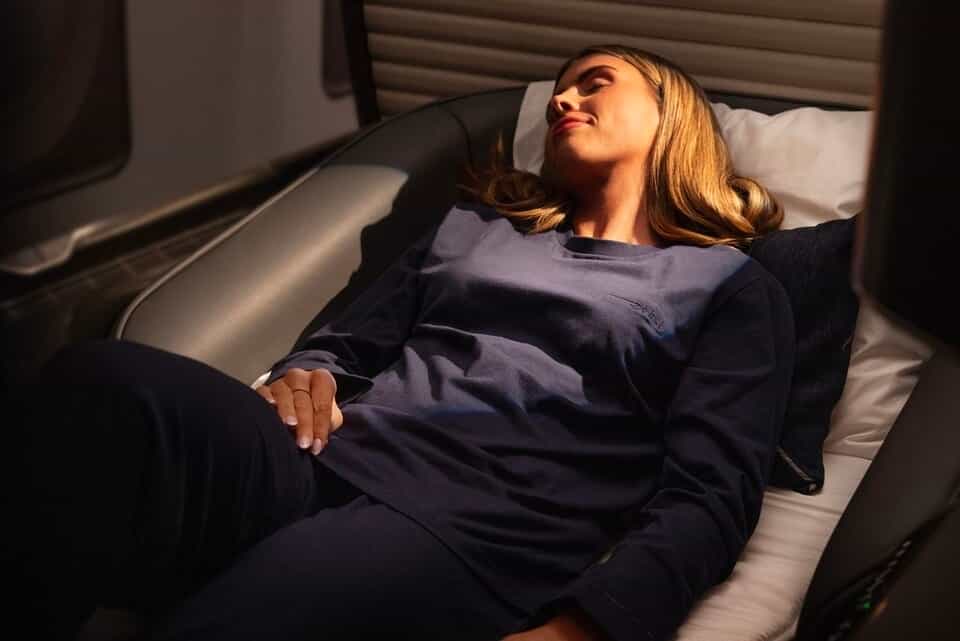
New pyjama set in First
The design draws inspiration from British craftsmanship and the elegance of Concorde, with curved lines, hand-stitched leather details and bespoke mood lighting.
For couples travelling in the centre seats, the divider can be opened to create a shared space. Stowable tables and companion seating also enable what BA calls “buddy dining.”
In other words, British Airways appears determined to make First feel less like an exceptionally good airline seat and more like a private hotel room that happens to be travelling several kilometres above the ground.
Sean Doyle, British Airways Chairman and CEO, described the project as “a major milestone for British Airways and the future of our A380 fleet”.
He added that BA had “completely reimagined the customer experience”.
The hardware, though, is only one part of the strategy.
Restaurant Dining Moves Higher Up the Menu
British Airways has also refreshed its First dining service across its long-haul network.
Its new “From the Grill” concept allows passengers greater freedom to combine selected proteins, accompaniments and sauces.
Choices include British roast rack of lamb and grilled salmon, alongside a range of signature mains.
The aim is clear: less rigid airline meal service, more restaurant-style choice.
The airline also offers new contemporary stoneware, fine bone china and specialised glassware, along with a drinks selection that includes premium Champagne, gin serves and alcohol-free alternatives.
A bespoke minibar incorporated into the new First suite provides ready access to water and premium snacks between services.
The shift towards personalisation is significant.
Premium passengers increasingly expect luxury airlines to fit around their routines rather than expecting travellers to fit around the airline’s service trolley.
Dinner when you want it. Sleep when you need it. A drink without ringing three times.
It sounds wonderfully simple. In aviation, of course, making simple things appear effortless can be remarkably complicated.
Swaine and Wildsmith Bring British Luxury On Board
The softer touches are getting their share of attention too.
British Airways has partnered with British luxury heritage house Swaine on a new unisex First amenity kit inspired by the luggage once carried by early air travellers.
Introduced from 6 October, the kits come in royal blue and cream and contain skincare products from British brand Wildsmith.
The Circadian Rhythm collection includes products designed to help passengers cope with the dry cabin environment and the disruption of long-haul flying.
New First sleepwear uses cool-touch fabric incorporating British Airways’ bespoke tartan, while slippers, new pillows, a lightweight cotton duvet, mattress and woven herringbone day blanket complete the bedding package.
It is all designed to strengthen that boutique-hotel feeling.
And on a long overnight flight, getting several hours of genuine sleep can be worth more than another decorative flourish on the menu.
British Airways is also rolling out updated First Service Specialist training to First-trained cabin crew.
The programme is designed to encourage more personal and intuitive service based on individual passenger preferences.
That may ultimately prove just as important as the new seat.
Luxury hardware impresses in photographs. Passengers remember great crew service afterwards.
Premium Economy Gets More Serious
World Traveller Plus could prove to be one of the most strategically important parts of the entire refurbishment.
Premium economy has become an increasingly valuable cabin for international airlines as travellers seek more space and comfort without paying the considerable price of business class.
British Airways’ new World Traveller Plus seat targets that market directly.
The redesigned cabin will offer wider seating, a 38-inch seat pitch, increased recline, larger entertainment screens and privacy wings built around the headrest.
The layout will be eight abreast in a 2-4-2 configuration.
It also includes upgraded bedding and a reusable amenity kit that doubles as a tote bag after the flight.
Inside are travel essentials, including socks, an eye mask, and a dental kit, along with a Dr PAWPAW moisturising balm.
It is not First, and nobody is pretending otherwise.
But on a 12- or 14-hour journey, better recline, a larger screen, improved bedding and more personal space can mean the difference between arriving ready for the day and arriving ready for lengthy negotiations with a chiropractor.
Economy Has Not Been Forgotten
The back of the aircraft has not escaped the designers’ attention either.
World Traveller passengers are set to receive redesigned seats, adjustable headrests and larger 12-inch high-definition entertainment screens.
Bluetooth connectivity will allow passengers to use compatible personal headphones with the entertainment system, while USB-C charging will help keep phones, tablets and other devices alive through the journey.
The bedding has also been reconsidered.
New pillows use a contemporary herringbone pattern and additional filling, while plusher blankets come in BA’s signature blue with red Speedmarque detailing.
Compared with private First suites and 106 business-class beds, a better pillow may not generate quite the same rush of publicity.
But economy is where a huge number of customers actually experience an airline.
After ten hours over the ocean, a decent pillow can earn rather more passenger gratitude than another advertising slogan.
The A380 Is Being Reborn, Not Retired
Perhaps the most important part of the announcement is what it says about the Airbus A380’s future.
British Airways currently operates 12 A380S.
It is the world’s largest commercial passenger aircraft, and BA’s decision to undertake such a deep retrofit makes one thing abundantly clear: the airline is not treating the superjumbo as an aircraft waiting quietly for retirement.
It is investing in it.
That makes commercial sense at an airport such as London Heathrow, where available runway slots are precious and aircraft capacity matters.
On routes with strong demand, the A380 lets an airline carry many passengers on a single departure slot while still providing enormous internal space for premium cabins.
The new configuration pushes that premium strategy considerably further.
An entire upper deck of Club Suite seats sends a very different commercial message from simply replacing worn furnishings.
This is not cosmetic surgery.
It is a business-model reset for the aircraft.
For travel advisers, that makes the retrofit particularly worth watching.
More premium seats could create additional opportunities for corporate bookings, luxury leisure travel, upgrades and loyalty redemptions.
But advisers should also be cautious about promising clients the refurbished product until British Airways confirms individual aircraft and route assignments.
Equipment substitutions remain a fact of airline life, even when the cabin photographs are particularly tempting.
The Investment Goes Far Beyond the A380
The aircraft programme forms part of British Airways’ much larger £7 billion business transformation.
That programme extends beyond cabin interiors into lounges, new aircraft, technology, operational performance and connectivity.
British Airways has also begun rolling out Starlink satellite internet, with the airline stating that eligible short- and long-haul aircraft will receive the technology as part of its wider modernisation programme.
At Heathrow, the carrier has announced the next stage of its lounge transformation as it works to upgrade the ground experience as well as the journey in the air.
That broader approach matters.
Premium aviation is no longer judged solely by seat width, Champagne labels or whether the amenity kit is attractive enough to survive a second holiday.
Passengers judge the entire chain.
Booking.
Check-in.
Security.
The lounge.
Boarding.
Punctuality.
Connectivity.
The seat.
Food.
Sleep.
And, finally, whether their suitcase appears at the same airport they do.
A beautiful seat cannot entirely rescue a poor journey.
British Airways appears to understand that.
The Verdict: A Grand Old Aircraft Gets a New Future
British Airways’ new A380 is more than a makeover for an ageing favourite.
It is a statement of intent.
The airline is taking one of aviation’s most distinctive aircraft and giving it a premium-heavy future: private First suites downstairs, an extraordinary 106-seat Club Suite domain upstairs, a far more convincing premium-economy proposition and meaningful improvements even in economy.
There is still plenty to learn.
The first routes need confirmation. The pace of the fleet-wide conversion will matter. And ultimately the new service proposition must prove itself on real flights filled with real passengers rather than in beautifully lit publicity photographs.
But on paper, the ingredients are strong.
The Airbus A380 has always possessed theatre. Its sheer size guarantees it before the engines even start.
British Airways is now attempting to add privacy, technology, better sleep, more polished dining and a contemporary version of British hospitality.
For travellers who feared the superjumbo era might fade quietly into aviation history, that’s encouraging news.
The big bird is not bowing out.
It is becoming smarter and, apparently, ordering fresh china for the occasion.
By: Alison Jenkins – © 2026.
Read Time: 10 minutes.
Author Bio:
 Alison Jenkins has lived most of her working life in the slipstream of aviation, where timetables matter, and people matter more. In airline sales, she built a reputation the old-fashioned way: by knowing her clients, her routes, and never missing the human detail.
Quick with a smile, quicker with a solution, she made deals with warmth and kept her edge intact.
Trade shows, FAM’s, airport lounges and hotel lobbies became her second address. And somewhere along the way, notebook in hand, she began writing the journeys rather than selling them. Her reports grew lively, observant, full of the small truths only travellers notice.
That was the moment it dawned on her: she wasn’t simply travelling. She belonged in its stories.











