

The small businesses that keep global tourism moving the family-run hotel, independent tour operator, local transport company, specialist travel adviser and thousands of suppliers behind them are about to gain a considerably louder voice in the corridors where international policy is shaped.
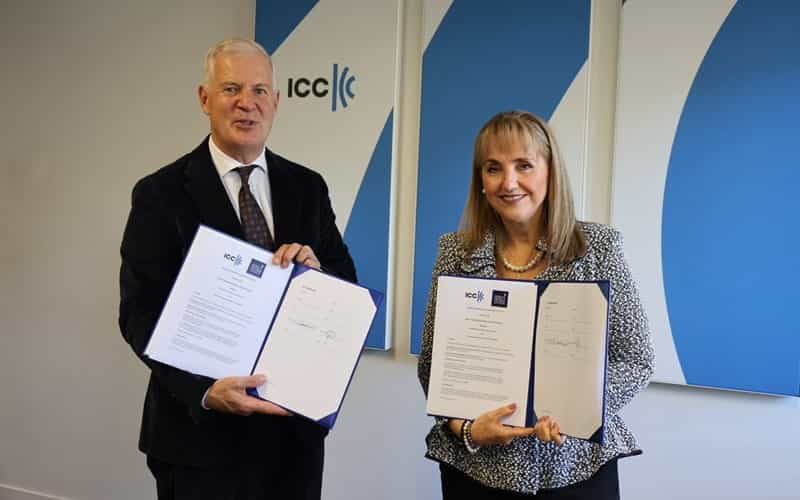
The World Travel & Tourism Council (WTTC) and the International Chamber of Commerce (ICC) have signed a Memorandum of Understanding designed to strengthen the competitiveness, influence and growth prospects of small and medium-sized enterprises across Travel & Tourism.
It is a significant alliance. WTTC brings sector-specific research, economic analysis and access to senior travel-industry leadership, while ICC represents more than 45 million companies across more than 170 countries.
Together, the organisations intend to turn the everyday frustrations of smaller tourism businesses into evidence governments can no longer easily overlook.
Small business, enormous influence
That matters because SMEs are not a decorative fringe of tourism. According to WTTC, they account for more than 85 per cent of travel and tourism businesses worldwide. They employ people, create new products, keep money circulating in communities and often provide the local character that turns a trip into something travellers actually remember.
Yet the smaller the business, the harder the administrative headwinds can bite.
Fragmented regulation, skills shortages, financing constraints, visa rules, digital barriers, connectivity problems and limited access to international markets can all weigh disproportionately on operators without large compliance teams or deep pockets.
Under the new agreement, WTTC and ICC will combine research, business intelligence and industry engagement to identify those obstacles and press governments for more practical settings.
The organisations will also collaborate on policy development, knowledge sharing and stronger connections between Travel & Tourism SMEs and broader international business networks.
Gloria Guevara, President & CEO of WTTC, said:
“Travel & Tourism is powered by millions of businesses around the world, and SMEs are at the heart of our sector. They create jobs, drive innovation and ensure that the benefits of tourism reach local communities.
“By combining WTTC’s understanding of Travel & Tourism with ICC’s extraordinary global reach, we can take evidence from businesses directly to governments and work with policymakers to remove barriers, strengthen competitiveness and unlock greater investment and employment.”
John W.H. Denton AO, Secretary General of the International Chamber of Commerce, said:
“Travel and Tourism is one of the world’s most connected industries, linking people, businesses and markets across borders every day. At a time of economic uncertainty, strengthening the operating environment for the millions of small businesses that power this sector is both an economic and strategic imperative.
“Through this partnership, ICC and WTTC will bring together the global business community to support entrepreneurship, expand opportunity, and ensure that growth in travel and tourism delivers benefits across economies and communities worldwide.”
Both quotations correspond with WTTC’s official announcement.
From nice words to useful results
In other words, this partnership is not supposed to become another memorandum destined for a handsome folder and a quiet shelf.
Its value will be judged by whether small businesses eventually see fewer barriers, better access to markets and finance, stronger digital capability and more sensible regulation.
The agreement also strengthens WTTC’s broader Together in Travel initiative, created to connect and support smaller tourism enterprises.
WTTC says its long-term ambition is to build a global community of one million Travel & Tourism SMEs over five years.
There is an important qualification: WTTC has made clear that the one-million-SME ambition is its own target and does not form part of the formal joint commitments under the WTTC-ICC Memorandum of Understanding.
That distinction matters. International organisations are increasingly expected to demonstrate measurable outcomes, not merely admirable intentions and a plentiful supply of conference lanyards.
For tourism operators, the alliance’s potential value is straightforward.
A small business in regional Australia, Southeast Asia, Europe or the Americas may have little direct influence on international policy. But when its concerns are aggregated with those of thousands or millions of similar businesses, they become much harder to dismiss.
Tourism’s barriers are firmly in the sights
The policy agenda is practical: regulatory complexity, access to finance, digital transformation, mobility, connectivity and the other frictions that can make international tourism unnecessarily difficult or expensive.
There is also a broader economic case.
Smaller tourism businesses frequently anchor jobs in regional and local communities where alternative employment may be limited. Helping those businesses grow can therefore have effects far beyond visitor numbers, supporting entrepreneurship, investment and local supply chains.
The next test will be delivery.
Research papers, summits and declarations certainly have their place, but the tourism industry has never been short of meetings. SMEs need outcomes, simpler rules, easier access to opportunity, and a seat at the table before policy decisions are made, not after the damage is done.
On that score, the WTTC-ICC partnership has considerable potential.
It combines a powerful tourism-sector advocate with one of the world’s broadest business networks and gives both organisations a shared mandate to translate small-business experience into policy.
For an industry built overwhelmingly on smaller enterprises, that could prove less like another piece of institutional paperwork and more like something genuinely useful: leverage.
By: Prae Lee – © 2026.
Read Time: 4 minutes.
Author Bio:
 You can tell a great deal about a person by how they meet a Bangkok morning. Prae Lee doesn’t charge into it; she glides, unhurried, as if time itself has agreed to behave. She carries a calm assurance, the sort earned by knowing both your roots and your destination.
A graduate of Chulalongkorn University, she took her business degree with quiet pride, then polished it further in Singapore and Australia. Travel didn’t change her. It refined what was already there: curiosity, discipline, grace.
Back in Bangkok, she slipped modern life into the family business, mastering social media with an instinct for listening and selling with Thai gentleness.
Prae never seeks attention, yet everything she touches grows brighter.
Now with Stephen’s EGT Media, she writes with authenticity, drawing on culture, travel and a rare, steady confidence.











