

PARIS is preparing to host what may prove one of the travel industry’s more consequential artificial intelligence gatherings of 2026, not because delegates will be shown another shiny chatbot, but because the uncomfortable question on the table is far larger: what happens when the world develops several different AI futures at once?
The Global Travel Futures Forum will take place in Paris on 28 and 29 October 2026, bringing together senior figures from tourism, technology, government, finance, destinations and academia to examine how competing artificial intelligence ecosystems are beginning to reshape the global traveller journey.
Produced by the Global Resilience Network (GRN), the Forum is supported by Atout France, the European Travel Commission, ETOA and Panthéon-Sorbonne University’s IREST tourism institute. The academic program will be staged at Panthéon-Sorbonne University on 28 October, followed by the executive Forum at the Hôtel de l’Industrie on 29 October.
An appropriately heavyweight name will open the proceedings.
Siri pioneer takes centre stage
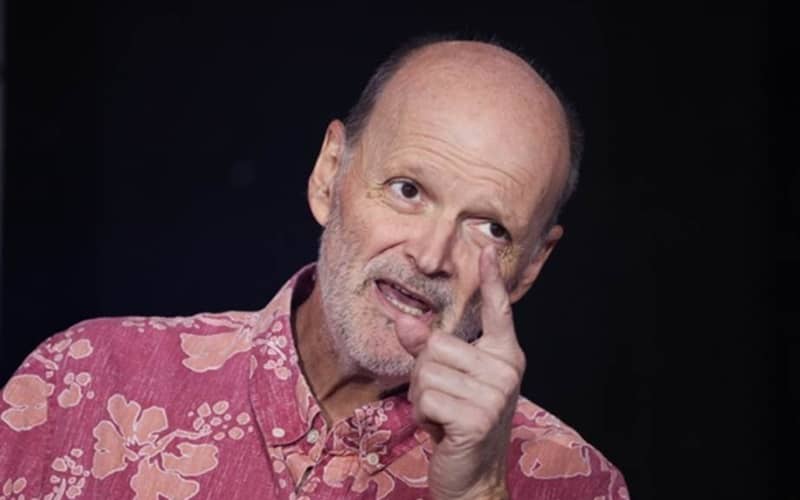
Dr Luc Julia, the French-American computer scientist widely recognised as a co-creator of Siri, will deliver the opening keynote, AI Without the Hype: What Artificial Intelligence Can and Cannot Do.
Julia has spent much of his career working at the sharp end of human-machine interaction. He led Siri development teams at Apple, later served as a senior vice-president and chief technology officer at Samsung, and subsequently became Chief Scientific Officer at Renault Group. Renault’s own corporate biography identifies him as a co-creator of Siri, a useful detail in an era when technology origin stories can sometimes acquire considerably more polish with every retelling.
His message in Paris is expected to be refreshingly unsentimental.
“If I had to say something nowadays, that would be ‘Breathe, AI isn’t going to kill us’, but also ‘Be afraid of ourselves, not of AIs’,” Julia said.
That may be the most reassuringly human sentence heard at an AI conference all year.
Travel becomes the laboratory
The Forum’s central proposition is that artificial intelligence is not developing as one borderless global system.
Instead, the United States, Europe and the United Kingdom, China, the Middle East and India are pursuing increasingly distinctive technological, regulatory and commercial pathways. Each is being shaped by different attitudes towards innovation, sovereignty, privacy, data, infrastructure, trust and scale.
For travel, that matters enormously.
Few industries stitch together as many unrelated systems in a single customer journey. One international trip can involve an airline, two airports, immigration authorities, rail operators, hotel systems, payment networks, digital identity platforms, online travel agencies and destination services sometimes before the traveller has even located the baggage carousel.
Add autonomous AI agents capable of searching, comparing, booking, paying, rebooking and responding to disruption, and the old boundaries of the travel transaction begin to look distinctly flimsy.
The practical question is no longer simply whether AI can book a flight.
It is whether an AI agent operating under one regulatory, commercial and data framework can communicate reliably with another system operating under completely different assumptions.
That takes the conversation from clever technology to something the boardroom understands very well: operational risk.
“AI is not arriving as one global system with one set of rules,” said Laurie Myers, CEO and Global Strategist of the Global Resilience Network. “Travel cannot prepare for only one future. Resilience will depend on operating across competing ecosystems while protecting trust and human agency. Paris puts those futures side by side and asks what leaders must do now.”
Five pathways, one passenger
A signature Forum session, You’ve Only Seen One Future: Five AI Pathways Meet in Paris, will compare developments across the United States, Europe and the UK, China, the Middle East and India.
The harder work comes afterwards.
Sessions are expected to examine identity, payments, mobility, interoperability, data governance, ethics and human agency all subjects that sound rather academic until a passenger is stranded at 2 am while two automated systems politely refuse to recognise each other.
That is why travel may be one of the best real-world tests of whether AI interoperability can move from conference vocabulary to operating reality.
Confirmed participants include European Travel Commission CEO Eduardo Santander, ETOA CEO Tom Jenkins, Atout France chief executive Adam Oubuih, and representatives from Alibaba and Fliggy, BCG, HBX Group, Caisse des Dépôts, Alibaba Cloud and Sabre, with further speakers and program partners expected.
One correction is worth making to some early publicity material: Atout France’s chief executive is Adam Oubuih, not “Adam Oubieh”. Atout France’s own corporate records confirm the spelling.
Europe’s AI adoption accelerates
The Forum’s timing matters because AI adoption is no longer theoretical.
Eurostat reported that 20.0 per cent of EU enterprises with at least 10 employees used AI technologies in 2025, up sharply from 13.5 per cent in 2024.
The spread, however, remains striking.
Denmark led the European Union at 42.0 per cent in 2025, while Romania recorded just 5.2 per cent. Finland stood at 37.8 per cent and Sweden at 35.0 per cent, illustrating just how unevenly the technology is spreading across European business.
That divergence is precisely the sort of challenge GRN wants travel leaders to confront.
An industry cannot assume suppliers, regulators, destinations or customers are adopting AI at the same speed or even under the same rules.
The question for travel businesses therefore becomes less about owning the cleverest model and more about remaining useful, trusted and interoperable across many models.
A commercial issue also lurks behind all this.
If autonomous agents increasingly choose flights, hotels, tours and destinations for consumers, traditional travel brands may find themselves selling not only to people but to machines interpreting price, loyalty, availability, sustainability, reputation and personal preference on the traveller’s behalf.
For airlines, hotel groups, cruise companies, travel advisors and destination marketers, that could become one of the defining distribution battles of the next decade.
A traveller may still ask, “Where should I go?”
The difference is that the first answer may increasingly come from software rather than a brochure rack, search engine or smiling consultant behind a desk.
A human future still matters
The Forum begins on 28 October with an academic and intergenerational program examining AI, traveller behaviour, tourism in 2030 and the future workforce, including findings from a Generation Z survey.
The executive program follows on 29 October at Hôtel de l’Industrie.
GRN says the Paris gathering forms part of a wider international AI program that has already included work examining Chinese AI systems, a visit to Alibaba’s headquarters in Hangzhou in May 2026 and executive sessions in Dubai. The program is scheduled to continue at World Travel Market London from 3 to 5 November, before returning to China in May 2027.
For travel executives, however, Paris’s value will not be measured by how many futuristic predictions survive the coffee break.
It will be measured by whether the industry can agree on the less glamorous plumbing: compatible data, trustworthy identity, payment interoperability, clear accountability and meaningful human oversight.
That last point may prove the most important.
Travel has always depended on technology, but it has never been merely a technology business. It is an industry built around movement, judgement, reassurance and trust, particularly when plans go wrong.
AI may soon decide which flight a traveller should book, which hotel best fits a preference profile or how an itinerary should be repaired after disruption.
But when five technological futures collide, somebody still has to decide whose rules apply.
Paris, appropriately enough, is about to host that argument.
By: Soo James – © 2026.
Read Time: 6 minutes.
Author Bio:
 There’s nothing rehearsed about Soo James, and that’s precisely the point. Malaysian by heritage, Sydney by schooling, she arrived at UNSW to study Arts, then took a left turn into IT, not out of ambition, but curiosity. Somewhere among systems and schedules, she worked out what really held her attention: people, language, and the quiet spaces between them.
Writing followed naturally. Travel and lifestyle gave her room to observe, to listen, to notice the details others rush past. Soo writes the way good travellers move, watching the room before admiring the view, catching the gesture before chasing the headline.
At EGT Media, her stories don’t shout or sell. They linger. They slow you down, open a door, and gently suggest there’s more to see if you’re willing to look.











