

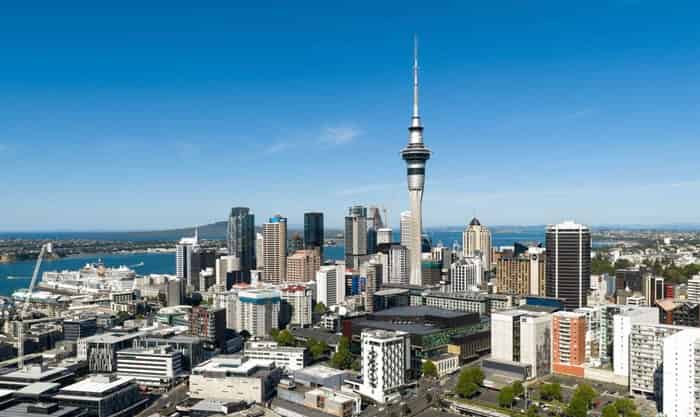
New Zealand tourism has found its stride again. This time, the recovery is carrying considerably more than a suitcase full of good intentions.
Fresh figures from Stats NZ show 3.67 million overseas visitor arrivals in the year to June 2026, up 9 per cent from 3.38 million a year earlier. Tourism New Zealand rounds that milestone to 3.7 million and says holiday arrivals rose 15.3 per cent, while conference arrivals climbed 16.7 per cent.
New Zealand spent several difficult years rebuilding air connectivity, its tourism workforce, traveller confidence and industry cash flow. These latest figures are more than a tidy set of numbers. They show a country moving decisively from recovery into growth.
And for the Australian travel trade, that matters.
Australia remains New Zealand’s largest and most established visitor market. Tourism New Zealand says Australian holiday arrivals rose 16 per cent in the year to June. Australian travellers also spent NZ$4.2 billion in New Zealand in the year to March 2026.
Australians, it seems, are still crossing the Tasman with admirable enthusiasm. More importantly for tourism operators, they are remembering to bring their wallets.
Visitor spending is doing the heavy lifting
The bigger tourism story is not simply how many people arrive. It is how much economic value those visitors leave behind.
International visitors spent NZ$13.7 billion in New Zealand in the year to March 2026, according to the International Visitor Survey. That was NZ$1.5 billion more than the previous year. Holiday visitors accounted for NZ$9.1 billion of the total.
Australia led total spending at NZ$4.2 billion, followed by the United States at NZ$2 billion and China at NZ$1.5 billion. China is also delivering one of the sharper recoveries in holiday demand, with Tourism New Zealand reporting Chinese holiday arrivals up 40 per cent in the year to June.
That combination is precisely what New Zealand needs.
Arrivals are rising. Spending is rising. Long-haul demand is strengthening. And international tourism is once again pushing money through hotels, attractions, transport operators, restaurants and regional businesses.
This explains why New Zealand deserves renewed attention from the travel trade.
New Zealand tourism is no longer a “recovery someday” story. It is a measurable growth story spanning airlines, airports, hotels, touring, cruising, events, regional tourism and travel distribution.
The 2019 benchmark is suddenly within reach
The New Zealand Government’s Tourism Growth Roadmap set a target of returning international visitor arrivals to at least the 2019 level of 3.89 million by 2026.
At 3.67 million arrivals for the year to June, the rolling annual total now sits about 220,000 below that benchmark.
That remains a meaningful gap, but it is hardly a canyon.
Tourism New Zealand is already looking beyond the recovery marker. Its current ambition is to build towards 3.9 million international arrivals and NZ$14.4 billion in international visitor spending by June 2027.
In other words, returning to the old benchmark is not the finish line.
The Government’s longer-term ambition is considerably larger. Its Tourism Growth Roadmap aims to double the value of 2023 tourism exports from NZ$9.9 billion to NZ$19.8 billion by 2034.
The strategy therefore cannot simply be “more tourists, please”.
It is increasingly about value, capacity, investment, workforce, connectivity, visitor experience and regional benefit.
That distinction matters.
Tourism volume makes headlines. Tourism value pays wages.
New Zealand’s Tourism Policy Statement, released in June 2026, sets eight key objectives for the tourism system. It aims to encourage growth that benefits businesses, workers and communities, while giving central government, local government and industry a shared direction.
That is sensible policy.
There is little commercial genius in selling paradise so successfully that everybody queues for it at once.
Aviation capacity joins the recovery
Air access is strengthening at precisely the right time.
Auckland remains New Zealand’s principal international gateway. Auckland Airport says 2.4 million overseas visitors came through the airport in the year to March 2026, up 5 per cent year on year.
Australia, the United States and China together accounted for 65 per cent of international visitor arrivals through Auckland.
Across the Tasman, airline capacity has also grown.
Auckland Airport reported a 4 per cent increase in seat capacity between Australia and Auckland in the year to March 2026. The increase was supported by 11 additional Qantas and Jetstar flights each week and helped underpin a 9 per cent rise in Australian holidaymakers.
The South Island story is arguably even more striking.
Christchurch Airport announced on 19 August 2026 that more than 1.27 million international seats will be available during its November 2026 to March 2027 summer season.
That represents a whopping 21 per cent increase on the previous summer.
Long-haul capacity will rise 54 per cent, adding around 130,000 seats. Trans-Tasman and Pacific capacity is also increasing by 11 per cent.
The programme brings new routes, extra frequencies and bigger aircraft from an impressive airline line-up.
Singapore Airlines is increasing summer capacity. Cathay Pacific will operate up to five Hong Kong services each week during the peak. China Southern will operate as many as ten Guangzhou services weekly during part of the summer, while United Airlines will deploy the larger Boeing 787-9 on its San Francisco service.
Air New Zealand is preparing new Christchurch non-stop routes to Singapore, Tokyo Narita and Perth.
Jetstar is adding new Christchurch services to Perth and Sydney. Qantas will operate its third daily Sydney service for a much longer summer period, while Fiji Airways is also increasing Nadi frequencies.
For South Island tourism operators, those are not merely airport statistics.
More international seats can spread visitors beyond Auckland, reduce reliance on domestic connections and put Canterbury, Otago, Southland and the West Coast within easier reach of international travellers.
It is also good news for Australian travel agents selling self-drive holidays, touring, skiing, food and wine, adventure and premium nature itineraries.
The South Island has never been short of scenery.
What it sometimes needs is more seats pointing towards it.
Visitor satisfaction remains a powerful advantage
New Zealand’s greatest tourism asset is still the experience itself.
Tourism New Zealand says 96 per cent of international visitors reported that New Zealand met or exceeded their expectations. Another 94 per cent felt welcomed, while 93 per cent felt safe during their stay.
Those numbers carry real commercial value.
Destination marketing cannot survive on magnificent scenery alone. Travellers may book the mountains, lakes, wineries and lodges, but they remember whether the holiday actually worked.
Welcome, safety, service and confidence matter.
New Zealand continues to perform strongly on all four.
The country also provides remarkable variety for a relatively compact destination.
Auckland brings harbour, dining and urban experiences. Rotorua combines geothermal attractions with Māori culture and tourism. Wellington adds food, arts and politics, while Marlborough brings world-famous wine.
Christchurch continues to evolve as a visitor destination in its own right. Queenstown owns the adventure brief with enviable confidence, while Fiordland supplies the sort of scenery that makes even a smartphone camera look vaguely talented.
Between them sit regional experiences that can give travel sellers far more than the standard first-time itinerary.
That creates an opportunity to sell repeat travel at higher value.
Growth will need careful handling
However, success comes with a warning label.
MBIE’s inaugural Tourism Sentiment Survey found that 91 per cent of New Zealanders support tourism and recognise its benefits.
But attitudes towards visitor volumes vary by region. Around a quarter of respondents in Tasman and Otago said visitor numbers were too high. MBIE also notes that environmental and community pressures remain concerns in parts of the country.
The finding should not be interpreted as a rejection of tourism.
It is better regarded as a planning signal.
If New Zealand is serious about doubling tourism export value, investment needs to keep pace with demand.
Roads, visitor facilities, conservation assets, workforce supply, housing, aviation capacity and local infrastructure all sit behind the glossy brochure.
The Tourism Growth Roadmap recognises precisely that challenge.
Its medium-term stages identify potential supply priorities including workforce development, mixed-use tourism infrastructure, regional capability, tourism funding, system coordination, visitor experience and aviation and cruise connectivity.
The Government has also allocated NZ$4.008 million towards Milford Road corridor improvements.
It is a useful reminder that a world-class attraction still needs world-class access.
Why New Zealand tourism matters now
For travel sellers and suppliers, the commercial opportunity is substantial.
New Zealand now offers a cluster of growth stories rather than one isolated recovery headline.
New Zealand tourism growth is touching almost every part of the trade. Visitor arrivals, aviation, airport capacity, hotels, touring, events, cruising and regional destinations are all part of the same broader story.
Strong demand from Australia makes it even more relevant for this market.
That breadth creates fresh reasons to sell established favourites, build new regional itineraries and keep New Zealand travel in front of clients throughout the year.
Most importantly, the underlying indicators have momentum.
Visitor arrivals are up.
Visitor spending is up.
Australian demand is strong.
China is recovering.
International air capacity is expanding.
Government growth targets are ambitious.
And visitor satisfaction remains extraordinarily high.
New Zealand is not merely waiting for tourism to return.
It is building the next version.
For the Australian travel trade, that should be enough to command attention.
Our neighbour across the Tasman is becoming one of the Asia-Pacific’s most compelling tourism growth stories: familiar enough to sell with confidence, yet fresh enough to sell all over again.
By: Michelle Warner – © 2026.
Read Time: 8 minutes.
Author Bio:
 Michelle Warner has always carried stories the way others carry passports lightly, faithfully, and with purpose. She learned her craft in newsrooms, shaping sentences with care, before swapping deadlines for departures as a flight attendant with some of the world’s great airlines. Years aloft sharpened her eye for character and deepened her fondness for the small, dignified rituals of travel, the quiet kindness of strangers, the poetry of arrival, the patience learned between time zones.
Now grounded by choice, Michelle has come home to writing with the same calm authority she once brought to turbulent cabins. Her prose blends an editor’s discipline with a traveller’s wonder, tinged with humour and reverence for the golden age of travel. Each piece feels like a handwritten boarding pass, gracious, observant, and unmistakably alive.











