

Tourism has earned a place in New Zealand’s senior secondary curriculum, putting one of the country’s biggest employers firmly on the classroom timetable and, perhaps more importantly, on the career radar of young Kiwis.
Tourism Industry Aotearoa (TIA) has welcomed the Government’s decision to make Tourism one of nine new industry-led subjects approved for Years 12 and 13 in the refreshed New Zealand Curriculum.
The move gives tourism something the industry has long argued for: recognition not simply as a route into frontline work, but as a broad professional field spanning management, technology, sustainability, entrepreneurship and destination development.
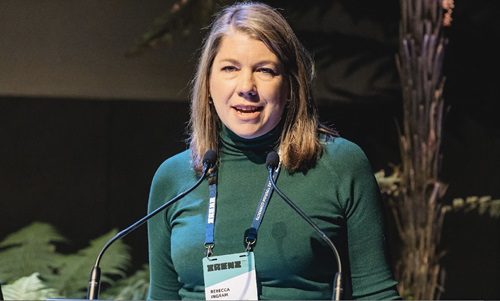
TIA Chief Executive Rebecca Ingram said what students encounter at school can strongly shape the choices they make afterwards.
“What our young people are exposed to at school has a significant influence over their aspirations, career goals and the choices they make for further study or employment post school,” said Ingram.
“From entrepreneurship to senior management, visitor experience design to destination management – it’s all possible in tourism and we can now show the full spectrum of tourism roles in the curriculum.”
That breadth matters.
The modern visitor economy is no longer merely a tale of tour buses, hotel desks and glossy brochures. It increasingly depends on data, digital systems, strategic planning, cultural understanding, sustainability, and good old-fashioned problem-solving, preferably before the guest notices there was a problem.
Ingram said the skills required by the industry are changing quickly.
“While we cannot predict the future, the trendline is clear: tourism will increasingly need skilled, personable and technology-savvy people to perform the new roles.
“We’re pleased to see that tourism will exist as both a vocational and a professional pathway at this level, helping to ensure a balanced tourism workforce into the future,” said Ingram.
The New Zealand Ministry of Education confirmed on 6 August 2026 that Tourism is among nine industry-led subjects approved for development.
The list also includes Hospitality Food and Beverage, Engineering Technology, Applied Intelligent Systems and Construction and Built Environment.
For tourism employers, the decision carries some considerable economic weight.
The latest Stats NZ Tourism Satellite Account recorded 327,888 people employed directly and indirectly in tourism industries in the year ended March 2025. That represented 11 per cent of all people employed in New Zealand.
In plain English, that’s roughly one worker in nine. Suddenly, teaching young people about the industry looks rather less like an elective indulgence and much more like sensible workforce planning.
TIA has pushed for senior secondary tourism studies to better reflect the sector’s future needs, including through its 2025 submission on proposed education reforms.
It will now help develop the Tourism subject alongside the Services Industry Skills Boards and the Tourism Teachers Association over the next two years, bringing industry experience into what students actually learn.
“Industry has a formal role in designing the subjects, ensuring learning reflects real-world practice and workforce needs. This will be exciting work and we can’t wait to get started.
“We are also delighted to see Outdoor Education confirmed as a Ministry-led subject, for Years 12–13. Both subjects are expected to be piloted in 2028 before being rolled out in 2029.”
For an industry that sells journeys for a living, the destination here is unusually clear: give young people a better view of tourism before they choose where their own careers might take them.
And this time, happily, the itinerary begins at school.
By: Sandra Jones – © 2026.
Read Time: 3 minutes.
Author Bio:
 Sandra has spent a working lifetime quietly rescuing journeys, one itinerary, one anxious caller, one impossible connection at a time. Years in Australia’s finest travel agencies taught her the art of calm, how to find a flight in a fog of cancellations, how to soothe a traveller when luggage wanders, how to turn nine frantic days in Europe into something resembling sense. Qualified, seasoned, endlessly patient, she learned that good travel advice is part logistics, part listening.
But the storyteller in her was always waiting its turn. Writing offered a new map, a way to turn experience into reflection, detail into delight. At Global Travel Media, Sandra now writes the truths only insiders know: the mishaps, the laughter, the grace found between gates and goodbyes. She reminds us that travel, for all its fuss, is still one of life’s better ideas.











