

Thailand has secured one of the most coveted prizes on the global technology calendar, winning the right to host the 2030 IEEE International Conference on Robotics and Automation in Bangkok.
The victory will bring IEEE ICRA 2030 to Thailand for the first time. It places the country at the centre of an international conversation that increasingly shapes factories, hospitals, transport systems and daily life.
The conference will run from 13 to 17 June 2030 at Bangkok’s Queen Sirikit National Convention Centre. Around 10,000 delegates are expected, including approximately 8,000 international visitors.
Researchers, engineers, technology companies, investors and policymakers will gather under one roof, although, given the subject matter, one suspects a few exceptionally clever machines may also find their way through registration.
A high-value win for Thailand
The successful bid was led by the Thailand Convention and Exhibition Bureau, the Faculty of Engineering at Mahidol University, the IEEE Robotics and Automation Society Thailand Chapter and the IEEE Thailand Section.
The Thailand Medical Robotics and AI Association will join the academic and professional bodies as a co-host.
The IEEE Robotics and Automation Society describes ICRA as its flagship conference and the premier international forum for leading robotics researchers. Established in 1984 and held annually, it has become a major stage for technical research, scientific debate and industry engagement.
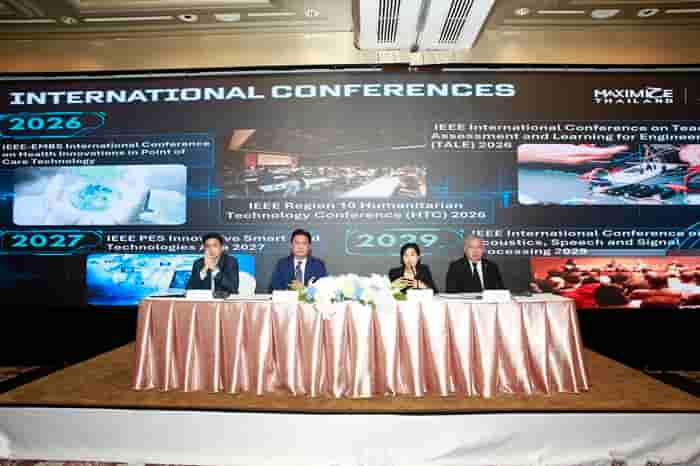
Leading up to IEEE ICRA 2030 are IEEE conferences hosted in Thailand during 2026-2029
For Thailand, however, this is more than a handsome conference win or another busy week for Bangkok’s hotel lobbies. It is a strategic statement.
Jittanun Techasarin, Director of the Conventions Department at TCEB, said the event fits Thailand’s wider plan to use international business events as platforms for economic growth, investment, innovation and collaboration in high-value industries.
“Between late 2026 and 2029, prior to IEEE ICRA 2030, the IEEE Thailand Section will host five international conferences related to advanced technologies, all supported by TCEB. Winning the bid for IEEE ICRA 2030 reinforces our strategy of attracting world-class events in high-value sectors such as robotics, automation, and advanced technologies.”
That lead-in matters. Rather than treating ICRA 2030 as a one-off trophy, Thailand is building a runway of specialist conferences. These events can deepen local expertise, build international networks and strengthen investor confidence before the main gathering arrives.
Where research meets revenue
Associate Professor Dr Jackrit Suthakorn, Founder and Executive Director of Mahidol University’s Centre for Biomedical and Robotics Technology, said ICRA brings academia, government and industry together on one collaborative platform.
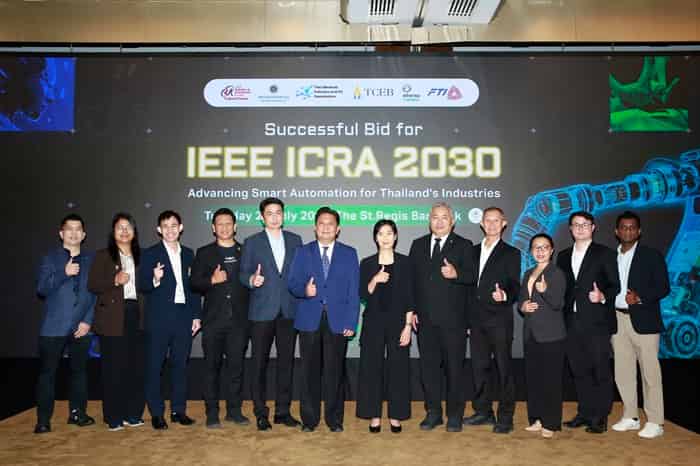
Team Thailand led by TCEB and Mahidol University Announcing Bid Success for World’s Premier Robotics Conference_IEEE ICRA 2030
“IEEE ICRA provides businesses with direct access to leading researchers, technology developers, and end users from around the world. It attracts global leaders in robotics, AI, automation, sensors, semiconductors, and software, while offering startups an international platform to showcase breakthrough innovations.”
That access could prove particularly valuable for Thai manufacturers and technology ventures.
Thailand already has substantial industrial capabilities across automotive production, electronics, medical technology and food processing. The conference offers an opportunity to connect those established sectors with new work in artificial intelligence, autonomous systems, smart factories, sensors and advanced software.
It also gives local start-ups something money cannot always buy: a global audience already interested in what comes next.
Research demonstrations, commercial partnerships, technology transfers, business matching and investment discussions are expected to sit alongside the technical conference program.
Mahidol University said Thailand’s bid received support from leading universities, research bodies and prominent international robotics scholars. The university believes the victory can help place Thailand at the heart of the global robotics and AI ecosystem.
Informa Markets – Thailand has welcomed the result and signalled that it is ready to use its international exhibition platforms and partner network to support knowledge exchange and new commercial opportunities.
The Federation of Thai Industries has also backed the bid. Vice Chairman Manapol Poosomboon said the conference supports the Federation’s “Intelligent Industry” strategy.
That program seeks wider adoption of digital technology, AI and robotics. It also aims to create a workforce equipped for more advanced manufacturing.
A billion-baht economic dividend
The numbers are substantial.
IEEE ICRA 2030 is forecast to generate more than THB1.06 billion in direct economic activity and approximately THB590.6 million in added value for the Thai economy.
Current projections also point to roughly 745 jobs and THB36.4 million in government tax revenue.
Those estimates cover the direct business generated by a major international gathering, but the longer-term prize may prove greater.
Conferences of this calibre can help a destination win research partnerships, attract investment and expose local companies to new suppliers and technologies. They can also create professional relationships that continue long after the exhibition stands have been packed away.
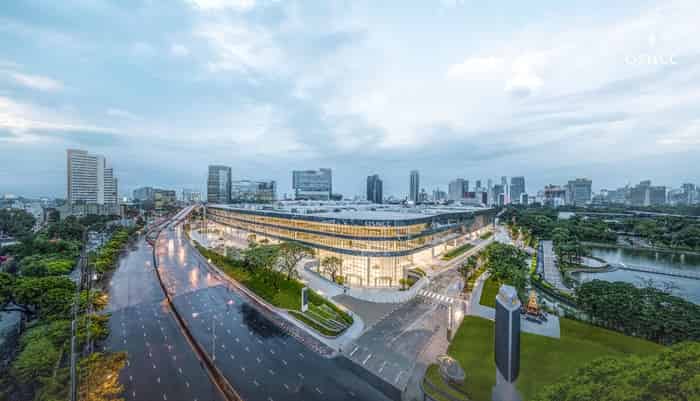
Bangkok is well suited to play host. The Queen Sirikit National Convention Centre provides a major modern venue in the heart of the capital. The city also offers the air links, accommodation base, hospitality experience and sheer energy required for an event of this scale.
There is also a useful symbolic fit.
Bangkok is a city where tradition and rapid modernisation have long shared the same crowded pavement. Hosting the world’s leading robotics minds adds another layer to that story: ancient temples, electric trains, street-side woks and autonomous machines, all within a few MRT stops.
More than a conference badge
Thailand’s win reflects years of collaboration between government agencies, universities, laboratories, industry groups and international technical networks.
Mahidol University said the successful campaign included support from institutions such as Chulalongkorn University, the Asian Institute of Technology, Chiang Mai University, Thammasat University and the National Science and Technology Development Agency.
That breadth of support strengthens the event’s credibility. It also reinforces Thailand’s ambition to become a regional centre for robotics, automation and artificial intelligence.
The real test, of course, will come after the applause.
To create a lasting legacy, organisers must ensure that Thai researchers, students, manufacturers and start-ups gain meaningful access to the conference’s people and ideas. Investment announcements make headlines; skills, partnerships and commercial applications build industries.
Still, winning ICRA 2030 is a formidable opening move.
It places Bangkok firmly on the global robotics map, delivers a billion-baht business-events prize and gives Thailand four years to turn international attention into national advantage.
For a country determined to build an innovation-led economy, the robots are not merely coming. Thailand has invited them in, booked the convention centre and, rather sensibly, put the kettle on.
By: Yves Thomas – © 2026.
Read Time: 5 minutes.
Author Bio:
 There’s a quiet pull about Yves Thomas, the kind you only notice after a moment. It comes from having lived travel from both sides of the reception desk. A graduate of Bangkok University International, she stepped straight into Thailand’s tourism industry, learning early how much care goes into making someone else’s holiday feel effortless.
She worked with some of the country’s best destination management teams, polishing the details most travellers never see but always remember. Eventually, the road began calling louder than meetings and schedules. Yves packed a bag and went looking again, trading conference calls for compass points.
Somewhere between Chiang Mai and Copenhagen, she started writing it down. Those reflections became a blog, warm and observant.
Now based in Hua Hin and writing for Global Travel Media, Yves shares travel not as a publicist, but as a traveller attentive, thoughtful, and deeply human.











