

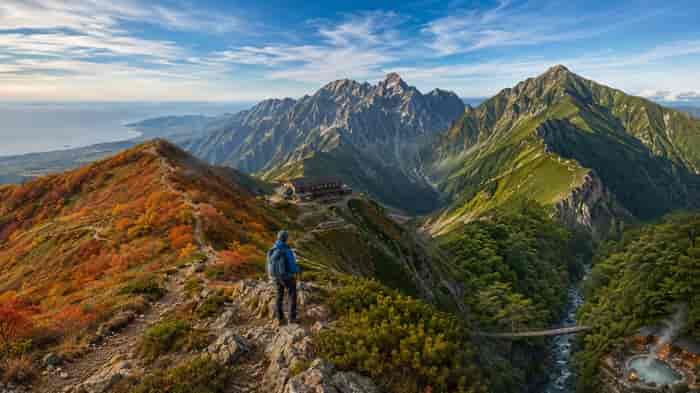
The cover image says it all: dawn light on a rough peak, with a sea of cloud below. Japan’s mountain story is ready for a wider audience.
Japan has no shortage of mountains. The real surprise is how few overseas guests walk beyond Mt Fuji.
A new Japan National Tourism Organisation feature points to three very different climbs. They are Mt Chokai on the Sea of Japan, the Northern Alps near Matsumoto, and Mt Tsurugi above Shikoku’s Iya Valley. Each trip mixes wild land with old faith, good food and hot springs.
That mix matters for the travel trade. Hiking can draw guests away from the main cities. It can also lift stays in small towns and rural areas. More than 70 per cent of Japan is covered by mountains, so there is ample room to spread the load. There is also a fair chance of finding peace, fresh air and no neon sign in sight.
Japan hiking with more than a summit
Japan’s best walks are not just about reaching the top.
Many trails pass old shrines, stone markers and paths once used by pilgrims. Mountain huts form a key part of the trip. Some serve hot meals, cake, coffee, wine and beer. At day’s end, a local onsen can ease sore legs.
Autumn is a strong time to go. September and October often bring cool air and bold red, gold and orange leaves. Summer has its own appeal, with alpine flowers and long days. Each area has a different mood.
For agents and tour firms, this is good news. A climb can be sold with rail, guides, huts, inns, food and spa stays. It is not just a walk. It is a full trip.
Mt Chokai: sea views from a sacred peak
Mt Chokai rises between Akita and Yamagata. The active volcano stands at 2,236 metres and faces the Sea of Japan.
That setting gives hikers a rare view. They can climb high alpine ground and still look out to the coast. The peak is known as “the Fuji of Dewa” due to its fine, even shape.
Mt Chokai is one of Japan’s 100 Famous Mountains. Yet it still sits well below the radar for many overseas guests. That may be its best sales point.
The main Hokodate Route gains about 1,140 metres. A full return walk takes about 11 to 12 hours with breaks. It is a long day, so sound fitness and an early start are vital.
Chokai Lake is a good turn-back point for families and less experienced hikers. Those who go on to the top gain wide views across the Sea of Japan. Guests keen on autumn colour can also walk to the Senjogahara plateau. Its gold grass sweeps across the highland.
Tsuruma Pond is another fine stop in late October. Red and gold trees reflect in calm water near the road to the Yunodai trailhead. It is the sort of scene that makes a phone camera feel far more gifted than it is.
The mountain also has deep roots in worship. Many trails follow old paths made by mountain monks and pilgrims. In summer, rare flowers add more colour. One is the small white Chokai-fusuma, found only here and on nearby Mt Gassan.
Mt Chokai offers a neat mix of coast, peak, faith and flowers. It is Japan in one long climb.
Matsumoto: castle town by the Northern Alps
Matsumoto gives the alpine trip a grand front door.
The city in Nagano Prefecture is home to a well-kept 16th-century castle. It also sits at the base of the Northern Alps. Guests can tour old streets, eat soba and head for 3,000-metre peaks in the same stay.
The area has a broad hut network. That makes it fit for both day walks and longer ridge trips. Two peaks stand out: Mt Norikura and Mt Tsubakuro.
Mt Norikura: high views with less strain
Mt Norikura is a group of 23 peaks, seven lakes and eight plateaus. Its top, Mt Kengamine, rises above 3,000 metres.
It sounds hard. Yet the first part is done by bus.
Tatamidaira Bus Terminal sits at about 2,700 metres. From there, the summit is about 90 minutes away. This makes Mt Norikura one of Japan’s more accessible high peaks for new alpine hikers.
The views are large. The effort is real, but not grim. Even so, no one should treat it as a park stroll. Thin air, cold wind and fast shifts in weather still apply. The mountain does not care how easy the bus ride was.
After the walk, guests can return to Matsumoto. Asama Onsen is about 15 minutes away by car. The spa town has more than 1,300 years of history. It once served the lords of Matsumoto Castle. Today, it offers a warm bath and a sound cure for proud but tired calves.
Mt Tsubakuro: granite, huts and sunrise
Mt Tsubakuro rises to 2,763 metres. It is often called the “Queen of the Northern Alps”.
The peak is known for white granite ridges, wildflowers and broad views. The climb takes about five hours and is steep in parts. The path is well kept, with seats and rest stops on the way.
Kassen-goya hut is famous for fresh watermelon in summer. That is a fine trade after a hard climb. Near the top, Enzanso hut serves far more than plain fuel. Meals can include katsu curry, borscht and a Japanese breakfast. Hikers may also find coffee, cake, wine and draught beer.
The hut sits near the summit. It is a base for sunset, sleep and sunrise. It also gives guests a taste of Japan’s hut culture, where simple stays can still feel warm and social.
Mt Tsubakuro is the start of the Omote Ginza route towards Kamikochi. This is one of Japan’s best-known long ridge walks. Lucky hikers may also see the rare Japanese rock ptarmigan, or raicho.
The main season runs from early July to early October. Flowers bloom in summer. Autumn colour arrives before the first snow.
A walk that changed a life
Guide Paul Deckret knows how strong the Northern Alps can feel.
A six-day solo walk from Tateyama to Kamikochi helped lead him to make Japan his home. He later climbed Japan’s 100 tallest mountains.
“By the end of it, something had changed in me,” Deckret said. “I realized I had discovered an entirely new way of experiencing life.”
For first-time guests, he points to the walk from Kamikochi to Mt Chogatake. He says it brings forests, clear water, local walkers and mountain culture into one trip.
His point is clear. A good guide does more than lead the way. A guide can explain the land, its past, its food and its local life. That adds worth for the guest and value for the region.
Mt Tsurugi and Iya Valley: a softer climb
Mt Tsurugi gives Shikoku its own great mountain tale.
The 1,955-metre peak is the second highest in western Japan. Yet its broad ridge and chairlift make it a sound choice for beginners.
The lift rises to about 1,750 metres. From there, the walk to the top takes about an hour. The summit opens onto a wide grass ridge with views across the Shikoku ranges.
Those keen for more can walk on to Jirogyu. The next peak stands at 1,930 metres and is about an hour away along the ridge.
The route also passes Otsurugi Shrine. It honours a huge sacred rock about 50 metres high. At its base flows Tsurugisan Oshikimizu spring water. It is listed among Japan’s “Top 100 Famous Waters”.
The climb works well with a stay in Iya Valley. The area has steep gorges, green rivers and small hill towns. Its best-known sight is Iya-no-Kazurabashi, an old bridge made from mountain vines.
Then comes Iya Onsen. At Hotel Iyaonsen, a cable car takes guests down the gorge to open-air baths by the river. It may be the only spa transfer that feels like a small quest of its own.
For planners, this is a strong two-part trip. The mountain suits newer hikers. The valley adds culture, a rare bridge and a hidden hot spring.
Easy access is not the same as no risk
Japan’s trains, buses, lifts and good paths can give a false sense of ease.
These are still real mountains. Above 2,000 metres, temperatures can fall below 10°C even in summer. Rain and wind can arrive fast.
Hikers need warm layers, a fully waterproof rain jacket and trousers, good boots, a head torch, food, water and cash. Some huts and remote sites do not take cards.
In autumn, days are shorter. Snow and ice may come early. Guests should pick a route that suits their skill and fitness. They should check the weather, trail state, bear notices and any volcano alert before they leave.
A climb plan may be needed. Hut beds may need to be booked. Offline maps are wise because mobile reception can fade.
The sound rule is simple. Start early. Watch the sky. Turn back when time, weather or health says so. A peak will still be there next year.
Japan’s next great trip may be uphill
These three regions show a side of Japan that many guests still miss.
Mt Chokai brings sea views, autumn colour and old faith. Matsumoto links a castle town with high peaks and warm baths. Mt Tsurugi joins an easy ridge walk with the deep charm of Iya Valley.
They also suit the way many people now wish to travel. The trips are active, local and rich in detail. They support small towns and longer stays. They can work for new hikers, keen trekkers, food lovers, photo fans and spa guests.
Japan’s classic city route remains one of the world’s great trips. Yet there is another Japan above the rail line.
It is quieter. It is older. It asks more of the legs. Then, with fine manners, it offers an onsen.
The JNTO Hiking and Trekking Guide covers route selection, gear, climbing registration, guides and care for the mountain environment.
Official route information is available for Mt Norikura, Mt Tsubakuro and Mt Tsurugi.
Hikers entering volcanic areas should review the Japan Meteorological Agency’s volcanic information for mountaineers before departure.
By: Soo James – © 2026.
Read Time: 8 minutes.
Author Bio:
 There’s nothing rehearsed about Soo James, and that’s precisely the point. Malaysian by heritage, Sydney by schooling, she arrived at UNSW to study Arts, then took a left turn into IT, not out of ambition, but curiosity. Somewhere among systems and schedules, she worked out what really held her attention: people, language, and the quiet spaces between them.
Writing followed naturally. Travel and lifestyle gave her room to observe, to listen, to notice the details others rush past. Soo writes the way good travellers move, watching the room before admiring the view, catching the gesture before chasing the headline.
At Global Travel Media, her stories don’t shout or sell. They linger. They slow you down, open a door, and gently suggest there’s more to see if you’re willing to look.











