

For an industry built on moving people, tourism transport appears to be travelling with the handbrake firmly on when it comes to gender equality.
A landmark new report released by UN Tourism and the International Transport Workers’ Federation (ITF) has revealed that women remain dramatically underrepresented across aviation, land and maritime passenger transport, particularly in technical, operational and executive roles.
The newly released Global Report on Women in Tourism Transport provides the world’s first comprehensive, sex-disaggregated snapshot of women’s participation across air, land and water passenger transport. And while tourism proudly markets itself as an industry of opportunity, the figures suggest many women are still waiting at the departure gate.
The findings paint a stark picture.
Women account for 36 per cent of the global aviation workforce, yet only six per cent occupy pilot positions. The flight deck, it seems, is still largely a boys’ club, with men continuing to dominate technical, operational and leadership positions.
The situation on the ground is even more striking. Despite land passenger transport employing a staggering 96 per cent of all tourism transport workers, women represent just three per cent of that workforce.
Meanwhile, in water passenger transport, women make up only 12 per cent of employees, with managerial and technical roles remaining overwhelmingly male-dominated.
If the statistics raise eyebrows, the workplace realities are even more concerning.
According to the report, inadequate sanitation facilities, safety concerns, inflexible working arrangements and limited legal protections continue to discourage women from entering or remaining in the sector. Alarmingly, one in five countries still lacks legal protections against workplace harassment.
In response, UN Tourism and ITF have moved beyond simply publishing another worthy report destined to gather dust on an office shelf.
The organisations have signed a three-year action plan designed to turn research into measurable change. The partnership will work alongside governments, unions, employers and industry stakeholders to strengthen gender-responsive policies, improve workplace conditions, expand leadership pathways and establish better reporting mechanisms.
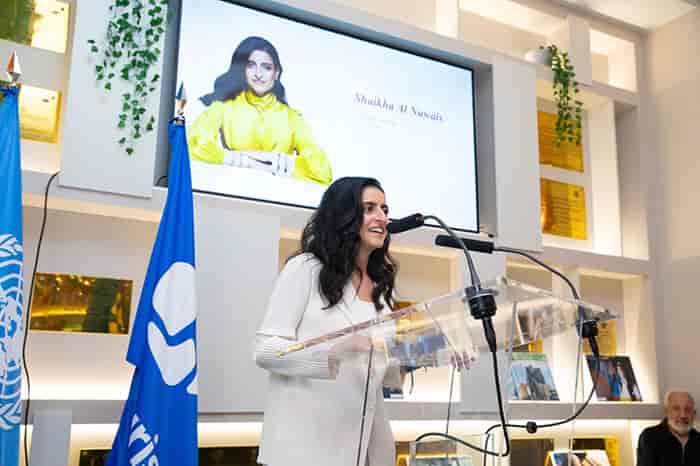
UN Tourism Secretary-General Shaikha Al Nuwais said the industry could no longer rely on good intentions alone.
“Tourism is meant to connect people and open doors. Yet in every part of tourism transport, too many doors remain closed to women. This report gives us the data to act with precision, not good intentions alone. Our responsibility now is to ensure that the women who keep this industry moving are also able to help lead it.”
ITF General Secretary Stephen Cotton echoed that sentiment, stressing that publication of the report marked the beginning, rather than the conclusion, of the process.
“Launching this report is not the end of the story, it is the beginning. ITF and UN Tourism have made a joint commitment to work with governments, employers, unions and industry partners to tackle the inequalities that persist across tourism transport. Our focus now is turning evidence into action.”
For tourism businesses already grappling with workforce shortages, the message is clear: excluding half the talent pool is no longer commercially, socially or morally sustainable.
After all, an industry dedicated to opening the world should ensure opportunity is not left sitting in the departure lounge.
By: Karuna Johnson – © 2026.
Read Time: 4 minutes.
Author Bio:
 Karuna Johnson’s career only makes sense if you know she truly loves travel. Thai by birth, with dual citizenship, she moves easily between worlds, equally at home sharing street food in Bangkok or sitting quietly through a Sydney boardroom meeting.
Educated in both Thailand and Australia, she speaks several languages and has applied them across destination management companies and hotels, spanning sales and administration. She’s the sort who keeps things running smoothly while others are still waking up.
Her journeys have taken her across Asia, Europe, and the United States, but it’s the smaller details that stay with her: people, customs, and the stories beneath every trip.
Worldly without being showy, Karuna brings a steady, thoughtful voice to Global Travel Media, exactly what the travel industry needs.











