

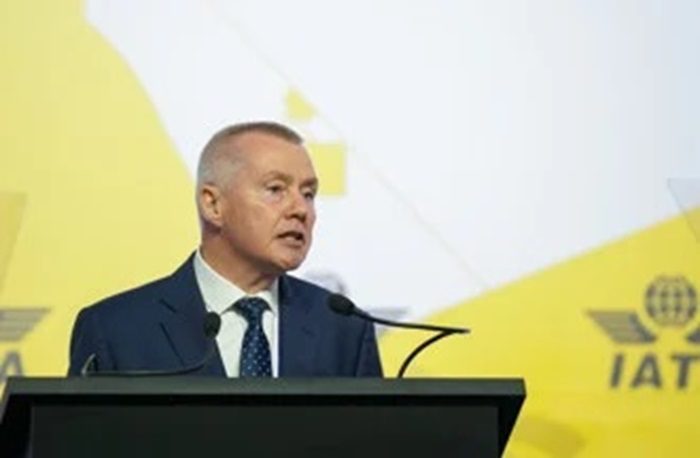
If Willie Walsh wanted a polite farewell speech, he chose the wrong industry.
Standing before aviation leaders gathered for the 82nd Annual General Meeting of the International Air Transport Association (IATA), Walsh delivered something closer to a final report card on the state of global aviation. And if the industry were a student, there would be a few uncomfortable parent-teacher interviews ahead.
The outgoing IATA Director General did not sugar-coat the challenges confronting airlines.
Fuel costs are soaring.
Aircraft deliveries remain years behind schedule.
Supply chains continue to disappoint.
Governments are introducing policies that often make little economic sense.
And aviation’s race to net-zero emissions is slipping further behind schedule.
Against that backdrop, global airline profitability is expected to take a significant hit.
Net profits are forecast to tumble from US$45 billion in 2025 to US$23 billion in 2026. Net margins are expected to fall from 4.2 per cent to just 2 per cent.
For most industries, two per cent margins would be considered skinny. For aviation, it is the equivalent of walking a financial tightrope during a crosswind.
Yet despite all the headwinds, travellers continue to book flights.
That, perhaps, remains the industry’s most remarkable story.
Travellers Keep Flying Despite Rising Costs
The latest geopolitical tensions and conflict in the Middle East have sent oil prices climbing once again.
Walsh revealed that average jet fuel prices are expected to increase by around 70 per cent year-on-year, adding a staggering US$100 billion to the industry’s fuel bill.
That’s not a rounding error.
That’s enough money to buy dozens of airlines outright.
Yet passenger demand continues to hold up remarkably well.
IATA’s latest polling suggests travellers understand the reality facing airlines.
About 86 per cent expect fares to rise when fuel prices increase.
Nearly half expect to spend more on travel this year than they did last year, while another 43 per cent expect spending to remain unchanged.
The result is a market that continues growing, albeit more slowly.
Passenger traffic is expected to expand by 2.1 per cent, while cargo demand is forecast to increase by 0.7 per cent.
The concern, Walsh warned, is how long travellers and shippers will tolerate steadily rising costs before demand eventually softens.
For now, aviation’s post-pandemic recovery remains remarkably resilient.
But resilience is not the same thing as immunity.
The Aircraft That Never Turned Up
While fuel prices dominate headlines, Walsh reserved some of his sharpest criticism for aerospace manufacturers.
For airlines, the problem is painfully simple.
The aircraft they ordered has not arrived.
The industry’s aircraft backlog now exceeds 18,000 jets.
Meanwhile, the average age of the world’s commercial fleet has climbed to a record 15.2 years.
Airlines expected thousands of newer, more fuel-efficient aircraft to be operating by now.
Instead, they are flying older aircraft longer than planned, burning more fuel and incurring higher maintenance costs.
It’s a triple financial hit.
The industry’s missing fleet of more than 5,000 replacement aircraft is costing airlines billions in lost efficiencies every year.
IATA estimates supply chain failures cost airlines at least US$11 billion during 2025 alone.
Walsh’s frustration was unmistakable.
His criticism of engine manufacturers was among the strongest heard from an industry leader recently.
“My message to the engine OEMs is simple – stop gouging us and get back to making great engines that work and that last.”
The room reportedly responded with knowing smiles.
After all, airline executives have spent years dealing with grounded aircraft, maintenance bottlenecks, and delayed engine repairs while some suppliers continue to report healthy profits.
It’s enough to test the patience of even the most diplomatic chief executive.
Walsh has never been accused of excessive diplomacy.
Governments Still Treat Aviation Like a Luxury
If manufacturers received one serve, governments received another.
Walsh argued that too many policymakers continue treating aviation as an easy target for taxation rather than recognising it as critical economic infrastructure.
His example was Brazil’s proposed 26.5 per cent VAT on airline tickets.
According to IATA modelling, the tax would add approximately US$195 to the average international airfare.
The likely consequence?
Millions fewer international journeys.
The irony, Walsh suggested, is that governments often collect less economic benefit from these taxes than they lose through reduced connectivity, tourism and trade.
Aviation doesn’t simply move people.
It connects economies.
Break those connections and the broader economy inevitably pays the price.
Passenger Rights or Political Theatre?
Another favourite target was Europe’s controversial EU261 passenger compensation regulation.
For years, airlines have argued that the system creates massive costs without addressing the real causes of delays and cancellations.
Walsh remains firmly in that camp.
He pointed out that compensation payments can often exceed the value of the original airfare.
At the same time, many delays stem from airport congestion, air traffic control restrictions, and infrastructure shortcomings beyond airlines’ control.
His analogy summed it up perfectly.
“It’s like fining bus drivers to solve roadworks delays.”
The audience laughed because it was difficult to argue with the logic.
IATA research found that when disruptions occur, passengers generally prioritise alternative travel arrangements over financial compensation.
In other words, most travellers want solutions, not lawsuits.
That distinction appears to be getting lost in some regulatory circles.
Infrastructure: The Gift That Keeps On Delaying
Infrastructure remains one of aviation’s greatest frustrations.
Nearly 400 airports worldwide now require slot coordination because demand exceeds available capacity.
Meanwhile, ageing air traffic management systems continue generating unnecessary delays.
Some countries are investing in the future.
Vietnam’s new aviation hub in Ho Chi Minh City received praise.
Singapore’s long-term airport expansion strategy was also highlighted.
Australia scored a rare mention too.
Walsh welcomed the opening of Western Sydney International Airport later this year.
His observation carried a hint of dry humour.
The airport, he noted, is finally arriving after decades of political twists, turns and delays.
Many in the Australian aviation sector would argue that’s one of the more diplomatic descriptions available.
Then came Heathrow.
Every industry conference has a familiar character who somehow becomes part of every conversation.
For aviation, Heathrow often plays that role.
Walsh questioned whether plans for a third runway genuinely serve passengers or simply reward shareholders.
The airport’s regulatory model remains a major concern for airlines.
As Walsh sees it, effective competition remains the missing ingredient.
And where competition does not exist, strong regulation becomes essential.
Sustainability’s Reality Check
Perhaps the most sobering section of Walsh’s speech focused on sustainability.
Five years ago, aviation committed to achieving net-zero carbon emissions by 2050.
Today, that goal remains alive but increasingly complicated.
The industry’s most enduring challenge is Sustainable Aviation Fuel.
Airlines have demonstrated demand.
More than 180 purchase agreements have been signed since 2021.
Yet production remains tiny.
This year’s SAF output is expected to reach just 2.4 million tonnes.
That represents only 0.8 per cent of aviation’s annual fuel requirements.
The target remains 65 per cent by 2050.
Put another way, aviation is trying to fill an Olympic swimming pool with a garden hose.
Walsh warned that governments have become overly reliant on mandates while failing to create sufficient incentives for production growth.
The result has been higher costs without corresponding increases in supply.
In Europe in particular, airlines are facing billions in compliance-related costs despite desperately wanting to purchase more SAF than currently available.
As Walsh observed: “You could not make this stuff up.”
Behind the humour sits a serious concern.
Without dramatically faster growth in SAF production, the industry’s environmental roadmap may need to be revised.
Passing the Baton
This AGM also marked the end of an era.
After guiding IATA through the pandemic, recovery and some of aviation’s most turbulent years, Walsh is preparing to leave the organisation and become CEO of IndiGo, one of the world’s fastest-growing airlines.
His departure comes at a fascinating moment.
Artificial intelligence is beginning to transform airline operations.
Passenger demand remains strong.
Technology continues opening new opportunities for efficiency and customer service.
Yet the industry also faces enormous structural challenges.
Despite those concerns, Walsh remains optimistic.
And perhaps that’s fitting.
Aviation has always been an industry built on optimism.
Every day, more than five billion travellers place their trust in airlines.
Aviation enables US$4.1 trillion in global trade.
It supports employment for 86.5 million people worldwide.
Most importantly, it continues bringing people together in an increasingly divided world.
The challenges outlined by Walsh are real.
Fuel prices will remain volatile.
Aircraft shortages won’t disappear overnight.
Sustainability targets will require hard decisions.
But aviation has never been an industry that thrives by staring at the clouds.
Its job has always been finding a way through them.
And judging by the determination on display at IATA’s annual gathering, nobody appears ready to stop flying anytime soon.
By: Bridget Jones – © 2026.
Read Time: 8 Minutes.
About the Author.
 Bridget has never been built for stillness. Of Portuguese heritage, she began as a nurse, tending veterans at the Repatriation Hospital, listening to stories as colourful as the life she was yet to live. It was worthy, steady work, but wanderlust, as always, proved louder than routine.
So, she traded starch for a backpack and disappeared for a year, chasing trains, sunsets and the occasional regrettable glass of wine. She wrote everything down: the dust, the laughter, the missteps, the magic. Those notebooks became a travel blog, then a habit, then a calling.
Eventually, she found Global Travel Media, or perhaps it found her.
Today, Bridget writes with heart, humour and a dash of mischief, still travelling, just now with words.











