


Somewhere along the tourism timeline, camping quietly staged one of the most remarkable reinventions the travel industry has ever seen.
Without much fanfare, the humble tent has gone from something Australians associated with soggy sleeping bags, burnt sausages and a desperate hunt for a clean amenities block to a luxury product commanding prices that would make some five-star hotels blush.
That’s not an exaggeration.
Across the Asia-Pacific region, luxury outdoor lodging, better known as glamping, is booming. Travellers are increasingly swapping traditional luxury hotels for immersive experiences that promise nature, wellness, sustainability and something many resorts struggle to deliver these days: genuine escape.
For travel advisors, tour operators and hoteliers, the trend is no longer a curiosity. It is becoming a significant revenue opportunity.
The latest collection of experiences highlighted by the Asia Pacific Outdoor Lodging Association (APOLA) provides compelling evidence that travellers are actively seeking holidays that offer more than thread counts and lobby chandeliers.
What they want now is connection.
Connection to nature.
Connection to culture.
And perhaps, after a few turbulent years, a connection to themselves.
At the very top end of the market sits Buahan, a Banyan Tree Escape, hidden amongst the lush Payangan Highlands north of Ubud in Bali.
The adults-only retreat has become one of Asia’s most talked-about luxury properties by challenging almost every traditional hotel convention imaginable.
There are no walls.
There are no doors.
Yet travellers are lining up to stay there.
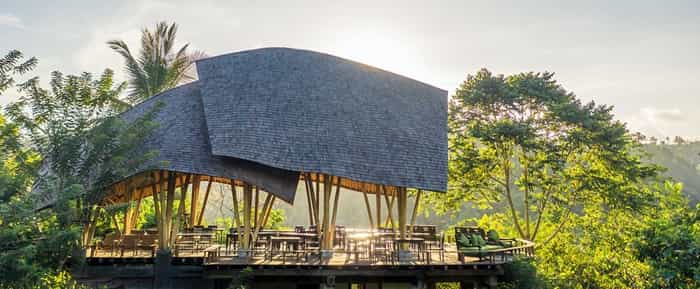
Exclusive Buyout at Buahan, a Banyan Tree Escape in Bali
The property is now offering exclusive buyouts of all 16 villas for private celebrations, executive retreats and special events. The package includes full-board dining, daily sunset cocktails, curated wellbeing experiences, airport transfers, a dedicated Escape Host and US$4,000 worth of resort credits.
It’s an offering designed for guests seeking complete privacy in one of Bali’s most spectacular natural settings.
The accolades continue to pile up. Buahan received Two MICHELIN Keys in 2025, secured a coveted place on the Condé Nast Traveller Gold List and was previously recognised as Tripadvisor’s World’s Number One Sustainable Hotel.
Exclusive buyout rates start at US$18,480++ per night, with a minimum stay of 2 nights.
For reservations and additional information, visit:
https://www.banyantree.com/escape/indonesia/buahan-a-banyan-tree-escape.
Or contact: [email protected].
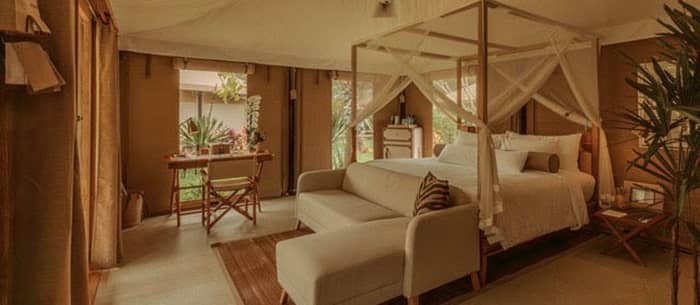
Stay Three, Pay Two at Twinpalms Tented Camp in Phuket
Meanwhile, several thousand kilometres away on Phuket’s famed Bang Tao Beach, Twinpalms Tented Camp is proving that luxury and canvas can comfortably coexist.
Part of the Small Luxury Hotels of the World collection, the resort has launched a Stay Three, Pay Two promotion for travel through to 30 October 2026.
The package includes a complimentary night, beachfront breakfasts at Catch Beach Club, spa discounts, reduced airport transfers, food and beverage savings and even a complimentary day cruise.
Not a bad reward for extending a holiday by an extra night.
For travel agents, these value-added inclusions are often easier to sell than simple room discounts because they create a more memorable guest experience.
Bookings must be made before 25 October 2026.
More information can be found here: https://reservation.twinpalmshotelsresorts.com/propertyibe2/rates?propertyId=1091.
While Phuket remains one of Thailand’s tourism heavyweights, another destination is quietly emerging from the shadows.
Nan.
For many international travellers, the northern Thai province remains refreshingly unfamiliar. That’s increasingly becoming its greatest asset.
The newly opened Visama Explorer Nan is capitalising on the growing demand for slow travel and meaningful experiences.
Nestled amongst rolling mountains and traditional Thai Lue communities, the property offers safari-style accommodation combined with local cultural immersion.
Its Stay & Taste package includes two nights’ accommodation, breakfast and dinner, outdoor campfire movie evenings, snacks and minibar refreshments featuring local beverages.
Prices start from THB6,970 per adult.
Unlike Thailand’s better-known destinations, Nan offers something increasingly difficult to find in modern tourism.
Silence.
The sort of silence that allows travellers to genuinely disconnect from their phones and reconnect with the world around them.
Further details are available at: https://booking.hmpmaster.com/visama-explorer-nan.

Comfortable Tents and Guided Hiking in Cambodia
Cambodia is also embracing the luxury outdoor lodging movement, albeit with a strong conservation focus.
Deep within Botum Sakor National Park, Cardamom Tented Camp continues to demonstrate how tourism can support environmental protection while delivering extraordinary guest experiences.
Its three-day Trekker Package provides access to more than 180 square kilometres of protected rainforest through guided jungle hikes, kayaking adventures and immersive wildlife encounters.
Accommodation, meals and guided activities are all included.
Importantly, every booking contributes towards ongoing conservation initiatives within one of Southeast Asia’s most important ecological regions.
For travellers increasingly concerned about sustainability, that matters.
A great deal.
Package rates begin from US$393 per person, excluding VAT.
Guests can quote APOLA when booking.
For details, visit: https://cardamomtentedcamp.com/packages/trekker-package/.
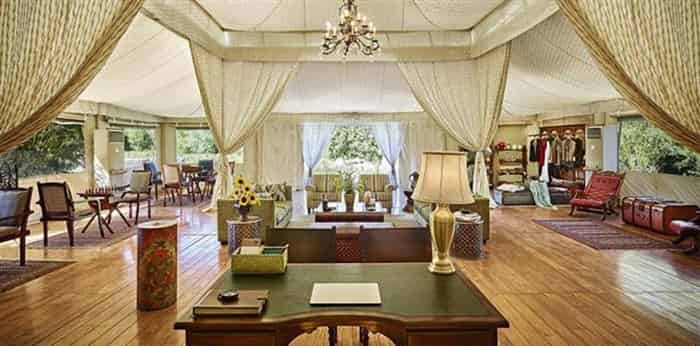
Stay More, Save More and Early Bird Offers in India
India, meanwhile, is proving that luxury camping is not confined to tropical beaches and rainforests.
The Ultimate Travelling Camp (TUTC) continues expanding its presence across some of India’s most remarkable destinations, including Ladakh, Ranthambore, Nagaland and Thiksey.
The operator is currently promoting two attractive offers.
Its Stay More, Save More campaign rewards guests who extend their stays, while the Early Bird promotion offers savings for bookings made at least 60 days before arrival.
These camps provide access to destinations that many travellers dream about but rarely experience in comfort.
Snow-capped Himalayan landscapes.
Wildlife-rich national parks.
Ancient cultures.
And some of the most dramatic scenery on the planet.
Reservations can be made via: [email protected].
More information is available at: https://www.tutc.com.
For the travel industry, the rise of luxury outdoor lodging reflects something much bigger than a passing travel trend.
Travellers increasingly want stories rather than souvenirs.
They want experiences rather than possessions.
And they are willing to spend serious money to find them.
The irony isn’t lost on many tourism veterans.
After decades spent building larger hotels, grander resorts and increasingly extravagant facilities, some of the industry’s fastest-growing luxury products now revolve around sleeping beneath canvas under the stars.
Perhaps luxury travel has finally come full circle.
Only this time, the tent comes with a Michelin pedigree, a spa treatment and somebody else lighting the campfire.
And judging by the growing demand across Asia-Pacific, travellers wouldn’t have it any other way.
By Supaporn Pholrach – © 2026.
Read Time: 6 Minutes.
About the Author.
 Supaporn Pholrach came up in advertising when deals were sealed with a handshake, and deadlines were written on scraps of paper, not dashboards. She learned early that people mattered more than process, and it stuck. Armed with solid training and a stubborn work ethic, she built a reputation for getting results without turning hard or hollow.
Fifteen years at Bangkok Shuho would test anyone’s stamina. Supaporn stayed the distance. These days, as Sales Manager at Global Travel Media, she helps tourism brands cut through the noise with common sense, good humour and genuine warmth.
She doesn’t chase quick wins. She earns trust, builds loyalty and keeps her word. In an industry that rarely slows down, Supaporn is someone you’re quietly glad to have on your side.











