

Thailand’s Tourism Reset Signals End of the Numbers Race.
For years, Thailand’s tourism industry chased visitor arrivals the way airlines chase load factors.
Relentlessly.
Every year brought a new target.
Every target brought a new celebration.
More visitors. More flights. More hotel nights.
The formula helped transform Thailand into the undisputed heavyweight champion of Southeast Asian tourism.
But somewhere between the packed beaches, overcrowded attractions, and endless arrival statistics, a more difficult question began to emerge.
What happens when growth stops feeling like success?
That question now sits at the centre of a significant shift quietly unfolding inside Thailand’s tourism economy — and one that could influence tourism strategies across the Asia-Pacific region.
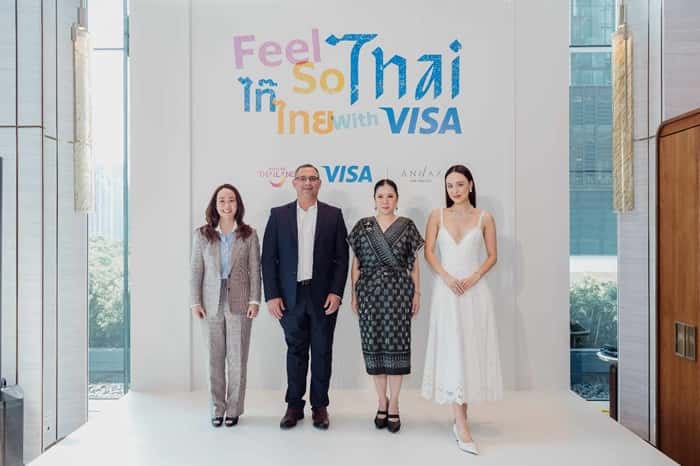
This week’s partnership announcement between Visa and the Tourism Authority of Thailand (TAT) might sound like a routine corporate collaboration.
It isn’t.
Behind the polished language about visitor experiences and digital payments sits a much larger story.
Thailand is repositioning its tourism future around value rather than volume.
And for an industry that has spent decades worshipping arrival statistics, that represents a profound change.
Tourism boards love big numbers.
Big numbers make excellent headlines.
Politicians love them even more.
But tourism operators know a secret that often gets lost inside government press conferences.
Not all tourists contribute equally.
A traveller who spends five days exploring local neighbourhoods, dining in family-owned restaurants, shopping with independent retailers and booking local experiences can generate far more economic value than a visitor who spends most of their holiday inside an international resort.
The tourism industry has known this for years.
The challenge has been finding a politically acceptable way to say it.
Thailand appears increasingly willing to do exactly that.
The Kingdom remains Southeast Asia’s most visited destination and one of the world’s great tourism success stories.
Yet tourism leaders are now looking beyond simple arrival counts and asking tougher questions.
How much do visitors spend?
Where do they spend?
How widely does tourism money spread?
And perhaps most importantly, who benefits?
Those questions matter because tourism itself is changing.
Travellers emerging from the pandemic are behaving differently.
They’re spending differently.
They’re travelling differently.
And increasingly they’re searching for experiences that feel personal, authentic and memorable.
The old tourism model was built around attractions.
The new model is built around engagement.
That distinction explains why Visa has suddenly become an important player in Thailand’s tourism strategy.
The company expanded its Visa Destinations programme into Thailand this week, making the Kingdom the first country-level launch in the world and the first rollout across Asia-Pacific.
At first glance, a payments company becoming a tourism partner may seem unusual.
Until you understand where tourism is heading.
Today’s travellers expect experiences to be seamless.
They expect convenience.
They expect security.
Furthermore, they expect technology to remove obstacles rather than create them.
And when those expectations aren’t met, destinations notice.
Nobody has ever boarded a flight because a payment terminal existed.
But travellers remember every moment when one doesn’t work.
That frustration influences where people shop, where they eat and how confidently they explore.
Visa’s programme aims to remove that friction while helping local businesses become more accessible to international visitors through expanded digital payment acceptance.
In practical terms, it means a visitor wandering through Bangkok’s historic Song Wat district can move effortlessly between cafés, local retailers, restaurants and cultural experiences without worrying about cash, currency exchange or payment barriers.
That may sound minor.
It isn’t.
Because tourism’s future increasingly belongs to destinations that make discovery easy.
And discovery is precisely what Thailand wants visitors to do.
One of the most revealing elements of the initiative is its focus on Song Wat itself.
Located along the Chao Phraya River, the district isn’t Bangkok’s biggest attraction.
That’s precisely why it matters.
Song Wat represents the kind of tourism experience destinations are increasingly trying to promote.
Authentic.
Local.
Unexpected.
The sort of place travellers stumble upon and then spend years talking about afterwards.
Walking through its streets feels like stepping into a version of Bangkok that somehow survived the march of globalisation.
Historic shophouses sit beside emerging creative spaces.
Family-run businesses operate alongside modern cafés.
The smell of traditional street food drifts through heritage buildings that tell stories long before Instagram arrived.
It’s real.
And increasingly, real has become tourism’s most valuable product.
Tourism Authority of Thailand Governor Thapanee Kiatphaibool believes visitor experience will ultimately determine Thailand’s long-term success.
“Tourism plays a critical role in Thailand’s economy and strength. The visitor experience is central to sustaining growth. Now, TAT has launched the Krabi Prototype project, the CF-Hotels platform, STG Star, and the TTA award to better enhance and shape Thailand’s sustainable tourism. Partnerships with global players like Visa help reinforce the tourism ecosystem, from infrastructure and connectivity to experiences on the ground that shape how visitors engage with Thailand.”
Her comments reflect a broader reality confronting destinations worldwide.
The race for visitor numbers is slowly being replaced by a race for visitor value.
Visa Thailand Country Manager Anthony Watson says traveller expectations are evolving rapidly.
“Thailand’s strength as a travel destination lies in its diversity, from world-renowned cities to culturally rich local communities across the country. As travel expectations evolve, visitors are placing greater emphasis on confidence, reliability and ease throughout their journey. Through our partnership with the Tourism Authority of Thailand, we are helping enable more seamless and secure payment experiences, while supporting local businesses in expanding digital acceptance so they can better connect with international travellers and participate in the tourism economy.”
His comments point to a future where tourism success depends less on volume and more on the quality of the experience.
And that may be the most significant part of this story.
Because Thailand isn’t simply launching another tourism initiative.
It’s redefining what tourism success looks like.
For decades, the industry celebrated arrivals.
The next decade may be judged by something far more important.
How much value does every visitor leave behind?
By: Prae Lee – © 2026.
Read Time: 6 Minutes.
About the Author.
 You can tell a great deal about a person by how they meet a Bangkok morning. Prae Lee doesn’t charge into it; she glides, unhurried, as if time itself has agreed to behave. There is a calm assurance about her, the sort earned by knowing both your roots and your destination.
A graduate of Chulalongkorn University, she earned her business degree with quiet pride, then further honed it in Singapore and Australia. Travel didn’t change her. It refined what was already there: curiosity, discipline, grace.
Back in Bangkok, she slipped modern life into the family business, mastering social media with an instinct for listening and selling with Thai gentleness.
Prae never seeks attention, yet everything she touches grows brighter.
Now with Global Travel Media, she writes with authenticity, drawing on culture, travel and a rare, steady confidence.











