

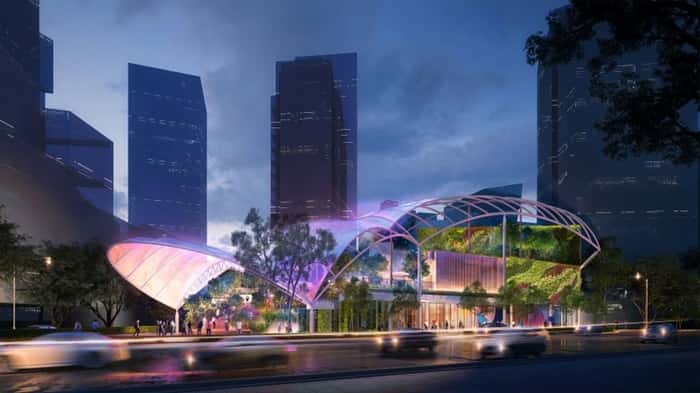
If Orchard Road had a dollar for every time someone declared it “not what it used to be”, it wouldn’t need a rejuvenation plan.
But here we are.
Singapore’s most recognisable boulevard, long the gold standard for air-conditioned retail therapy, is being given a deliberate, and rather overdue, shake-up. Not a cosmetic dust-off, mind you, but a rethink of what a modern high street ought to feel like in an age where you can buy just about anything from your sofa.
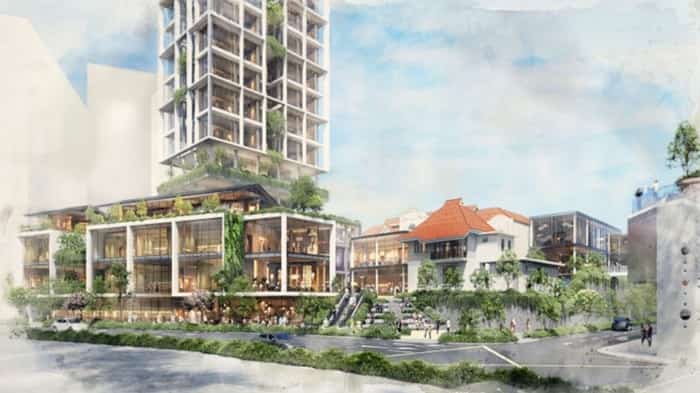
37 Emerald Hill – Artist’s Impression (credit – Singapore Tourism Board)
And to their credit, the powers that be aren’t pretending otherwise.
The latest round of initiatives, driven by the Singapore Tourism Board (STB) with support from the Urban Redevelopment Authority and National Parks Board, reads less like a retail upgrade and more like a cultural reset.
The message is simple enough: Orchard Road is no longer content being a place you pass through with shopping bags. It wants to be somewhere you linger.
Pop-ups With a Pulse, Not Just Another Shopfront
The first sign that someone’s been paying attention comes in the form of pop-up spaces, though these aren’t the usual “fill the gap and hope for the best” variety.
From May 2026, tenders will go out for the design and management of up to three rotating pop-up sites along the pedestrian stretch between Wisma Atria and Ngee Ann City. Short-term tenancies, anywhere from a month to six, will keep the mix moving.
In other words, blink, and you might miss it, which is precisely the point.
Expect new-to-market brands, experimental concepts and a fair dose of “let’s see if this works” retail theatre. It’s the sort of thing that gives people a reason to come back next weekend, not just next year.
A small move on paper, perhaps, but one that acknowledges a larger truth: retail without novelty is just shelving.
Turning the Street Into the Show
Then there’s the architecture, or rather, what they’re planning to do with it.
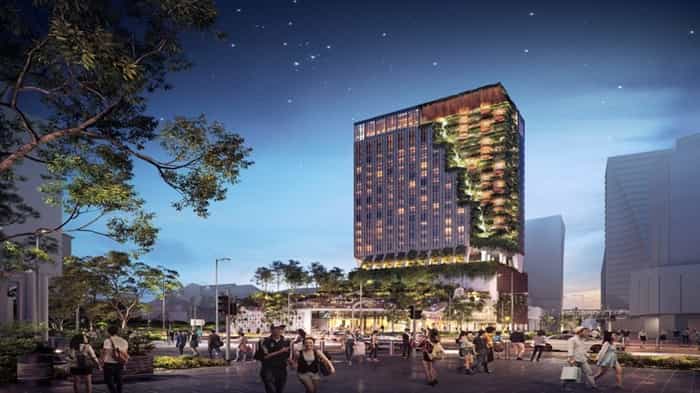
NoMad Hotel – Artist’s Impression (credit – UOL)
From mid-2026, stakeholders will be encouraged to treat building façades as something more than walls. Digital displays, lighting concepts, and interactive surfaces, suddenly, the outside of a building matters as much as what’s inside it.
It’s a shift you see in cities that understand spectacle sells. Done well, it turns a street into a stage.
Inside the malls and public spaces, the brief is equally clear: make it experiential. Not louder, not bigger, just more engaging. Installations, programming, immersive concepts. Less “shop and go”, more “stay and see what happens next”.
And perhaps most tellingly, Orchard Road is being nudged into the evening.
Night markets, projections, and later trading are nothing revolutionary on their own, but collectively, they signal an intent to stretch the day. Because a street that sleeps early rarely keeps its reputation for long.
A Touch of Soul At Last
For all its polish, Orchard Road has sometimes been accused of lacking a bit of personality. Plenty of gloss, not always much grit.

Redevelopment of Tanglin Shopping Centre – Artist’s Impression 1 (credit – Pacific Eagle Real Estate)
That may be about to change.
The Creative Exploration System, due in the second half of 2026, introduces a series of artistic markers guiding visitors through the precinct’s four sub-areas. Designed by local studio PLUS Collaboratives, they’ll feature poetry by Singaporean writers.
Poetry, on Orchard Road.
It’s the sort of detail that could easily be dismissed, but it matters. It gives the place a voice of its own, something beyond the logos and glass.
Add to that a set of newly designed benches, eight winners chosen from more than 150 entries, and you begin to see a pattern. These aren’t just places to sit; they’re designed to be noticed, used, photographed, and remembered.
In short, Orchard Road is being asked to loosen its collar a little.
Big Moves Behind the Scenes
While the street-level tweaks will shape first impressions, the heavier lifting is happening just out of view.
The Grange Road Events Venue is perhaps the most significant addition, a 3,000-capacity indoor space backed by Live Nation. It fills a gap that’s been glaring for years: a proper venue capable of anchoring concerts, exhibitions and large-scale events right in the heart of the precinct.
That matters more than it might seem.
Events bring people. People bring energy. And energy, in the end, is what keeps a place relevant.
Nearby, the redevelopment of 37 Emerald Hill will attempt the delicate balancing act Singapore tends to do well, honouring heritage while making room for something commercially viable. Expect a mixed-use concept with a hotel, lifestyle offerings and public spaces that nod to the site’s past.
Then there’s the arrival of the NoMad Hotel, set to open by the end of 2026. It’s not just another luxury flag; it’s a signal. When brands like this choose a location, they’re betting on its future, not its past.
Youth, Green Space and a Bit of Breathing Room
Further down the track, the Somerset Belt project aims squarely at a younger crowd.
Think skate parks, creative hubs, open lawn spaces designed less for consumption and more for participation. It’s a recognition that if Orchard Road is to stay relevant, it can’t rely solely on tourists with shopping lists. It needs locals who actually want to be there.
And then there’s the expansion of Istana Park.
Tripling its size and linking it more seamlessly to the surrounding precinct, it introduces something Orchard Road has historically lacked: breathing room. A place to sit without expectation, to pause without purpose.
It may well prove to be one of the more quietly important changes.
Not a Reinvention: A Reality Check
Strip away the planning jargon and glossy language, and what you’re left with is something refreshingly straightforward.
Orchard Road isn’t being reinvented because it wants to be. It’s being reinvented because it has to be.
The old model rows of shops, predictable brands, and a steady stream of tourists simply isn’t enough anymore. Not in a world where experience trumps acquisition and where the most successful destinations are the ones that give people a story to tell.
Singapore, to its credit, has recognised that early.
And Orchard Road? It’s finally catching up.
by Soo James – (c) 2026.
Read time: 5 minutes.
About the Author.
 There’s nothing rehearsed about Soo James, and that’s precisely the point. Malaysian by heritage, Sydney by schooling, she arrived at UNSW to study Arts, then took a left turn into IT, not out of ambition, but curiosity. Somewhere among systems and schedules, she worked out what really held her attention: people, language, and the quiet spaces between them.
Writing followed naturally. Travel and lifestyle gave her room to observe, to listen, to notice the details others rush past. Soo writes the way good travellers move, watching the room before admiring the view, catching the gesture before chasing the headline.
At Global Travel Media, her stories don’t shout or sell. They linger. They slow you down, open a door, and gently suggest there’s more to see if you’re willing to look.











