Australia’s accommodation sector has weathered recessions, pandemics, airline collapses, and enough economic turbulence to make even seasoned hoteliers reach for the minibar early. Yet this week in Adelaide, another growing headache took centre stage, the escalating conflict involving Iran and its ripple effect on global travel confidence.
The national board of Accommodation Australia gathered during the influential AHICE Conference with one message becoming painfully clear: uncertainty is once again stalking the tourism sector’s corridors.
Accommodation Australia CEO James Goodwin confirmed member properties across the country are already feeling the chill.
“It’s clear consumers have less confidence to travel and member properties are feeling the effects of the conflict,” he said.

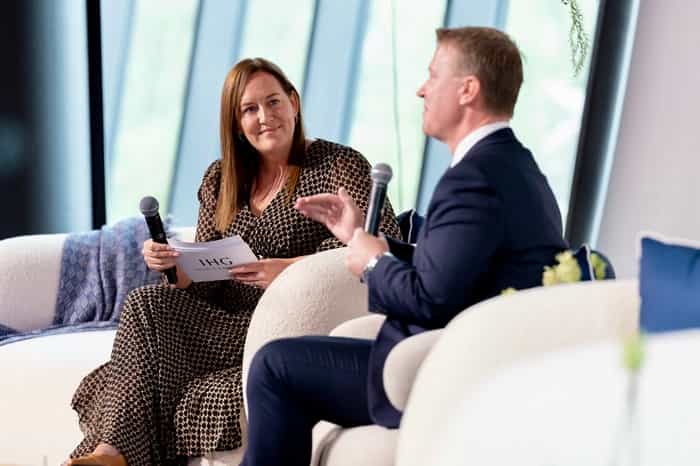
AA Deputy Chair Emma Hynes and AA CEO James Goodwin on stage at AHICE.
And confidence, as every hotelier knows, is the oxygen of tourism. Once travellers hesitate, bookings soften, regional drive holidays are postponed, and corporate travel managers suddenly discover the phrase “wait and see”.
The board received updated occupancy and forward bookings figures from its industry analytics partner, CoStar STR, which suggest the industry is entering another period of nervous consumer behaviour.
For an accommodation sector that had finally begun stabilising after years of pandemic aftershocks, the timing could hardly be worse.
Goodwin warned that governments must remain aggressive in promoting Australia to both existing and emerging international markets.
“We need all governments to work with tourism operators to continue to promote Australia to new and existing international markets,” he said.
That plea lands at a critical moment for Australian tourism. International aviation capacity remains uneven, travellers are increasingly cautious with discretionary spending, and global headlines dominated by conflict rarely inspire families to dust off passports or road-trip itineraries.
Regional Australia, in particular, is beginning to feel the pinch.
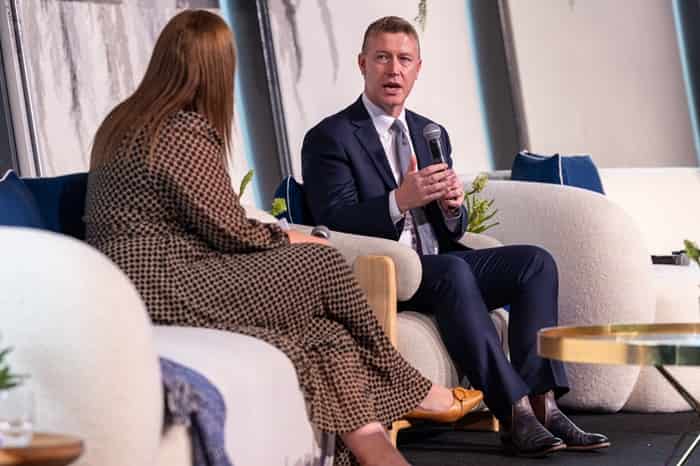
AA Deputy Chair Emma Hynes and AA CEO James Goodwin.
Goodwin noted rising fuel costs and supply concerns surrounding petrol and diesel are creating additional pressure for remote and regional accommodation operators already grappling with razor-thin margins.
“I think clear messaging and improved fuel information will go a long way to improve consumer confidence and get people back out on the road,” he said.
In tourism terms, fuel anxiety spreads faster than gossip at a hotel buffet breakfast. The mere perception of shortages or spiralling costs can quickly derail holiday planning, especially for caravanners and domestic self-drive travellers who form the backbone of many regional economies.
To help address those concerns, Accommodation Australia recently partnered with the Tourism and Transport Forum to raise awareness around fuel supply and traveller confidence issues.
Still, the industry’s challenges extend beyond geopolitics and petrol bowsers.
Workforce shortages remain a stubborn problem nationwide, particularly in hospitality operations, where recruitment pipelines have struggled to recover since the pandemic’s border closures and labour disruptions.
The board reiterated the importance of Accommodation Australia’s workforce platform, eeger, which now boasts close to 16,000 registered job seekers.
That number offers a glimmer of optimism for operators still scrambling to fill housekeeping, food service and management roles ahead of peak travel periods.
“The sector relies on migration and the Board also received an update on a range of measures to improve visa processing,” Goodwin said.
In plain English, Australia’s hotels still desperately need workers and quickly.
Meanwhile, Accommodation Australia Chair David Mansfield stressed the importance of maintaining direct engagement with members during periods of economic uncertainty.
“In uncertain times it is crucial to listen to our members and assure them the organisation is at the table with key decision makers, making sure their needs are heard in the corridors of power,” he said.
It was a fitting sentiment during a week where industry leaders gathered not merely to network over coffee and conference canapés, but to confront a hard truth: global instability has once again found its way into Australia’s tourism economy.
The accommodation sector may indeed be resilient; it has proven that repeatedly, but even in hospitality, resilience does not make operators immune to conflict, consumer anxiety, or rising operational costs.
And right now, Australia’s hotels are discovering that geopolitical tensions thousands of kilometres away can still leave an unwelcome vacancy sign glowing at home.