

There was a time when travellers tackled Southeast Asia like contestants in a reality television challenge: three countries in five days, four airports, two tantrums and one emotional breakdown somewhere near immigration.
Thankfully, sanity appears to be making a comeback.
And the Philippines is perfectly positioned to cash in on it.
Rather than selling frantic passport-stamping marathons, the Philippines is leaning heavily into something travellers now crave more than infinity pools and breakfast buffets, breathing space. Real holidays. The kind where you return home refreshed, instead of needing another week off to recover from the first.
At the heart of this tourism renaissance sits Cebu, an island gateway that has quietly transformed itself into Southeast Asia’s ultimate launchpad for seamless multi-island escapes.
And unlike some destinations that promise paradise but deliver traffic jams and elbow-to-elbow beaches, Cebu’s proposition actually stacks up.
One Trip, Several Islands, Minimal Drama
Travel trends across Asia have shifted noticeably over the past two years. Travellers are staying longer, moving slower and increasingly chasing authenticity over checklist tourism.
In simple terms, people want fewer queues and more sunsets.
The Philippines has recognised the opportunity and responded with curated seven-to-eight-day itineraries linking several islands together with surprisingly painless transit times.
That matters enormously in modern tourism.
Nobody wants to spend half their holiday dragging luggage through terminals that resemble post-apocalyptic shopping centres.
From Cebu, however, travellers can reach some of the country’s most celebrated islands in little more than an hour or two. It transforms the experience from an exhausting logistics exercise into genuine island-hopping bliss.
Frankly, it is tourism designed by people who appear to have actually travelled before.
Cebu and Boracay: The Holiday Double Act
The pairing of Cebu and Boracay remains the headline act and with good reason.
Cebu delivers energy, colour and movement. It is a city where Spanish-era churches sit comfortably beside buzzing food markets and waterfront dining spots serving legendary local lechon so good it should probably come with a warning label.
Visitors can dive into urban culture one day and plunge into waterfalls the next.
The nearby Kawasan Falls continue to draw adventure seekers keen to experience the increasingly famous canyoneering routes, equal parts exhilarating and mildly terrifying, depending on your relationship with heights.
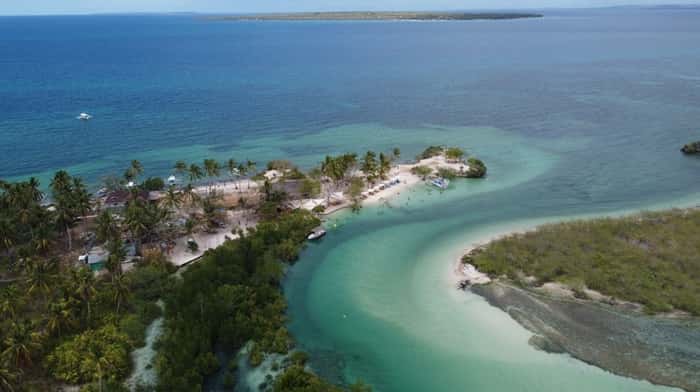
Then there are the Bantayan Islands, where turquoise waters and sleepy beach scenes remind visitors precisely why “work from beach” became a pandemic fantasy for millions.
But eventually, even the most energetic traveller wants stillness.
That is where Boracay strolls into the conversation wearing its usual show-off grin.
Reaching the island from Cebu takes roughly two hours, including transfers remarkably efficient by regional standards. Once there, travellers are greeted by the sort of white-sand beaches tourism brochures have been shamelessly exploiting for decades.
And yes, the sand really is that good.
Boracay has matured beautifully over recent years. It still delivers postcard-perfect sunsets and warm turquoise water, but the island now feels more refined, more balanced and considerably more sophisticated than its backpacker-party reputation of years gone by.
Luxury resorts coexist comfortably with boutique stays, while wellness retreats, beachfront dining and sailing cruises create a destination equally suited to honeymooners, families and weary executives escaping spreadsheets.
Not bad for an island once famous mainly for cocktails and questionable holiday decisions.
Bohol Quietly Wins Hearts
For travellers preferring serenity over scene-making, Bohol offers an entirely different rhythm.
And honestly, that is part of the Philippines’ brilliance.
Each island feels distinct. Each delivers its own personality.
Bohol trades nightlife for nature and noise for tranquillity. From Cebu, travellers can hop aboard a high-speed ferry or take a short domestic flight before arriving in one of the country’s most naturally beautiful provinces.
The famous Chocolate Hills continue captivating visitors with their surreal landscape, while the Loboc River offers peaceful river cruises framed by thick tropical greenery and drifting local music.
Meanwhile, Panglao Island has become something of a quiet achiever in luxury tourism circles.
Its eco-resorts and beachfront properties provide the sort of laid-back sophistication travellers increasingly seek without being pretentious.
Better still, many attractions sit conveniently close together, allowing visitors to spend less time commuting and more time enjoying themselves.
It sounds obvious, but in modern tourism, that has become surprisingly rare.
Siargao Brings the Cool Without Trying Too Hard
Then there is Siargao, the island equivalent of that effortlessly stylish person everyone secretly envies.
Siargao has evolved well beyond its surfing roots. Today, it represents the Philippines’ barefoot luxury movement where travellers swap schedules for spontaneity and alarm clocks for ocean breezes.
After a direct flight from Cebu, visitors quickly settle into General Luna’s relaxed pace, where cafés, surf culture and natural lagoons blend seamlessly together.
Sugba Lagoon remains one of the country’s standout natural attractions, while Magpupungko Rock Pools continue drawing photographers and swimmers alike.
But the real attraction here is the atmosphere.
Siargao feels authentic in a world increasingly drowning in manufactured tourism experiences.
Nobody appears in a rush. Nobody seems particularly interested in impressing anybody else. It is refreshingly human.
And perhaps that is exactly why travellers are falling in love with it.
The Philippines Finds Its Tourism Sweet Spot
The Philippines is not trying to compete with Singapore’s efficiency or Thailand’s scale.
Instead, it is playing a far smarter game.
It is selling ease, warmth and emotional escape.
With visa-free access for most ASEAN travellers, widespread English proficiency and excellent value for money, the destination fits perfectly into evolving travel behaviour across Asia-Pacific markets.
More importantly, it delivers variety without complexity.
Travellers can experience vibrant cities, luxury beaches, rainforest adventures, and surf culture in a single journey without spending half the trip trapped in airports.
That balance is becoming increasingly powerful.
Because in 2026, luxury is no longer simply marble bathrooms and infinity pools.
Luxury is time.
And right now, the Philippines is giving travellers plenty of it.
For more information, visit the Department of Tourism Philippines.












