

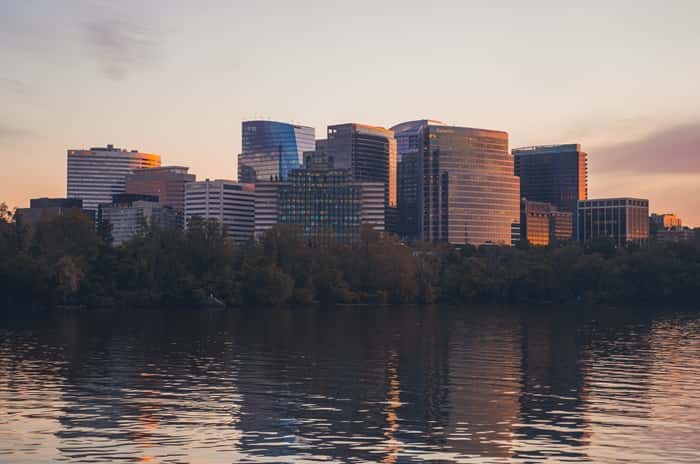
Washington, DC has long traded on the heavy hitters: the White House, the Smithsonian, the monuments, the motorcades and the sort of gravitas that makes even a sandwich feel bipartisan.
But the American capital is no longer content to be admired for its marble, memory and museum mileage. It is rebuilding itself, and not in the cosmetic sense of planting a few shrubs and calling it urban renewal. With $10.1 billion in development moving across the city, DC is reshaping neighbourhoods, transport, culture and the visitor economy with a seriousness that should have the travel sector paying very close attention.
This is not a city freshening the curtains. It is a city moving the furniture.
For travellers, event organisers, airlines, tour operators and the broader meetings market, that matters. A stronger DC does not simply mean prettier footpaths and shinier venues. It means a more saleable destination, a broader reason to stay longer, and a more convincing pitch for repeat visitation.
At the centre of the biggest conversation sits RFK Stadium, or rather, what comes next. The old site is being transformed into a major entertainment and mixed-use district, anchored by a planned 65,000-seat stadium for the Commanders. The project, valued at $3.8 billion, is far more than a sporting bet. It is a long-game urban play, with housing, public spaces, venues and recreation stitched around a modern events anchor. Demolition of the old stadium is due to be completed by late 2026, with the new venue tracking towards an opening in 2030.
For the tourism industry, this is the sort of development that changes city narratives. Stadiums at that scale do not just host football. They pull in concert traffic, international sporting events, large gatherings, and convention-related traffic. In plain English, they generate nights, spend and headlines.
If RFK is the blockbuster, Georgetown is the stylish supporting act. The neighbourhood has always been one of DC’s better-dressed addresses, but it is now evolving with a fresh retail and lifestyle energy. IKEA has opened a “Plan and Order” store. Google has committed to a 10-year lease and opened a bricks-and-mortar store. Uniqlo is on the way. Garage is heading in. On Running has already landed. Add a Korean beauty studio using AI-powered skin analysis, a café-dog boutique hybrid, wellness studios and an Argentine restaurant tucked behind a flower shop, and Georgetown begins to look less like a lovely old favourite and more like a district auditioning for its next act.
That mix matters because modern travellers increasingly buy neighbourhoods, not just cities. They want places with texture, local energy and the sense that something is happening beyond the postcard. Georgetown is leaning into that beautifully.
Then there is Downtown DC, where the city is taking a very deliberate crack at one of the great post-pandemic urban headaches: too much office stock, not enough life after hours. The $400 million Downtown Action Plan aims to bring more residents, greener spaces, safer streets and stronger commercial activity back into the city centre over five years. Office-to-residential conversions are central to that strategy, and DC is already leading the nation on that front, with 1,904 residential units delivered, 1,803 under construction and more than 4,200 homes in the pipeline.
That is not just a planning statistic. It is a tourism story. City centres that are occupied, walkable and lived in tend to feel better for visitors. More cafés open. More bars survive. More shops trade. More streets feel worth strolling after dark. Dead office districts do not inspire return visitation. Proper urban life does.
One of the more telling signs of DC’s ambition is that the city is not merely building forward, it is also investing heavily in the icons that made it famous in the first place. The National Mall is undergoing an estimated $500 million in improvements ahead of the United States’ 250th anniversary. The Lincoln Memorial will gain a new 15,000-square-foot exhibit space beneath the memorial. Constitution Gardens is being refreshed with new gathering areas and landscaping. The Tidal Basin and Jefferson Memorial precinct have undergone major seawall works, completed early and under budget, which in public infrastructure terms is practically cause for hymn singing.
The National Mall’s 1947 carousel is also due to reopen in April 2026 after restoration. That may sound like a charming footnote, but tourism thrives on these details. Great destinations do not rely solely on mega-projects. They also preserve the smaller emotional hooks, the bits visitors remember and photograph and tell people about later.
Beyond the core, DC’s waterfront story keeps growing. Yards West is building out a future “downtown” for the Capitol Riverfront, with office space, retail, homes and green public areas. Buzzard Point continues its transformation from industrial fringe to mixed-use waterfront community. Bridge District in Ward 8 is pushing forward with housing, retail and green space, alongside ambitions to deliver one of the world’s largest ILFI Zero Carbon multifamily residential buildings.
Again, these are not merely property page stories. In tourism terms, they broaden the map. They create fresh precincts for dining, events, local experiences and city discovery. A destination with multiple active neighbourhoods gives visitors more reasons to spread out and spend.
Culture, meanwhile, remains one of DC’s greatest competitive strengths, and there too the city is adding polish. The African American Civil War Memorial Museum is preparing to reopen in 2026 with renovated space and free admission. The Hirshhorn Sculpture Garden is in the midst of a major reimagining. The National Air and Space Museum continues its sweeping renovation, with more galleries due by the end of 2026 and the Bezos Centre still to come in 2028. The National Archives Museum has already unveiled a newly reworked gallery for some of the most important documents in American history.
And then there is the newer generation of attractions: the Go-Go Museum and Cafe in Anacostia, The People’s House, and the Milken Centre for Advancing the American Dream. These projects broaden the city’s appeal beyond civics-class tourism. They give repeat visitors something new, and first-timers a more layered picture of the capital than domes and democracy alone.
The aviation piece is also worth watching. At Reagan National and Dulles International, redevelopment is adding more retail and food options while improving passenger infrastructure. Dulles is in the middle of a major concourse expansion for United Airlines, with a 14-gate facility expected by fall 2026 and built to LEED Silver ambitions. Reagan National is also planning a new concourse to replace Terminal 1, alongside parking expansion and ongoing concession upgrades.
Access matters. It always has. A city can build the most dazzling visitor product in the world, but if the airport feels stale, cramped or joyless, it blunts the experience before the holiday or work trip has properly begun. The reverse is equally true. Good airport infrastructure sets a tone, particularly for a capital city.
There are also future-facing developments that may yet become tourism magnets in their own right. Capital One Arena is in the midst of an $800 million renovation, with new premium spaces and upgrades to the surrounding neighbourhood intended to improve walkability and the overall fan experience. Brooklyn Bowl is heading to the Audi Field precinct. Therme is planning a 15-acre wellness and waterpark-style resort at Poplar Point. National Geographic’s Base Camp and Museum of Exploration is due in 2026 after a $250 million rehabilitation of its headquarters block.
Taken together, the pattern is unmistakable. Washington, DC is not relying on history to do all the heavy lifting. It is modernising the product.
For Australian agents and wholesalers, that creates a stronger US East Coast story. For the MICE sector, it adds fresh inventory and sharper reasons to pitch the city. For airlines and travel sellers, it makes it easier to position Washington as more than a political stopover or a museum box-tick.
There is also something broader at work here. The best city development programmes understand that visitors and locals often want the same thing: safer streets, useful transport, lively precincts, meaningful culture, and public spaces that feel built for people rather than traffic cones. DC appears to have grasped that truth.
And that is why this matters.
This is not some vanity parade of cranes and renderings. It is a practical, strategic rebuild of a capital city that wants to be more compelling, more liveable and more competitive. In travel terms, that is the sort of story worth watching closely.
Washington, it seems, is not just polishing the silver for America’s 250th birthday.
It is rebuilding the house.
by Jason Smith – (c) 2026.
Read Time: 7 minutes.
About the Writer.
 Jason Smith was educated in terminals, taxis and hotel corridors, the sort of schooling no classroom could hope to provide. Half American, half Asian, he grew up inside the quiet machinery of tourism, watching his family send strangers into the world long before he travelled himself.
Bangkok came first, then the Asian Institute of Hospitality & Management, followed by a career stitched together across Singapore, Malaysia and Vietnam. Each city left a mark. Thailand eventually claimed him, along with a corner office, as Director of Sales for one of the country’s leading hotel groups.
Then the world paused. Borders closed, skies emptied, and Jason returned to America carrying time, memory and a lifetime of stories.
Now at Global Travel Media, he writes about the human side of travel check-ins, departures, and everything in between with warmth, clarity, and an instinct for connection.











