

If there is one lesson the travel industry learned during the pandemic years, it’s this: rebuilding planes, routes and demand is the easy part. Rebuilding people is harder.
That reality sits squarely behind a new push to modernise one of the sector’s key training qualifications, the Certificate III in Travel (SIT30222), with industry leaders now backing a national review designed to bring the course back into step with the realities of today’s travel workplace.
The Australian Travel Careers Council (ATCC) has formally welcomed the review announced on 24 February by Service and Creative Skills Australia (SaCSA) and the Australian Travel Industry Association (ATIA), describing it as an important move for a sector still rebuilding its workforce pipeline.
For many agency owners, wholesalers and travel businesses, the timing feels overdue.
A Training System Playing Catch-Up
Travel is no longer the industry it was even a decade ago. Retail agencies now juggle dynamic pricing systems, complex airline distribution models, sophisticated booking technology and customers who expect answers instantly, often across several digital platforms at once.
Yet many in the sector believe the training frameworks feeding new recruits into the industry have struggled to keep pace.
That concern prompted the ATCC last year to launch its Travel Skills Taskforce (TST), a practitioner-led initiative that brings together experienced travel professionals to examine whether existing qualifications still reflect the skills businesses actually need.
The idea was simple: if training is meant to prepare people for the job, then the people doing the job should help design the training.
Industry Consultation Already Underway
The push for reform did not begin with the February announcement.
Six months earlier, the ATCC had raised similar concerns during consultations with the NSW Department of Education, particularly regarding the noticeable drop in travel-sector trainees entering the workforce.
Those conversations ultimately led to the formation of the Travel Skills Taskforce, which has since been quietly gathering evidence from across the industry.
Between September and December 2025 alone, the taskforce held five consultation sessions with travel professionals, clocking up more than seven hours of detailed discussion examining everything from digital capability to customer service skills and operational workflow.
Three further industry forums are scheduled in 2026, with the ATCC expecting to complete its review in May 2026.
A Qualification With Industry DNA
ATCC CEO Rick Myatt brings a unique perspective to the debate.
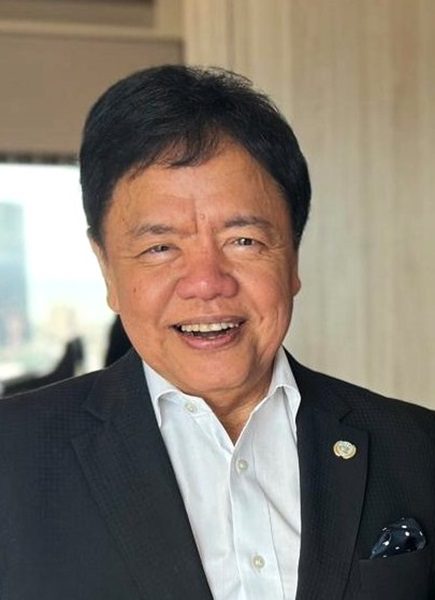
Australian Travel Careers Council CEO Rick Myatt
He was closely involved in the original development of the Certificate III qualification in 2012 and later contributed to its evolution through advisory roles with Service Skills Australia and SkillsIQ.
For Myatt, the current reform is less about rewriting the rulebook and more about making sure the qualification reflects how the industry actually works today.
“This is about ensuring the entire travel ecosystem contributes to a qualification that is fit-for-purpose,” Myatt said.
“By leveraging deep-rooted historical knowledge alongside current practitioner insights, we can build a modern workforce requirement that actually works for businesses.”
Collaboration the Key to Reform
What happens next will depend largely on cooperation between industry bodies and education stakeholders.
Under its Roadmap for Reform, the ATCC intends to share detailed findings from the Travel Skills Taskforce with the relevant national bodies overseeing vocational qualifications, helping ensure the next iteration of the Certificate III course reflects real-world industry needs.
“We look forward to working collaboratively with ATIA and SaCSA,” Myatt added.
“By combining our collective expertise, we ensure the industry receives a qualification reflecting real-world operational needs in 2026 and beyond, ultimately strengthening the talent pipeline for the entire sector.”
For an industry built on expertise, relationships and experience, that outcome would be more than welcome.
After all, the travel industry has always believed that the best training rarely comes from textbooks alone; it comes from people who understand the journey.
by My Thanh Pham – (c) 2026.
Read Time: 2 minutes.
About the Writer.
 My Thanh Pham has lived more of a life of travel than most people ever do. After studying tourism, she went straight into the work of building journeys across South-East Asia, temples, beaches, night trains, and all, quietly fixing the messy bits so others could enjoy the ride.
She was never meant to stay behind a desk. Airline life followed, dividing her days between reservations and the airport floor, right where travel shows its true colours. Missed flights, tight hugs, frayed tempers, sudden joy, she saw it all, close up.
Now at Global Travel Media, My Thanh has traded ticket stubs for a keyboard. She writes the way she once worked: steady, clear-eyed and respectful of the road’s unpredictable rhythm, guiding readers through a world she knows from the inside.











