

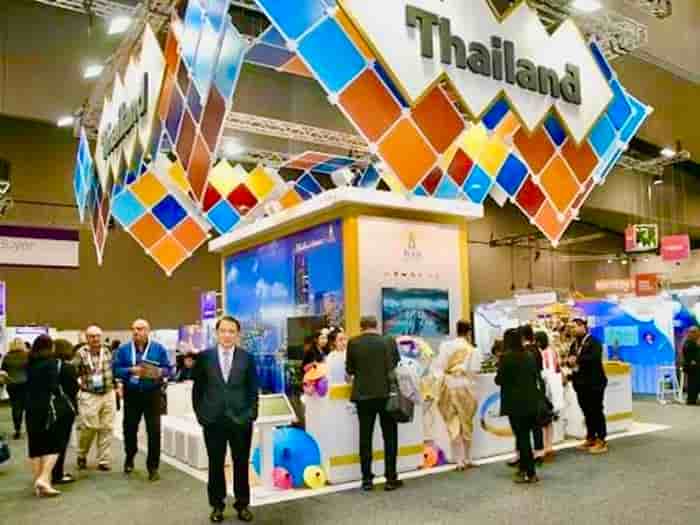
Thailand’s meetings industry has never lacked ambition. What it occasionally lacked in earlier years was restraint.
For decades, the country’s Meetings, Incentives, Conferences and Exhibitions sector, better known by the tidy acronym MICE, grew rapidly on the back of two dependable strengths: scale and hospitality. Thailand could host large events, feed delegates well and send them home with favourable memories of the Kingdom.
That formula worked admirably.
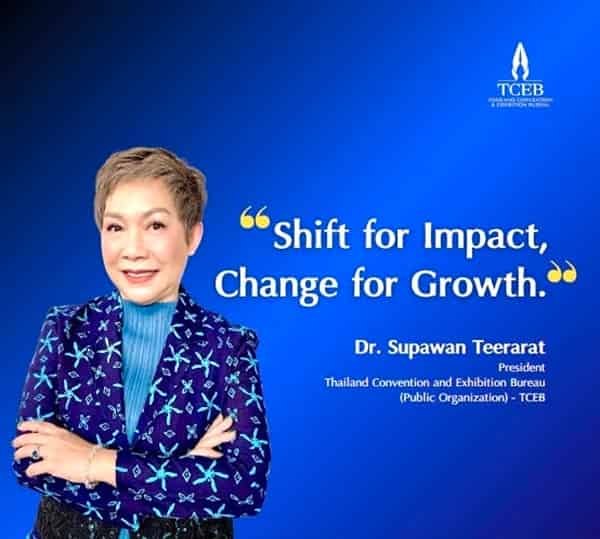
A notable change in the sector has been the leadership transition at TCEB
But the global business events industry has changed dramatically since the pandemic, and Thailand, to its credit, appears to have noticed.
Today, the conversation is less about how many delegates arrive at Bangkok’s convention centres and more about what those gatherings actually achieve once they are here.
At the centre of this recalibration sits the Thailand Convention and Exhibition Bureau (TCEB), the agency responsible for steering the country’s business events strategy. Under the leadership of President Dr Supawan Teerarat, the bureau is quietly reshaping how Thailand competes in an increasingly crowded regional market.
The goal, in simple terms, is to move from volume to value.
A Different Kind of Growth
Before COVID disrupted the global meetings calendar, success in the MICE world was often measured by impressive numbers, larger exhibitions, bigger congresses and incentive groups that sometimes arrived by the planeload.
Thailand was particularly good at this.
Bangkok’s convention venues were busy, Pattaya’s resort conference facilities were thriving, and Phuket remained a favourite reward destination for incentive travel programmes.
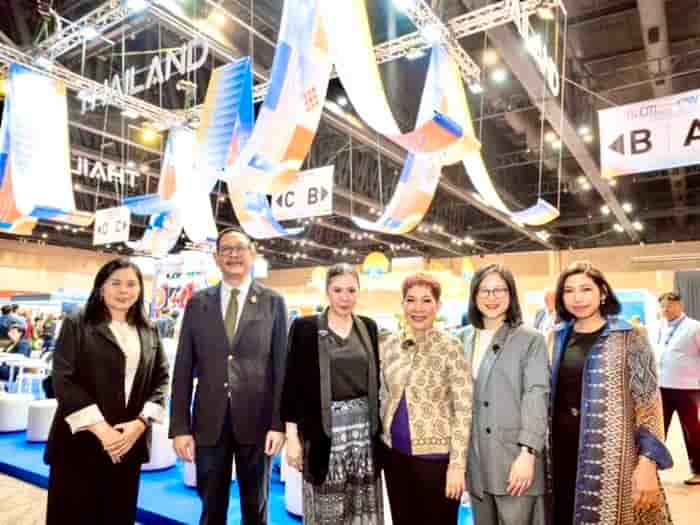
The TCEB team at work during IT&CMA & CTW AP with Thapanee Kiatphaiboon, TAT Governor
Yet the post-pandemic environment looks a little different.
Event organisers now favour shorter planning cycles. Hybrid meetings have become commonplace. Delegates expect experiences that feel curated rather than mass-produced.
This has prompted a subtle shift in Thailand’s MICE strategy.
Instead of simply hosting events, Thailand is increasingly positioning itself as a place where industry connections actually happen, whether in healthcare research, technology partnerships, sustainability initiatives, or the creative sector.
That might sound like bureaucratic phrasing, but the intent is practical enough: conferences should deliver tangible outcomes, not merely impressive attendance figures.
Continuity at the Helm
Leadership transitions can sometimes unsettle government agencies. In the case of TCEB, the handover appears relatively smooth.
Former president Chiruit Isarangkun Na Ayuthaya spent years strengthening the bureau’s international partnerships and embedding sustainability standards within the sector.
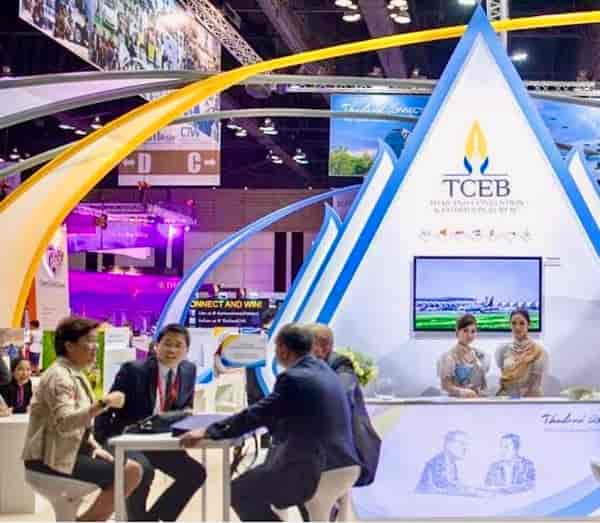
TCEB THAILAND CONVENTION & EXHIBITION BUREAU
His successor inherits a well-established system.
Thailand’s bidding capability for major events is mature, and its network of stakeholders from airlines to hotels and destination management companies is deeply experienced.
That institutional continuity is perhaps one of the Kingdom’s quieter advantages.
Bangkok Still Leads the Pack
No discussion of Thailand business events would be complete without mentioning Bangkok.
The capital remains the centrepiece of the country’s meetings industry, supported by major venues such as the recently modernised Queen Sirikit National Convention Centre, as well as BITEC and IMPACT.
These facilities place Bangkok firmly on the global convention map.
Yet the government has also encouraged a broader geographical spread of events, a sensible move both economically and strategically.
Cities such as Chiang Mai, Phuket, Pattaya and Khon Kaen increasingly host specialised gatherings, offering organisers something beyond the familiar metropolitan conference setting.
Chiang Mai appeals to associations seeking cultural depth and cooler northern climates. Phuket brings resort appeal to the incentive market. Khon Kaen quietly positions itself as a regional trade hub in Thailand’s northeast.
The idea is simple enough: not every conference needs a skyline.
Hotels That Know the Drill
Thailand’s hospitality sector continues to underpin its MICE success.
Long before the term “integrated resort” became fashionable, properties such as the Royal Cliff Group in Pattaya or Bangkok’s riverside luxury hotels had already built the infrastructure needed to host international meetings.
Purpose-built venues like PEACH (Pattaya Exhibition and Convention Hall) demonstrated early on that conferences require more than adaptable hotel ballrooms.
The industry learnt those lessons decades ago, and the experience still shows.
Delegates often remember the warmth of Thai hospitality just as clearly as the conference agenda itself.
Sustainability Moves Centre Stage
If there is one theme shaping the future of business events worldwide, it is sustainability.
Organisers now ask about carbon footprints as routinely as they ask about catering menus.
TCEB has responded by incorporating environmental considerations into its bidding criteria and venue certification programmes. Waste reduction, energy efficiency and community engagement are gradually becoming standard expectations rather than optional extras.
In truth, Thailand has little choice.
Across Asia, competing destinations are investing heavily in green infrastructure. Remaining competitive requires keeping pace.
Fortunately, Thailand’s tourism industry has long understood how closely environmental stewardship and economic success are intertwined.
Looking Toward 2026
So, where does this leave Thailand’s MICE sector as it approaches 2026?
Probably in a stronger position than many observers expected during the darker days of the pandemic.
The country’s advantage has never been a single factor. Rather, it lies in the combination of reliable infrastructure, experienced industry operators and an unmistakably human touch.
Strategy documents may talk about “economic impact” and “knowledge transfer”. Those phrases appear frequently in policy briefings.
But in the end, successful meeting destinations depend on something simpler.
They need efficient venues, welcoming hosts and cities that visitors actually enjoy spending time in.
Thailand, happily, still has all three.
by Andrew J Wood and edited by Karuna Johnson- (c) 2026.
Read Time: 4 minutes.
About the Writer.
 Andrew J. Wood has lived in Thailand since 1991. He is a former Director of Skål International and a Past President of Skål International Asia, Skål International Thailand, and Skål International Bangkok.
A former hotelier with senior management experience at leading hospitality groups including Shangri-La, Minor International, Landmark and Royal Cliff, he writes regularly for international travel and hospitality publications.
His work focuses on tourism trends across Asia, sustainable tourism development, and the future of travel and hospitality in the Asia-Pacific region.











