

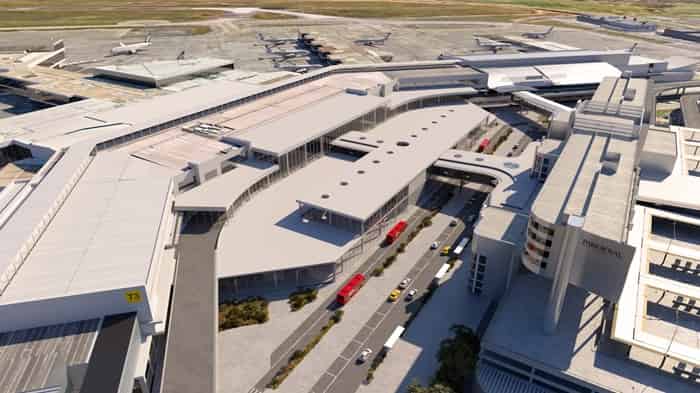
If ever there were proof that the skies are truly back, Melbourne Airport has just pinned it to the departures board. Australia’s busiest 24-hour international gateway has unveiled plans for a sweeping $4.5 billion expansion of its international terminal, a move as much about confidence as it is capacity.
The announcement lands on the back of a record-breaking summer, with January alone seeing more than 1.26 million international travellers flow through Tullamarine. That figure isn’t just a milestone, it’s a signal flare for what lies ahead. Demand isn’t creeping back; it’s marching.
At the heart of the plan is a staged redevelopment of the international precinct, designed to future-proof the airport’s role as a global connector. Expanded check-in halls, smarter baggage systems and five new gates are all on the cards, aimed squarely at smoothing the pinch points travellers know all too well.
Melbourne Airport chief executive Lorie Argus framed the project as essential infrastructure rather than optional polish.
“As Melbourne grows, demand for air travel is growing too, and we are investing billions of dollars to deliver the infrastructure we need to accommodate that,” she said.
It’s not a vanity build. The upgrade is as practical as it is ambitious. The expansion will extend both check-in and baggage reclaim zones, while five additional aircraft stands will allow the airport to handle either five widebody jets or up to eight narrowbody aircraft simultaneously, a flexibility airlines prize in an era of dynamic scheduling.
More space, however, isn’t just about aircraft movements. Passengers will notice the difference in upgraded waiting areas, improved lounge offerings and an expanded retail footprint. Even the often-overlooked meeters-and-greeters will benefit, with enlarged public waiting zones baked into the design.
The timing is deliberate. The works will be enabled by a new T123 Transport Hub, scheduled to open in September 2026, which will allow the international terminal footprint to expand into the existing forecourt. It’s a logistical sleight of hand designed to keep construction moving without grounding the airport’s famously non-stop operations.
Building inside a live 24-hour airport is never as simple as open-heart surgery; it’s more like a cosmetic procedure. That reality means the privately funded expansion will roll out over several years, carefully sequenced to minimise disruption while steadily adding capacity.
Argus noted the project dovetails neatly with another headline-grabbing development: Melbourne Airport’s third runway, slated for completion in 2031. Together, the twin investments represent a generational shift in how Victoria connects to the world.
“Increased capacity on our airfield and terminals will allow airlines to schedule more flights to more places, which will give consumers and exporters more choice,” she said.
The airport hasn’t been working in isolation. Argus confirmed months of collaboration with airlines to ensure the design reflects operational realities rather than just architectural ambition.
“We’ve spent several months working collaboratively with the airlines to ensure these plans meet their needs, while also delivering an improved experience for our travellers in both arrivals and departures.”
Yet the airport is also nudging Canberra. While bricks and mortar fall squarely within its remit, border technology does not, and that’s where the next frontier lies.
“Our investment in new infrastructure will deliver much needed extra capacity, but it is only part of the puzzle,” Argus said. “We’re keen to work with the federal government on upgrades to border processing technology and facilities to help further improve the arrivals experience for international travellers.”
It’s a pragmatic reminder that airports are ecosystems, not islands.
From an economic standpoint, the numbers are compelling. Argus pointed to a striking statistic: one average daily international service contributes around $190 million to the Victorian economy each year. Multiply that by expanded capacity, and the case becomes less about aviation and more about statewide prosperity.
“With just one average daily international flight worth $190 million to the Victorian economy every year, these investments will help facilitate more services and secure thousands of jobs around the state.”
Federal support appears broadly aligned. Assistant Minister for Citizenship, Customs and Multicultural Affairs Julian Hill welcomed the plans, underscoring aviation’s role as national connective tissue.
“Australian airports are critical infrastructure – connecting people with family, friends and work, and welcoming visitors from across our nation and the world,” he said.
Hill acknowledged the urgency, noting that rising travel demand leaves little room for inertia.
“Demand for domestic and international travel at Melbourne Airport is growing rapidly and Victorians and visitors alike will welcome these improvements which can’t come too soon.”
He added that collaboration across agencies would remain central, particularly around border experience and passenger flow.
“Australian Border Force will continue working closely with industry partners to improve passenger experience and ensure Australia’s airports are fit-for-purpose over the coming decades.”
Preliminary works will begin once the airport’s new road network opens later this year, quietly setting the wheels in motion for one of the most significant aviation infrastructure plays in the country.
For the travel trade, the message is unmistakable: Melbourne is not merely catching up, it’s positioning itself for the next era of global travel. Capacity breeds connectivity, and connectivity breeds opportunity. In that sense, the cranes that will soon dot the Tullamarine skyline may prove to be the most optimistic departure boards of all.
by My Thanh Pham – (c) 2026.
Read Time: 5 minutes.
About the Writer.
 My Thanh Pham has lived a life of travel more than most people ever do. After studying tourism, she went straight into the work of building journeys across South-East Asia, temples, beaches, night trains, and all, quietly fixing the messy bits so others could enjoy the ride.
She was never meant to stay behind a desk. Airline life followed, dividing her days between reservations and the airport floor, right where travel shows its true colours. Missed flights, tight hugs, frayed tempers, sudden joy, she saw it all, close up.
Now at Global Travel Media, My Thanh has traded ticket stubs for a keyboard. She writes the way she once worked: steady, clear-eyed and respectful of the road’s unpredictable rhythm, guiding readers through a world she knows from the inside.











