

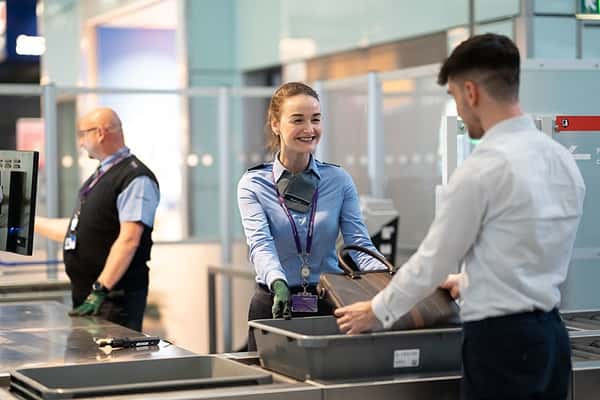
By any measure, airport security has long been the least romantic chapter of modern travel: shoes in trays, laptops out, liquids decanted into flimsy plastic bags, dignity surrendered somewhere between the X-ray belt and the metal detector.
At Heathrow, that ritual is now officially history.
After a £1 billion technology overhaul, the UK’s busiest gateway has completed a full rollout of next-generation CT security scanners across all four terminals, making it the largest airport in the world to adopt the system end-to-end. For passengers, the change is both simple and profound: liquids and laptops stay in the bag, queues move faster, and the plastic bag era quietly ends.
It is not a small operational feat. Heathrow processes tens of millions of passengers a year, and security lanes now run on scanners capable of handling thousands of travellers an hour while producing sharper, three-dimensional images of cabin baggage. The result is quicker screening, fewer false alarms and less of the choreography that once defined peak-hour mayhem.
There is also a sustainability dividend. The airport estimates the shift will eliminate almost 16 million single-use plastic bags annually, a small but symbolically powerful retreat from the wastefulness that once accompanied every holiday departure.
For Heathrow, the upgrade is the centrepiece of a broader investment program designed to future-proof the hub for rising traffic and tightening security standards. It arrives on the back of a quietly impressive operational year. In 2025, more than 97 per cent of passengers waited less than five minutes at security, earning Heathrow the title of Europe’s most punctual hub airport. Baggage performance lifted to a 98 per cent load rate, delivering an extra quarter of a million bags to their intended flights compared with the year before.
Those numbers matter in an industry where reliability now rivals luxury as the ultimate selling point.
Chief executive Thomas Woldbye put it plainly: “Every Heathrow passenger can now leave their liquids and laptops in their bags at security as we become the largest airport in the world to roll out the latest security scanning technology. That means less time preparing for security and more time enjoying their journey and millions fewer single-use plastic bags. This billion pound investment means our customers can be confident they will continue to have a great experience at Heathrow.”
Behind the scenes, the scanners deploy computed tomography, the same imaging technology used in medical diagnostics, to create layered, rotatable images of cabin baggage. For security officers, it delivers better detection and fewer manual bag searches. For travellers, it restores a small measure of grace to a process that had become increasingly theatrical.
The implications extend beyond London. Airports from Schiphol to Singapore are racing to modernise checkpoints as passenger volumes rebound and regulators loosen restrictions on liquids. Heathrow’s scale gives it an unusual authority: when the world’s most connected hub declares the old system obsolete, the rest of the industry tends to follow.
For Australian travellers transiting through Europe, the upgrade is more than a convenience. Heathrow remains a critical hub for trade between Australia, Asia and the Americas. Faster screening translates directly into tighter connections, fewer missed flights and in a welcome twist, more time for a coffee that does not involve sprinting.
In an era when aviation headlines often dwell on delays, disruption and decarbonisation, Heathrow’s security transformation is refreshingly practical. It does not promise glamour or grand architecture. It simply removes friction.
And in the business of moving people across the world, that may be the most valuable innovation of all.
by Alison Jenkins – (c) 2026.
Read Time: 3 minutes.
About the Writer.
 Alison Jenkins has lived most of her working life in the slipstream of aviation, where timetables matter, and people matter more. In airline sales, she built a reputation the old-fashioned way: by knowing her clients, her routes, and never missing the human detail. Quick with a smile, quicker with a solution, she made deals with warmth and kept her edge intact.
Trade shows, FAMILS, airport lounges and hotel lobbies became her second address. And somewhere along the way, notebook in hand, she began writing the journeys rather than selling them. Her reports grew lively, observant, full of the small truths only travellers notice.
That was the moment it dawned on her: she wasn’t simply travelling. She belonged in its stories.











