

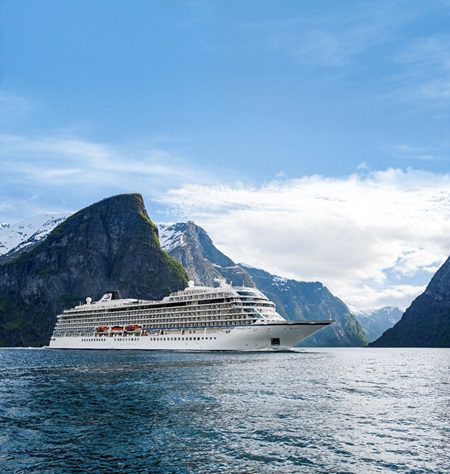
In a bold and deliberate move that could redefine the future of maritime travel, Viking Cruises—renowned for its thoughtful, guest-focused approach to cruising—has teamed up once again with Italian shipbuilding powerhouse Fincantieri to launch a project unlike anything seen on the high seas.
Unveiled this week, the Viking Libra is set to become the world’s first hydrogen-powered cruise ship capable of operating with zero emissions. Slated for delivery in late 2026 and already taking shape at Fincantieri’s Ancona shipyard, this groundbreaking vessel promises more than a new mode of travel—it signals a wholesale shift in how the cruise industry thinks about its environmental responsibilities.
🌿 Leading with Purpose, Not Just Promise
Weighing in at roughly 54,300 gross tonnes and boasting 499 staterooms, the Viking Libra will welcome nearly 1,000 guests in the refined, small-ship luxury that has long defined the Viking brand. Yet, while her silhouette may resemble her elegant ocean-faring siblings, her internal workings are another matter entirely.
At the heart of this new vessel lies a cutting-edge propulsion system powered in part by liquefied hydrogen and advanced fuel cells. This hybrid setup will enable the ship to run entirely emission-free in ecologically sensitive waters—such as Norway’s fjords or protected marine reserves—where traditional vessels are increasingly unwelcome.
The ship’s six-megawatt fuel cell system, supplied by Isotta Fraschini Motori, a Fincantieri subsidiary specialising in naval propulsion innovation, represents a tangible leap forward in the maritime sector’s slow but steady march toward sustainability.
Torstein Hagen, Viking’s founder and chairman, didn’t mince words. “From the very beginning, our ships have been designed with efficiency and responsibility in mind,” he said. “But with Viking Libra, we’re embracing hydrogen not as an experiment, but as a firm commitment to clean cruising. It’s a principled decision, not a publicity stunt.”
🔧 A Blueprint for the Future
This landmark announcement doesn’t stand alone. Following the Libra’s wake will be the Viking Astrea, also under construction and scheduled to debut in 2027 with similar zero-emission capabilities.
And there’s more. Viking and Fincantieri have confirmed signing contracts for two additional ocean ships to be delivered by 2031, with options for two more by 2033. These new builds would bring the company’s ocean fleet to 23 ships by the end of that year—an extraordinary feat in an industry where many players are consolidating, not expanding.
Fincantieri CEO and Managing Director Pierroberto Folgiero reflected on the moment: “With Viking Libra, we’re not only constructing a world first—we’re building a vessel that could reset the global conversation about what’s possible in cruise ship engineering. This partnership reflects shared values and shared ambition.”
🚢 Growing With Intention
While the cruise world often dazzles with spectacle and scale, Viking’s expansion remains ambitious and methodical. Alongside its burgeoning ocean fleet, the company plans to add 26 new river ships by 2028, expanding that fleet to 110 vessels. The combined result? A robust and diverse portfolio that spans the globe while remaining rooted in the company’s guiding philosophy: travel thoughtfully.
Each new ship in Viking’s pipeline is designed not to chase trends but to serve a growing audience of discerning travellers who expect more than just luxury—they want environmental integrity, cultural immersion, and a sense of purpose.
🌏 Eyes on the Australian Market
With Australia’s cruise sector bouncing back strongly post-pandemic and consumer interest in sustainable travel options growing by the day, Viking’s hydrogen fleet is expected to find fertile ground Down Under.
“Aussies are savvy,” says a senior executive at a Sydney-based cruise agency. “They’re not just looking for the biggest ship anymore—they want meaningful experiences. A zero-emission vessel that can glide through natural wonders without leaving a trace? That’s exactly the kind of product that will resonate here.”
Indeed, Viking’s approach may well strike a chord with Australian travellers who value environmental responsibility and sophisticated travel experiences—a demographic growing steadily across the country.
⚓ A Tipping Point for Cruise Sustainability?
In an industry often criticised for lagging in its climate commitments, the Viking Libra represents a genuine shift. It is not an idea on paper or a future promise but a real ship already under construction with a real plan to enter service in just over 18 months.
If Viking’s move encourages even a handful of other cruise lines to follow suit, the long-term implications for the sector could be enormous. Hydrogen propulsion, long touted as the future of clean marine transport, finally has a flagship—and it flies the Viking banner.
For travellers, agents, and stakeholders in the maritime world, the message is clear: sustainable cruising isn’t a dream on the horizon. It’s about to set sail.
To explore Viking’s full range of itineraries and its sustainability vision, visit www.viking.com.
By Michelle Warner, Business & Travel Correspondent











