

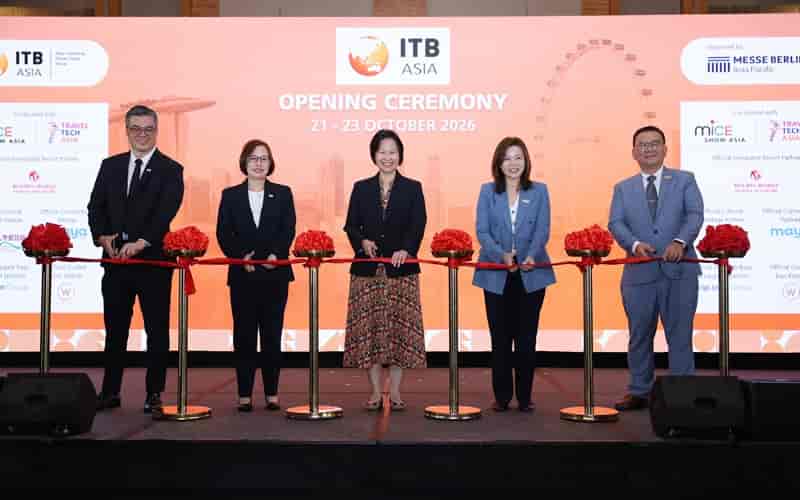
ITB Asia 2026 has closed in Singapore with more than 18,000 participants, a 184 per cent expansion in MICE Show Asia exhibition space and an ambitious new move into Indonesia. For a travel industry that rarely struggles to find something to talk about, this gathering had more than conversation on the agenda.
The 19th edition ran from 21–23 October at the Sands Expo & Convention Centre, Marina Bay Sands. It brought together more than 1,000 exhibiting brands and more than 1,500 qualified buyers. Alongside the main exhibition, MICE Show Asia and Travel Tech Asia gave the event three distinct commercial fronts: leisure, business events and technology.
The headline numbers came from organiser Messe Berlin Asia Pacific. More than 60,000 business appointments were pre-scheduled, while over 80 per cent of exhibiting brands represented international markets. That points to a substantial marketplace, although scheduled meetings are not the same as signed contracts. The difference tends to become clear once everyone gets home and opens their inbox.
MICE expansion sends a strong signal
The standout figure was MICE Show Asia’s 184 per cent increase in exhibition space compared with 2025. It is an impressive jump, but an important distinction: it measures the show’s footprint, not growth in the wider meetings industry, delegate spending or confirmed event bookings.
Even so, the expanded floor reflects destinations’, hotels’, and venues’ appetite to meet planners face to face. Ahead of the event, organisers reported more than 200 confirmed MICE buyers. These included American Express Global Business Travel, ConferenceDirect, FCM Meetings & Events, HelmsBriscoe, Medical Meetings and TMA Australia.
For Australian operators, the presence of familiar corporate travel and events businesses offered a practical connection to Asia-Pacific’s meetings market. The opportunity is not simply to win one conference. It is to build relationships that can bring repeat groups, incentive programmes and corporate accounts across borders.
MICE Show Asia also gave convention bureaux and hospitality suppliers room to compete for that business. In a crowded market, a destination’s appeal must increasingly be matched by usable venues, reliable transport and a convincing commercial proposition. An attractive view still helps, but it cannot chair a meeting.
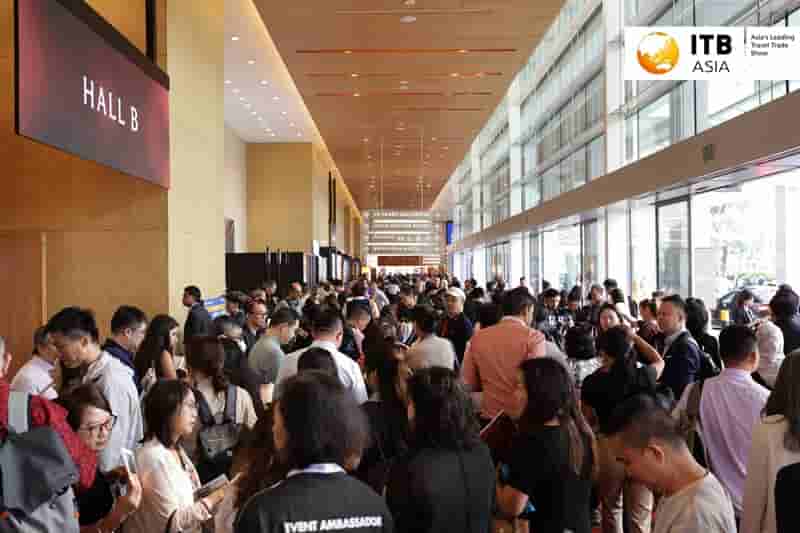
ITB Asia 2026 Closing
Jakarta becomes the next test
The bigger strategic development may prove to be the creation of ITB Asia Select, a regional extension of the Singapore-based brand. The first edition will run in Jakarta on 23–24 June 2027. It follows the rebranding of Travel Meet Asia Jakarta.
Messe Berlin Asia Pacific formalised the move through a memorandum of understanding with the Association of the Indonesian Tours and Travel Agencies (ASITA). The agreement places a local industry partner alongside an established international trade-show network.
The proposition is straightforward: take buyer-supplier connections closer to individual markets rather than expecting every deal to begin in Singapore. That could give Indonesian travel businesses broader access to overseas partners while offering international suppliers another entry point into the market.
Whether the format succeeds will depend on the quality of buyers, appointments and business secured in Jakarta. For now, the agreement clearly signals that the organiser sees regional growth beyond its annual Singapore gathering. Further markets are envisaged, although none was named in the closing announcement.
“As the industry evolves, our focus remains on creating meaningful connections and new opportunities for our partners, both in Singapore and across the wider region,” said Darren Seah, Executive Director, Messe Berlin Asia Pacific.
Travellers want experiences, not another brochure
Commercial ambitions were only part of the story. Under the theme “Experiences in Motion: Human-Centred Design in Travel & Tourism”, ITB Asia introduced an Experience Zone and a dedicated Experience Pavilion by Tripadvisor.
The move gave attractions, activities and local experience providers a more visible place. They were no longer simply an extra beside traditional tourism sellers. It also reflected a shift in what agents and their customers are buying: not merely a flight and a bed, but an experience worth leaving home for.
Free guided tours, backed by Woopa Group, helped delegates navigate the sprawling show floor and meet relevant exhibitors. A pilot off-airport check-in initiative with Changi Airport Group tested another way to improve the visitor journey. Both initiatives suggested that trade events are beginning to apply their own customer-experience advice to themselves.
Tourism Fiji, Hong Kong Tourism Board, Visit Finland and Visit Norway were among the tourism organisations represented. Hospitality, transport and attraction businesses ranged from Wyndham Hotels & Resorts to Mandai Wildlife Group and EVA Airways. The mix reinforced the point: destinations now compete through a network of connected products, not a single postcard image.
AI meets the human touch
Travel Tech Asia provided the other half of the argument. Its new Hosted Buyer Programme connected technology suppliers with buyers from hospitality, attractions, travel agencies and the broader travel-technology sector.
Artificial intelligence, automation and digital distribution featured prominently in the conference programme. Opening speakers Lovrenc Kessler of Simon-Kucher and Brett Henry of WebBeds examined travel demand and the competitive challenge of an industry in which access to AI is becoming commonplace.
It is a useful question for operators spending heavily on systems: if competitors can purchase similar technology, where does genuine advantage come from? Product knowledge, service, partnerships and execution remain hard to replace with a software subscription.
Across three theatres, 160 speakers contributed to 4,500 minutes of conference content. That is 75 hours of discussion, covering markets, meetings, technology and changing traveller expectations. The challenge is turning conference wisdom into firm decisions once the microphones are off.
What comes next for Asia-Pacific travel?
The three co-located shows return to Singapore from 20–22 October 2027. Exhibitor early-bird rates are offered until 31 March 2027. The Jakarta edition of ITB Asia Select arrives first, in June.
For travel advisers, hotel groups, event planners and tourism boards, Singapore’s message is less about crowd size than the changing shape of the business. Meetings are commanding more floor space, experiences are moving towards centre stage, and technology must prove its value in the real world.
ITB Asia has supplied the introductions and a regional expansion plan. The harder work now begins away from the exhibition hall, where a promising handshake must become business worth keeping.
For event information and future dates, visit ITB Asia, MICE Show Asia and Travel Tech Asia.
By: Soo James – © 2026.
Read Time: 5 minutes.
Author Bio:
 Soo James is nothing rehearsed, and that’s precisely the point. Malaysian by heritage, Sydney by schooling, she arrived at UNSW to study Arts, then took a left turn into IT, not out of ambition, but curiosity. Somewhere among systems and schedules, she worked out what really held her attention: people, language, and the quiet spaces between them.
Writing followed naturally. Travel and lifestyle gave her room to observe, to listen, to notice the details others rush past. Soo writes the way good travellers move, watching the room before admiring the view, catching the gesture before chasing the headline.
At EGT Media, her stories don’t shout or sell. They linger. They slow you down, open a door, and gently suggest there’s more to see if you’re willing to look.











