

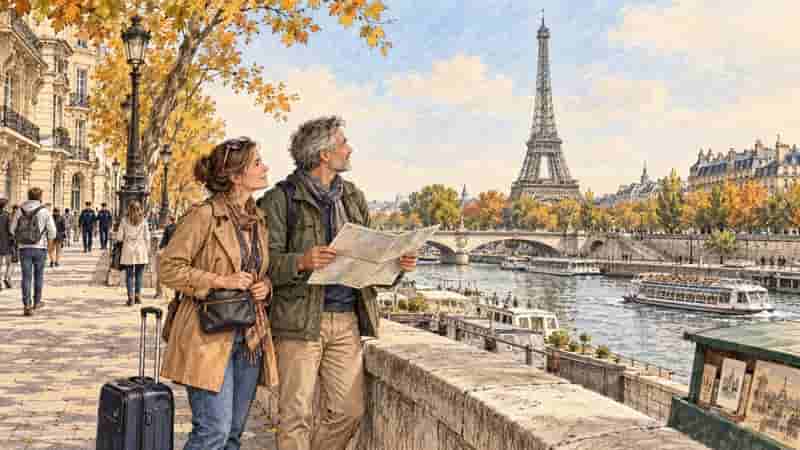
Australia’s travel advice for France, including Paris, remains in place. Holidaymakers should understand the risks, plan sensibly, and keep the romance from running away with the paperwork.
Paris has always been rather good at taking a visitor’s breath away. Australians planning a French holiday would prefer that experience to start with a first glimpse of the Seine, rather than discovering their passport has gone off on an independent itinerary.
France remains under Australian Government advice to “exercise a high degree of caution” because of terrorism. The Smartraveller advice checked on 18 October 2026 was last updated on 7 October 2026 and expressly continues the existing warning level. It applies to Paris as part of the national advice.
That distinction deserves a prominent place beside the holiday brochures. The 7 October update did not raise Australia’s overall advice level for France. The advice does not direct Australians to avoid visiting the country.
For travellers, travel agents and tour operators, the useful question is what preparation that warning requires.
Reading the warning properly
A travel advisory is a planning tool. It deserves more attention than the complimentary airline menu, although it rarely receives quite as much.
The United States also places France at Level 2, advising increased caution because of terrorism and unrest. Its advisory identifies tourist locations, transport hubs, hotels, restaurants, and major events as possible terrorist targets.
These warnings describe risks; they cannot predict what will happen on an individual holiday. Equally, an attractive itinerary cannot make those risks disappear.
The sensible response is to read the advice before booking, check it again before departure and continue monitoring developments while away. A screenshot from several months ago is a souvenir, not a reliable briefing.
Security belongs in the itinerary
Britain’s Foreign, Commonwealth & Development Office warns that terrorist attacks in France could affect places frequented by visitors, including public transport, entertainment venues and crowded gatherings. It advises vigilance and following instructions from French authorities.
For visitors, that means staying aware enough to notice what is happening beyond the camera screen.
Consider how you would leave a crowded venue, where your travelling companions would meet if separated and how you would contact them if a phone stopped working. These are modest preparations, best settled over breakfast rather than improvised in an emergency.
Security checks also deserve patience. A bag inspection may delay the pursuit of a masterpiece, but the masterpiece has already waited a considerable time.
No itinerary should be so tightly packed that following a police instruction becomes an inconvenience to be negotiated. When authorities restrict access, move people along or direct visitors elsewhere, the correct response is to comply.
Protests require distance and flexibility
The British advice says industrial action can delay roads and public transport. Demonstrations may occur with little warning, particularly in cities, although most are peaceful.
The American advisory adds that some protests have become violent and that police may respond with tear gas or water cannons. It advises avoiding demonstrations and areas with significant police activity.
A visitor does not need to work out who is right in a political dispute before deciding to take another street.
Nor does a crowd become a suitable spectator attraction because several people are filming it. A holiday photograph is poor compensation for getting stuck somewhere hard to leave.
Build flexibility into sightseeing days. If a route becomes unsuitable, choose another district, rearrange a booking where possible or ask your accommodation provider about local conditions. The aim is to preserve the holiday, rather than win an argument with the original schedule.
Check the train before leaving the hotel
Get transport information from the people operating the service.
RATP provides traffic information for Paris public transport. For rail journeys, check service updates directly with your train operator or booking provider, including SNCF Connect where applicable. These are sources to consult, rather than evidence that a particular service is currently disrupted.
A functioning Métro line does not establish that an intercity train is running normally. Equally, a problem on one route should not be presented as evidence that the whole country has stopped moving.
For airport journeys, allow a margin that reflects the consequences of arriving late. The final morning of a holiday is a poor occasion to discover how optimistic yesterday’s connection plan was.
Save booking references somewhere accessible, keep your accommodation address available offline and agree on an alternative route before setting out. Travellers with children, mobility needs or substantial luggage should consider whether that alternative is practical.
There is much to be said for the old-fashioned habit of arriving early, particularly when an international flight is involved.
Keep possessions close and distractions at a distance
British authorities warn that pickpockets operate on the Paris Métro, RER trains and at mainline stations. Their advice includes separating valuables, using inner bag compartments and keeping possessions close in restaurants and bars.
The practical lesson is straightforward: don’t let one moment of distraction put every essential item at risk.
A bag hung behind a café chair may be convenient for its owner and considerably more convenient for somebody else. Keep it within your control.
Think through how you would manage without your phone. Could you find the hotel, retrieve your insurance details or contact a companion? A little preparation makes an unpleasant incident easier to handle.
The intention is to enjoy Paris with reasonable awareness. Constantly checking every pocket hardly feels like a holiday; abandoning all care because the view is lovely isn’t much of a strategy either.
Insurance deserves a proper reading
Smartraveller’s insurance guidance advises travellers to understand their cover, including exclusions, medical expenses and planned activities. The cheapest premium is only one part of the decision.
Before departure, read the policy wording and ask the insurer to explain anything unclear. Keep the assistance number and policy details somewhere that doesn’t rely entirely on a single device.
If disruption affects a booking, contact the provider and insurer with the specific circumstances. Avoid assuming that a newspaper headline establishes an entitlement under a policy.
A useful question is: what would this policy actually do if the trip went wrong? It is more productive than discovering, after the event, that “comprehensive” was interpreted with admirable creativity.
Keep receipts and written communications when making alternative arrangements. Good records cannot guarantee an outcome, but they give a claim or enquiry a firmer foundation than a collection of increasingly exasperated recollections.
A warning is not a verdict on an entire country
Conditions vary by place and time. A national advisory should guide preparation, while local information helps travellers decide on a particular journey.
The Australian France advice also flags possible border delays and tells travellers to check entry requirements, including European Entry/Exit System rules. Those details warrant attention alongside the security advice.
A travel agent can help clients work through an itinerary and its practical weak points. Ask about connection times, assistance arrangements and whom to contact outside normal office hours. Specific answers are more useful than cheerful assurances that everything will be fine.
The same discipline applies to independent travellers. Check your arrangements, keep essential information, and leave enough room in the schedule to respond when circumstances change.
France offers ample opportunity for a memorable holiday. Enjoying it sensibly begins with accepting that preparation is part of the journey.
Pack comfortable shoes, learn a few courteous words and read the official advice. Paris can supply the romance. Travellers should bring the judgement.
By: Bridget Gomez – © 2026.
Read Time: 7 minutes.
Author Bio:
 Bridget has never been built for stillness. Of Portuguese heritage, she began as a nurse, tending veterans at the Repatriation Hospital and listening to stories as colourful as the life she had yet to live. It was worthy, steady work, but wanderlust, as always, proved louder than routine.
So, she traded starch for a backpack and disappeared for a year, chasing trains, sunsets and the occasional regrettable glass of wine. She wrote everything down: the dust, the laughter, the missteps, the magic. Those notebooks became a travel blog, then a habit, then a calling.
Eventually she found Stephen’s EGT Media, or perhaps it found her.
Today Bridget writes with heart, humour and a dash of mischief, still travelling, just now with words.











