

Australia’s cruise industry has received another unwelcome message from the bridge. Carnival Cruise Line will withdraw Carnival Luminosa and Carnival Adventure from Australian operations in March 2028, reducing its locally deployed fleet from four ships to two.
The announcement is more than a change to a sailing timetable. It raises fresh questions about the commercial appeal of Australian cruising, the certainty of maritime regulation and the choices available to holidaymakers who prefer to begin their voyage close to home.
And for an industry still adjusting to the disappearance of the P&O Cruises Australia brand, the timing could hardly be described as uplifting.
Two ships prepare to say farewell
According to reports published on 15 October, Carnival Luminosa is scheduled to make its final Australian voyage from Sydney on 15 March 2028. Carnival Adventure is due to depart Sydney on 20 March 2028 and, contrary to earlier plans, will not return for another Australian season.
The change is particularly significant because Carnival had already announced a more limited redeployment in February 2026. Under that plan, Carnival Adventure would leave for North America during the northern summer from April 2028 but continue to operate seasonally in Australia. That prospect has now been withdrawn.
Carnival Luminosa has been a familiar seasonal visitor to Brisbane since 2022. Its departure removes another Carnival ship from Queensland’s summer cruise offering, though it does not end the company’s year-round commitment to the city.
The news also marks a sharp change of course from Carnival’s October 2025 promotion of its 2027–28 Australian and New Zealand program, which outlined an ambitious range of voyages from several homeports.
Why is Carnival heading for other waters?
Carnival’s explanation centres on the conditions that influence fleet deployment years in advance: commercial opportunities, predictable regulation and an operating environment competitive with other cruise destinations.
In February, the company expressly pointed to more favourable market conditions elsewhere and regulatory uncertainty in Australia and New Zealand when announcing Carnival Adventure’s planned seasonal move to North America. The latest decision goes further by removing both ships from future Australian deployment.
Cruise industry representatives have also raised concerns about operating expenses and port costs. Those issues matter, but it would be misleading to claim that specific fees or biofouling rules caused this decision without evidence linking them to Carnival’s withdrawal. Nor has a reliable global comparison shown that Australian port fees are among the world’s highest.
However, a genuine regulatory issue requires attention.
On 2 October 2026, the Federal Government extended the exemption for eligible cruise vessels under the Coastal Trading (Revitalising Australian Shipping) Act 2012 until 31 December 2028.
The extension is intended to provide short-term operating certainty while reforms are developed. It also strengthens requirements on seafarers’ rights, including protections for collective bargaining from January 2027.
The government has signalled that this is intended to be the final exemption, with longer-term arrangements still to be settled.
Carnival’s Australian country manager, Peter Little, has described the extension as an interim measure and indicated that the company will continue working with Canberra on the future framework.
Both sides have legitimate interests: cruise operators need enough certainty to commit valuable ships years ahead, while governments must maintain fair employment standards and a workable maritime system.
The challenge is finding a policy setting that does both.
What remains for Australian cruisers?
Two Carnival ships are set to continue sailing year-round after March 2028:
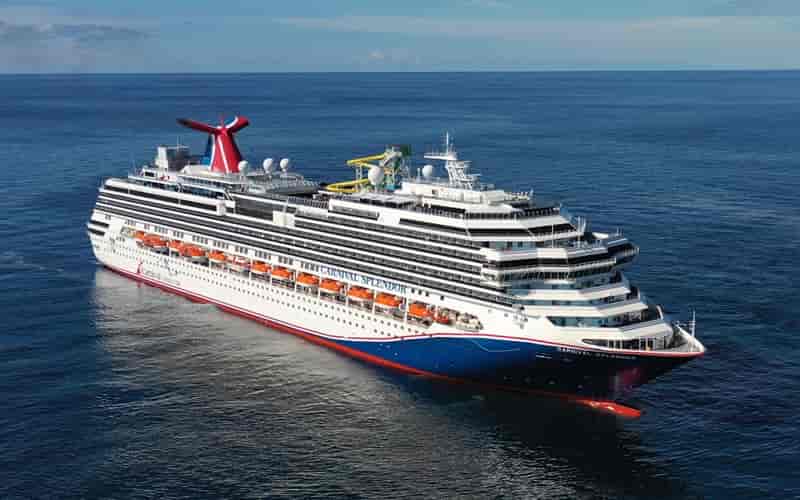
- Carnival Splendor – based in Sydney.
- Carnival Encounter – based in Brisbane.
Carnival Encounter returned to Brisbane from dry dock on 20 March 2026, with refurbished facilities and a refreshed appearance. Reports suggesting that its return is still pending are therefore out of date.
Carnival says it intends to release its 2028-29 Australian program in the coming weeks, concentrating on the two remaining ships.
Travellers and travel advisors should check new itineraries and booking conditions directly with the operator rather than assume that past seasonal departures will continue.
Importantly, a halving of the number of locally deployed ships is not the same as a confirmed 50 per cent fall in passenger capacity or cruise departures.
Carnival Luminosa already operates seasonally, and the final effect will depend on sailing frequency, ship capacity and the new program.
Nevertheless, fewer locally deployed vessels may mean less choice in certain seasons and fewer opportunities for the regional ports and tourism businesses that benefit from cruise calls.
Those effects will become clearer when the revised schedules are available.
The stakes extend beyond holidaymakers. Carnival has previously cited industry-wide economic benefits exceeding $7 billion and support for around 22,000 jobs across Australia.
These figures describe the broader cruise sector, not a forecast of losses arising from this particular decision.
From P&O expansion to a smaller footprint
The contrast is striking.
In March 2025, the former P&O Cruises Australia ships Pacific Adventure and Pacific Encounter joined Carnival as Carnival Adventure and Carnival Encounter.
Carnival then promoted its expanded four-ship Australian offering as a major step forward.
By March 2028, that four-ship presence will have narrowed to two.
This is not evidence that Carnival is quitting Australia: it is explicitly keeping year-round vessels in Sydney and Brisbane.
It is, however, a serious signal that the economics and policy settings of Australian cruising are facing renewed scrutiny at global fleet-planning tables.
The question for the industry is no longer simply how many ships Carnival will send. It is what Australia must do to remain a compelling place for cruise lines to base them.
For now, the country is keeping two Carnival ships on the horizon.
Whether it can persuade the others to return is a different matter altogether.
As sailors might say, the tide has turned, and Australia would be wise to read the chart.
By: John Alwyn-Jones – © 2026.
Read Time: 5 minutes.
Author Bio:
 John Alwyn-Jones is one of those rare figures who can make the business of travel sound positively adventurous.
A lifelong communicator with the polish of a broadcaster and the curiosity of a journalist, he’s spent decades shaping stories and strategies across tourism, aviation, and the cruise world. He’s led from the front as CEO, director, mentor, and advisor, and still brings warmth and wit to every boardroom and microphone.
Known for his sharp insight into global cruise lines and destinations, John has an old-school belief in professionalism, tempered with the sparkle of someone who’s genuinely seen the world. He’s not just in the travel business; he’s made it an art form.











