

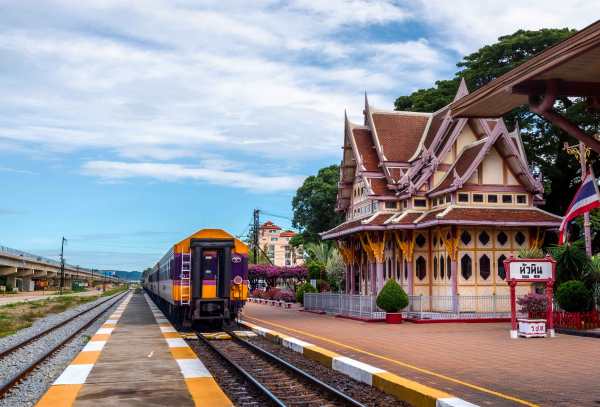
South of Bangkok, where the Gulf of Thailand laps against a long crescent of pale sand, sits a town that quietly invented the modern Thai beach holiday. Hua Hin doesn’t shout for attention the way Phuket or Pattaya do. Its charm traces back to its foundations nearly a century ago, and Thailand’s government now wants the rest of the world to notice.
From Fishing Village to Royal Retreat
The story begins in 1834, when farmers fleeing drought in nearby Phetchaburi settled a stretch of coastline, they called Samo Riang. Everything changed with a railway. When the Southern Railway line reached completion in 1911, it opened Siam’s aristocracy to a coast they’d never seen. Prince Purachatra Jayakara championed its development, and in 1921, construction began on The Railway Hotel, which welcomed its first guests in 1922 — the same year King Rama VI commissioned Thailand’s first Royal Hua Hin Golf Course. King Rama VII completed the summer palace Klai Kangwon “Far from Worries” in 1929, cementing Hua Hin’s status as the country’s original royal seaside retreat, a role it retains today. That original hotel survives as the Centara Grand Beach Resort & Villas, its colonial silhouette still evoking the era of steam trains and sea breezes.
A New Push to Go Global
That royal legacy is now the centrepiece of a fresh government campaign. In July 2026, Tourism and Sports Minister Mr. Surasak Phancharoenworakul visited Hua Hin, Cha-am, and the surrounding districts of Prachuap Khiri Khan, unveiling a plan to reposition the resort as a world-class destination on a par with Phuket and Ko Samui. Rather than chasing mass tourism, the strategy leans into what officials say makes Hua Hin distinctive: a quieter atmosphere, royal heritage and an established following among quality travellers. “Hua Hin has enormous potential and truly embodies the essence of a destination for a simple, peaceful lifestyle,” Surasak said, adding that future development would prioritize health and wellness tourism, sporting events and luxury hospitality.
The centrepiece of that plan is air connectivity. The government is pushing to reopen Hua Hin Airport to international traffic, with runway expansion and terminal upgrades targeted for completion by the end of 2026 and is courting airlines to launch direct routes from Kuala Lumpur, Taipei, Shanghai and Singapore. The Tourism Authority of Thailand has already signed a three-year partnership with Thai AirAsia to drive high-quality visitors to the destination, framing the approach as “Value over Volume” — prioritizing higher-spending travellers over raw arrival numbers. Provincial authorities are backing the push with a “Royal Destination” branding campaign, and State Railway of Thailand has special excursion trips from Bangkok to Hua Hin via the Royal Blossom luxury train.
A Destination for Every Kind of Traveller
Hua Hin already welcomes retirees drawn to its calmer pace, families favouring shallow waters and all-inclusive resorts, and golfers spoiled for choice among a dozen championship courses. Wellness and longevity travellers book into Chiva-Som Hua Hin Resort, while most major hotels there have full-service spas. Vana Nava Water Jungle draws thrill-seekers, and boutique properties with architecture ranging from eco-conscious coastal hideaways to Moroccan splendour appeal to design-minded guests.
Hua Hin’s food culture runs on fresh Gulf seafood, grilled and steamed at night markets. Beyond the bazaar, a visit to Monsoon Valley Vineyard will surprise wine connoisseurs with its highly rated Shiraz and Colombard varieties.
The Hua Hin Jazz Festival lights up the beach each late May into June, honouring the late King Bhumibol Adulyadej’s own passion for saxophone and composition. The colourful Hua Hin International Kite Festival fills the sky. Beach polo, an annual marathon, and kiteboarding and windsurfing along the coast toward Pran Buri round out an active calendar.
Shoppers balance night markets with Cicada Market’s weekend arts-and-crafts stalls. Wat Huay Mongkol and Khao Takiab’s hillside temples anchor the cultural scene, while Pala-U Waterfall offers a half-day countryside escape.
A century after a prince and a king first saw promise in a quiet fishing village, Hua Hin is once again being rewritten — this time as Thailand’s next world-class gateway, with new flights, upgraded runways, and a value-driven strategy stitching the resort onto the region’s map of far-flung, world-class beach destinations.











