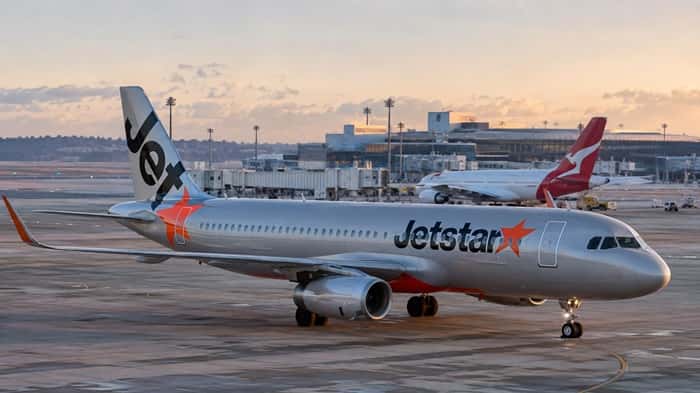
Qantas has signed the binding agreement that will bring its long partnership with Jetstar Japan to a close, subject to regulatory approval and completion of the transaction.
Under the deal announced on 4 August 2026, Jetstar Japan will buy back Qantas Group’s 33.32 per cent minority holding for JPY8.2 billion. The Development Bank of Japan will enter as a new shareholder, while Japan Airlines and Tokyo Century will retain their existing shareholdings.
The corporate mechanics may sound dry, but the strategic message is anything but. Qantas is leaving the Japanese low-cost carrier it helped establish, the Jetstar name is preparing to disappear from Japan, and capital is being redirected towards the group’s Qantas and Jetstar operations.
In aviation, even a farewell comes with several boarding groups.
A deal signed, but not yet completed
The first important distinction is that Qantas has signed a binding agreement; it has not yet completed the exit. Regulatory approvals are still required, and the transition is expected to be completed by June 2027.
That distinction matters for investors, employees, travel agents and passengers. Qantas will remain a shareholder until completion and will continue to recognise its share of Jetstar Japan’s profits or losses in underlying profit before tax during that period.
The transaction is valued at JPY8.2 billion. Qantas expects an estimated gain of approximately A$115 million in items outside underlying earnings, predominantly in the 2027 financial year. The estimate is subject to completion by 30 June 2027 and foreign currency movements.
The A$115 million figure is not simply a cash cheque waiting at reception. Qantas says it includes sale proceeds and one-off benefits arising from the non-cash expensing of historical foreign currency translation gains held in equity reserves. The direct pre-tax cash effect will reflect the sale proceeds and costs incurred during the transition.
It is an accounting explanation worth preserving because “A$115 million gain” makes a far more excitable headline than the underlying detail deserves.
Jetstar Japan will continue flying
Jetstar Japan is not closing. The airline will continue under a Japanese capital-led ownership structure and, after Qantas divests, will replace the Jetstar brand with a new name and identity.
The latest Qantas announcement confirms there will be no impact on Qantas or Jetstar international services between Australia and Japan. Codeshare arrangements with Japan Airlines are also unaffected.
An earlier joint statement issued in February said Jetstar Japan’s announced schedules would continue, flights already on sale would operate as planned, existing bookings could be used with confidence and employment for Jetstar Japan staff would be maintained. The August update does not announce any change to those commitments.
For passengers, that is the practical heart of the story. Aircraft will not suddenly be grounded, tickets will not turn into decorative bookmarks, and Australia–Japan services operated by Qantas and Jetstar Airways will continue.
This is an ownership transition and future rebrand, not an airline shutdown.
From Australian venture to Japanese control
Jetstar Japan began domestic operations in July 2012 and added international services in February 2015. By February 2026, it was flying to 15 domestic and four overseas destinations across 18 domestic and six international routes. The airline said it had carried more than 55 million customers.
Those figures make the Qantas exit more than a modest portfolio adjustment. Jetstar Japan helped normalise low-cost flying in a market long shaped by full-service airlines, high expectations and one of the world’s most formidable rail systems.
The airline also gave the Jetstar brand a meaningful position at Tokyo Narita. The February joint announcement described Jetstar Japan as Narita Airport’s largest low-cost carrier and outlined plans to expand its international network while using domestic flights to bring more inbound visitors to regional Japan.
That strategy makes sound business sense. Japan’s tourism success is increasingly measured not only by arrivals in Tokyo, Osaka and Kyoto, but also by how effectively international visitors are dispersed across regional cities and prefectures.
Development Bank of Japan brings aviation experience, financial weight and established relationships across Japanese government and industry. Japan Airlines brings network reach and a clear interest in developing a low-cost carrier that complements its broader group.
Qantas, meanwhile, no longer needs to sit at every table simply because it helped book the restaurant.
Why Qantas is bringing the capital home
Qantas says the sale will allow it to redirect capital towards Qantas and Jetstar’s domestic and international operations. The reasoning fits the group’s broader focus on fleet renewal and its stronger-performing core markets.
The airline group is undertaking what it describes as the largest fleet-renewal program in its history. That requires disciplined spending, particularly as new aircraft arrive and major projects compete for capital.
The move also follows the closure of Singapore-based Jetstar Asia, which permanently ceased operations on 31 July 2025. Qantas said that the airline had been hit by rising supplier costs, high airport fees and intensified competition, making its returns less attractive than those available in the group’s core markets.
Jetstar Japan is a different case. It is continuing to operate, and the transaction has been structured as an orderly change in shareholders rather than a closure.
Even so, both decisions point in the same strategic direction: Qantas is simplifying its exposure to Asian low-cost operations and concentrating resources closer to home.
The orange star prepares to bow out
The future brand remains one of the largest unanswered questions.
In February, the shareholder group published a tentative timetable that pencilled in an announcement of the new brand in October 2026 and completion of the ownership and brand transition in June 2027.
The August binding agreement confirms the June 2027 completion target but does not repeat the October branding date. October should therefore be treated as a provisional marker rather than a guaranteed unveiling.
Airlines, regulators and corporate timetables are old acquaintances, but rarely intimate friends.
What is confirmed is that Jetstar Japan will no longer use the Jetstar brand after Qantas completes its divestment.
That will close an important chapter for the Qantas Group in Asia. Vanessa Hudson said in February that Qantas was “incredibly proud” of Jetstar Japan’s pioneering role. Japan Airlines chief executive Mitsuko Tottori described the planned transition as a “new beginning”.
Both descriptions are fair.
For Qantas, the agreement releases capital, reduces complexity and sharpens its focus on operations it controls more directly. For Japan Airlines, Tokyo Century and Development Bank of Japan, it creates a locally led platform for future low-cost growth.
For Jetstar Japan, it is neither a funeral nor a rescue. It is a change of ownership, direction and name after 14 years of operation.
The airline remains on the runway. Qantas is simply leaving the cockpit meeting, taking its capital with it and asking the painters to remove the orange star.