

As Australians pack their bags for overseas adventures, new data from Southern Cross Travel Insurance (SCTI) reveals that our most essential travel companion – the mobile phone – is under constant threat from clumsy accidents, professional thieves and even local wildlife. SCTI’s recent Future of Travel research report revealed that Aussies ranked their phone and charger as their most important travel essentials (at 70%) over travel insurance (only 47%) and toiletries (43%).
According to SCTI, the insurer has handled over 1,330 phone claims over the past three years, with the average claim costing over $1,013.
While simple accidental drops are common, SCTI’s strangest claims highlight some truly bizarre scenarios.
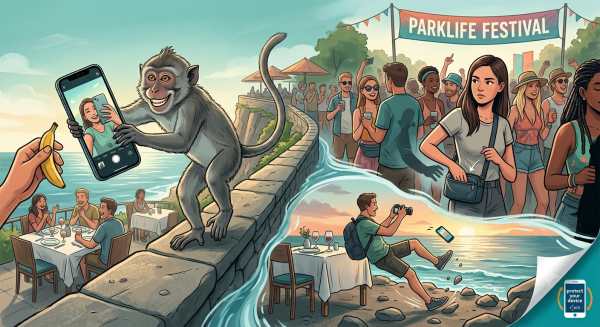
Leading the pack is a literal ‘monkey heist’ at a Bali clifftop restaurant, where a wild monkey reached around a wall, snatched a traveller’s phone and smiled at staff attempting a fruit bribe, before promptly dropping the device into the ocean below.
Water proved to be a repeat offender and multiple claims involved high-speed boating selfie drops, capsizing kayaks in Portugal and Fiji, and one unfortunate incident where a traveller suffering from severe ‘Bali belly’ even dropped their headphones directly into the toilet.
Crowded international events also emerged as major risk zones, with rampant phone thefts reported from Thailand’s Full Moon Parties to Manchester’s Parklife Festival.
Jess Strange, Chief Customer Officer at Southern Cross Travel Insurance, said many travellers now rely on their phones for almost every part of their trip, which can leave them exposed if their device is lost, stolen or damaged.
“From storing boarding passes, hotel bookings and digital wallets, to navigating maps and capturing once-in-a-lifetime memories, our phones have become one of the most important items we travel with. But as our data shows, they can disappear in an instant, whether they’re knocked out of your hand on a speedboat or swiped by a cheeky local monkey,” says Strange.
“While these stories may sound amusing, losing your primary way of communicating while overseas can quickly become stressful and expensive as replacing a phone while travelling can put a serious dent in your holiday budget.”
“It’s recommended you check whether your phone is covered under your policy and whether it should be listed as an unspecified or specified item. Depending on your insurer and policy, specified items may require payment of an additional premium for extra cover. Checking your item limits, understanding your cover and keeping digital copies of receipts can make a big difference if you need to make a claim.”
“It’s important to understand how policy limits and depreciation apply before you leave home. Many people don’t realise insurance policies, including travel insurance, generally take into account the age, wear and tear of electronic items. So, if you’re travelling with a three-year-old phone, you may not receive the cash equivalent of a brand-new model if it is lost or damaged.”
SCTI’s top tips if your phone is lost, stolen or damaged overseas:
-
Erase your data remotely: If your phone isn’t recoverable, use Apple or Android’s remote erase function to remove personal information and restore the device to factory settings. The phone needs to be online for this to work. While the command is permanent, it may not delete anything stored on a removable SD card.
-
Secure your accounts: Use another device to change passwords for email, social media, banking and other key accounts. Remember to remove the lost phone as a trusted device for two-factor authentication.
-
Report it quickly: If you think your phone was stolen, report it to the local authority and ask for a police report, as this is usually needed for insurance claims. It’s important to know that you do need to take reasonable steps to look after your belongings. For example, if you leave your phone out and unguarded on a resort table and a monkey (or a human) decides that’s a fun thing to own, you may not be successful with a claim.
-
Contact your provider: Give your service provider your IMEI and SIM numbers so they can blacklist the device and disable your number, helping prevent unauthorised use and a nasty long-distance bill.
-
Beware of phishing attacks: Scammers may pose as your service provider, bank or law enforcement and ask for personal information. Verify the source before sharing details, call organisations back on their official numbers from another device, and never click links in suspicious emails or texts.
-
Let your key contacts know: Warn travel companions, friends and family that your phone is missing, ask them to watch for suspicious activity or calls from your number, and make sure they know how to reach you by email or through someone you’re travelling with. Some phone providers also have international support lines that can help you secure your information.
Key insights from SCTI mobile phone claims data:
-
A traveller experienced a ‘monkey heist’ while at a Bali clifftop restaurant. A monkey snatched the phone from the dining table and then dropped it into ocean below – claim paid $1,020
-
A traveller attended Parklife Festival in Manchester and had their phone stolen from their zipped crossbody bag while wearing it – claim paid $754
-
A traveller was taking a selfie video on a moving boat when someone knocked into them and they dropped their phone into the ocean – claim paid $1,240
-
A traveller slipped on loose rocks while photographing the sunset on rocky beach in Fiji and dropped their phone and camera in the ocean – claim paid $5,748











