

There’s a quiet truth in the cruise business that rarely makes the brochures: ships don’t sail on sentiment.
They sail on margins.
And right now, New Zealand, glorious, remote, and increasingly expensive, is testing those margins in ways the industry can’t ignore.
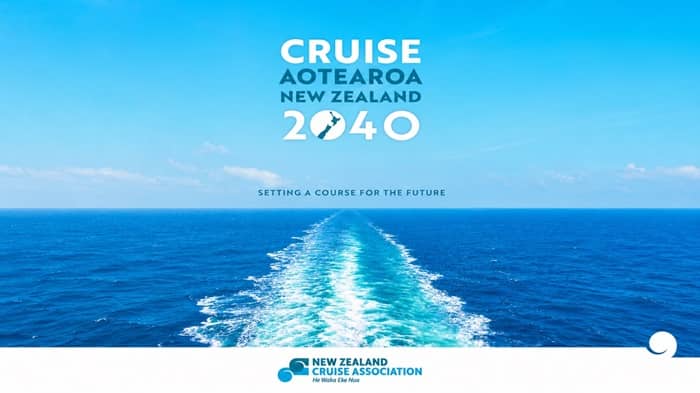
The newly released Cruise Aotearoa New Zealand 2040 strategy is, on paper, a confident piece of work. It talks of a $1 billion industry by 2040, net-zero ambitions, happier communities and better visitor outcomes.
But read between the lines and you should, and a more uneasy picture emerges.
This is not a victory lap. It’s a course correction.
The Boom That Didn’t Quite Land
Globally, cruising is back with a vengeance. Passenger numbers have surged past pre-COVID levels, fuelled by pent-up demand and a new generation of travellers discovering life at sea.
New Zealand, however, is feeling the chill.
After a strong 2023/24 season, forecasts point to a 15–20% drop in cruise activity over the next two years.
That’s not a blip. That’s a signal.
The reasons are familiar enough: fuel costs, foreign exchange pressures, regulatory friction, and the small matter of geography. It takes a long way and a lot of fuel to get here.
In an industry where ships can be redeployed with ruthless efficiency, New Zealand is no longer the easy choice it once was.
“It Won’t Just Always Come”
There’s a line buried in the strategy that deserves to be in bold type:
Cruise “won’t just always come.”
For years, the assumption was that it would. High demand, stunning scenery, strong passenger satisfaction, what’s not to like?
Plenty, as it turns out.
Cruise lines don’t buy scenery; they buy viability. And when costs climb faster than returns, even the most beautiful destinations start slipping down the itinerary.
From Volume to Value Finally
To its credit, the strategy doesn’t pretend otherwise. It pivots, quite deliberately, away from the old game of counting ships and passengers.
The new mantra is simple enough: value over volume.
That means fewer assumptions and sharper questions:
- Which ships actually deliver economic return?
- Which ports can handle them properly?
- And which visitors are worth attracting in the first place?
It’s a more grown-up conversation. Long overdue.
Because the numbers, while respectable, have never quite told the full story.
Cruise contributes around $614,000 per port day and $380 per passenger, solid figures, but not always evenly felt across regions.
And therein lies the rub.
Communities: The Uncomfortable Middle Ground
In some ports, a cruise is welcomed like a payday.
In others, it arrives more like a traffic jam.
Congestion, strain on local infrastructure, and a lingering sense that the benefits don’t quite match the disruption; these are not fringe complaints. They’re becoming central to the debate.
The strategy acknowledges this, albeit politely, noting the risk of losing “social licence” in certain regions.
Translation: push too hard, and the welcome mat disappears.
An Industry with an Image Problem
Let’s not dance around it. Cruise has a perception issue.
Some of it is deserved emissions, waste, and the visual impact of large vessels. Some of it is outdated, shaped by incidents that no longer reflect the industry’s current direction.
But perception, fair or not, has weight.
The document concedes there’s a “significant data and knowledge gap” fuelling that narrative.
In other words, the industry hasn’t been telling its story well, and in the absence of facts, people fill the gaps themselves.
The Sustainability Tightrope
If there’s one area where the pressure is only going one way, it’s sustainability.
Globally, cruise lines are pushing toward net-zero emissions by 2050, investing in cleaner fuels, shore power and smarter operations.
New Zealand wants to go further and faster.
The strategy talks of:
- Net-zero tourism supply chains by 2040
- Zero waste to landfill by 2030
- Stronger environmental protections across the board
It’s ambitious. It’s necessary. And it won’t be cheap.
But without it, the country risks undermining the very brand that draws visitors in the first place.
The Long Game Played Slowly
Cruising is not an industry that turns quickly.
Ships are scheduled years in advance. Infrastructure takes decades to plan and build. And reputations, good or bad, tend to stick.
The strategy recognises this, mapping out a three-stage approach:
- Get aligned
- Get integrated
- Then, maybe, get it right
It’s pragmatic, if not exactly thrilling.
What Actually Needs Fixing
Strip away the strategy language, and the challenges look surprisingly familiar:
- Too many stakeholders, not enough alignment
- Patchy data and limited transparency
- Inconsistent infrastructure and planning
- And a tendency to assume Cruise will simply keep showing up
It won’t.
And that’s the point.
A Strong Brand Still the Trump Card
For all the headwinds, New Zealand retains one enormous advantage: its reputation.
Few destinations can match its blend of landscape, culture, and authenticity. Passenger satisfaction remains high, and demand when it comes is genuine.
The danger lies in relying on that reputation without reinforcing it.
Because in a competitive global market, even the best brand needs backing.
The Bottom Line
This is a strategy that finally admits what many in the industry have been saying quietly for years:
New Zealand’s cruise sector needs to earn its place.
Not through volume. Not through assumption. But through value, clear, measurable, and shared.
The ambition is there: a $1 billion industry, stronger communities, cleaner operations.
The execution? That’s another voyage entirely.
CALL TO ACTION
For operators: sharpen the offer experience now trumps scale.
For government: align policy with reality; cost matters.
For regions: engage early because an unmanaged cruise is nobody’s friend.
by Michelle Warner – (c) 2026.
Read Time: 5 minutes.
About the Author.
 Michelle Warner has always carried stories the way others carry passports lightly, faithfully, and with purpose. She learned her craft in newsrooms, shaping sentences with care, before swapping deadlines for departures as a flight attendant with some of the world’s great airlines. Years aloft sharpened her eye for character and deepened her fondness for the small, dignified rituals of travel, the quiet kindness of strangers, the poetry of arrival, the patience learned between time zones.
Now grounded by choice, Michelle has come home to writing with the same calm authority she once brought to turbulent cabins. Her prose blends an editor’s discipline with a traveller’s wonder, tinged with humour and reverence for the golden age of travel. Each piece feels like a handwritten boarding pass, gracious, observant, and unmistakably alive.











