

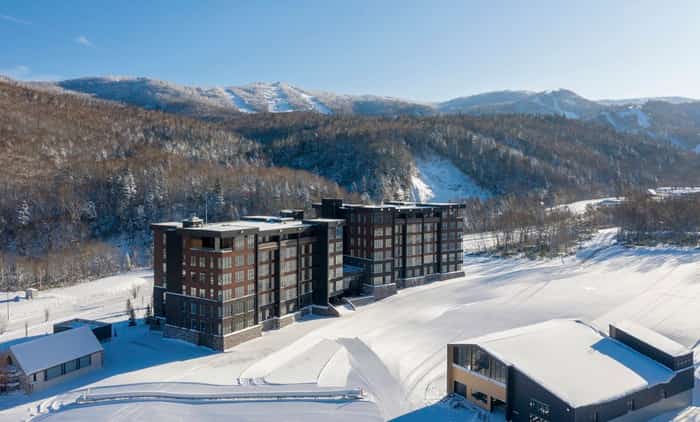
There’s a certain type of ski property that tries very hard to impress. Grand statements, oversized lobbies, and the sort of design flourishes that look better in brochures than they do after a long day in ski boots.
Then there’s YU Kiroro.
Tucked into the quieter folds of Hokkaido’s Kiroro Resort, this fully sold-out alpine residence doesn’t shout. It doesn’t need to. Instead, it does something far more difficult it gets the fundamentals right, then lets the setting do the talking.
Completed in late 2019 and developed by Thailand’s Property Perfect Public Company Limited, the THB 4 billion project has matured into one of Japan’s more quietly confident luxury ski addresses. No fanfare required. Just consistent delivery.
Powder first, everything else second
If you’re coming to Hokkaido, you’re coming for one thing: snow.
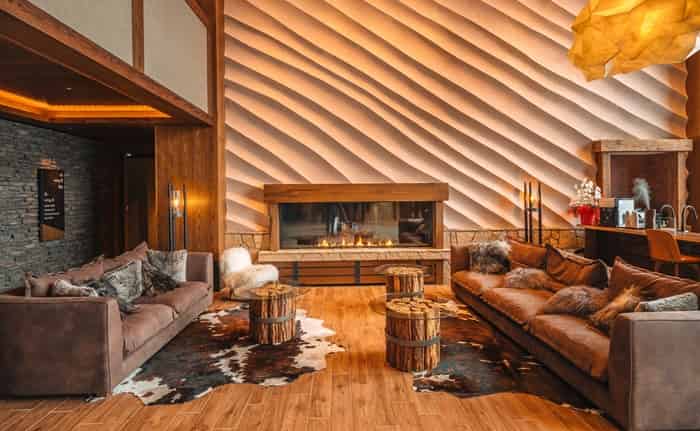
YU Kiroro Luxury Ski-in Lobby
And not just any snow, this is the sort of powder that has built a global reputation. Light, dry, and almost suspiciously forgiving, it’s the reason seasoned skiers keep returning, and first-timers suddenly look more competent than they are.
Kiroro, in particular, has long been something of an insider’s choice. While Niseko has leaned into its international fame along with the crowds that come with it, Kiroro has remained more restrained. Fewer scenes, more skiing.
That distinction matters.
From YU Kiroro, guests are about 90 minutes from New Chitose Airport, which, for travellers from Singapore, Hong Kong, or Bangkok, makes this one of the more accessible premium ski options in the region. Europe, by comparison, starts to feel like a commitment.
According to the Japan National Tourism Organisation (JNTO), inbound winter travel to Hokkaido continues to climb, driven largely by Asian markets seeking exactly this balance of high-quality snow without the logistical marathon.
Ski-in, ski-out, no marketing gymnastics required
The term “ski-in, ski-out” has been stretched beyond recognition in recent years. A short walk becomes “direct access”. A shuttle ride becomes “convenient”.
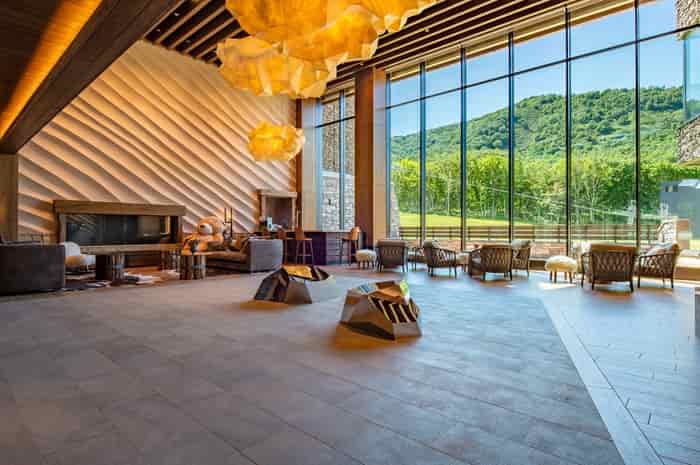
YU Kiroro Entrance
At YU Kiroro, it means exactly what it says.
You step out, clip in, and go.
It’s a small detail until you’ve experienced the alternative lugging gear, navigating crowds, waiting for transport. Suddenly, convenience becomes luxury.
The property itself spans just over 6,400 square metres and comprises 108 residences, ranging from one-bedroom apartments to full-scale penthouses. Sizes range from 62 to 267 square metres, which, in ski-property terms, is generous without being wasteful.
More importantly, the layouts make sense.
These are spaces designed to be lived in, not just admired. Proper kitchens. Dining tables that invite conversation. Living areas that don’t feel like hotel afterthoughts. After a day on the slopes, that matters more than any design award.
Design that understands where it is
Too many alpine developments import a European chalet aesthetic and call it a day. Timber here, stone there, and a fireplace to seal the deal.
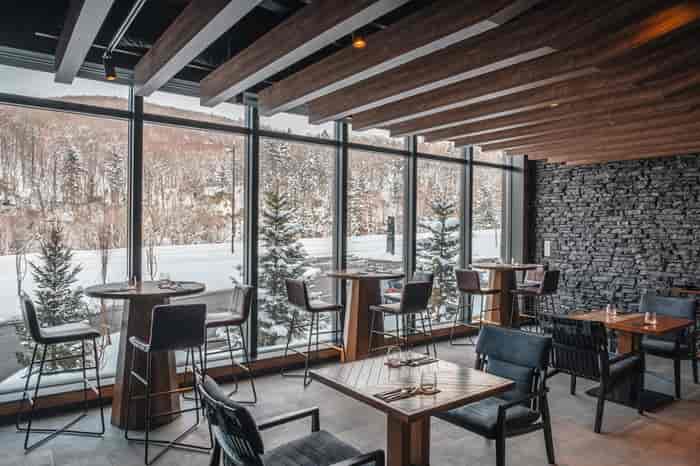
Yukashi Restaurant
YU Kiroro takes a different approach.
The design, referred to as “Hokkaido Alpine,” leans into the local landscape rather than borrowing from elsewhere. There’s timber, certainly, but it’s warmer, less theatrical. Stone is used with purpose, not decoration.
And then there are the windows.
Large, deliberate, and everywhere. They don’t just frame the view, they insist on it. Forest, mountain, snowfall, it’s all part of the experience, whether you’re in the lobby or halfway through breakfast.
The building itself has also been engineered with a level of pragmatism that suggests someone actually thought about winter. Heavy snowfall isn’t treated as an inconvenience; it’s designed for it. Reinforced structures, durable materials, and a façade that looks like it will age well rather than date quickly.
A lobby with a point of view
The arrival space at YU Kiroro could have easily gone the usual route: polished marble, oversized chandeliers, and the obligatory scent branding.
Instead, it tells a story.
Clay walls shaped using the traditional Japanese Sakan technique create subtle textures that echo wind and snow. Reception counters fashioned from timber trunks feel tactile rather than decorative. Even the abstract, cloud-like lighting leans more towards art than statement.
It’s thoughtful without being precious.
And importantly, it feels connected to the place rather than imposed on it.
Facilities that don’t overcomplicate things
Luxury in ski destinations often drifts into excess. Bigger spas, louder restaurants, longer lists of amenities.
YU Kiroro keeps things measured.
There are indoor and outdoor onsens, as expected, and properly done. Private onsen rooms for those who prefer their relaxation without an audience. A fitness centre, ski valet, and the YUKI Lounge, which leans into the idea that sometimes the best part of skiing is what happens after it.
Dining at Yukashi Alpine Bistro follows a similar philosophy. Local Hokkaido produce, handled well, without unnecessary theatrics. It’s the kind of place where you finish a meal and remember the food, not the presentation.
The penthouse, without the ego
At the top end, the four-bedroom penthouse delivers what you’d expect: space, materials, and a certain level of indulgence.
But again, it avoids going too far.
Yes, there’s marble, wood, handcrafted finishes, and a fireplace that anchors the living space. Yes, the views are expansive enough to make you pause mid-conversation.
And yes, there’s a private onsen on the balcony.
But what stands out is not the scale, it’s the restraint. It feels like somewhere you could actually stay, rather than somewhere designed purely to impress.
Not just a winter story
Perhaps the most interesting shift in properties like YU Kiroro is the move away from being purely seasonal.
Winter may still be the headline act, but summer in Hokkaido is no afterthought. Cooler temperatures, open landscapes, and a slower pace offer a different kind of appeal, one that is increasingly attractive to travellers looking to escape, rather than perform.
From an investment perspective, that matters.
Year-round usability is no longer a bonus; it’s becoming an expectation.
Final word
YU Kiroro doesn’t try to reinvent the ski resort. It doesn’t need to.
Instead, it focuses on the details that actually shape the experience: location, access, design, and a clear understanding of what travellers want once the novelty wears off.
In a market that often leans towards excess, that kind of restraint feels almost radical.
And, perhaps more importantly, it works.
by Maysa Punchanit – (c) 2026.
Read Time: 6 minutes
About the Writer.
 Maysa Punchanit has never waited for life to become easy. She’s far too practical for that. Instead, she’s built her path the way many strong women do, step by step, job by job, learning something useful everywhere she’s been.
Her working life has taken her through hospitality, sales, beauty therapy and the fast-moving world of social media, where she partnered with some of Thailand’s best-known companies. Along the way, she discovered a steady voice for blogging, warm, direct and grounded in real experience rather than marketing spin.
Being a single mother sharpened her resolve rather than slowing her stride. If anything, it gave her purpose.
Now with Destination Thailand News and Global Travel Media, Maysa arrives not as a newcomer, but as someone quietly battle-tested, resilient, capable and ready for the next chapter.











