

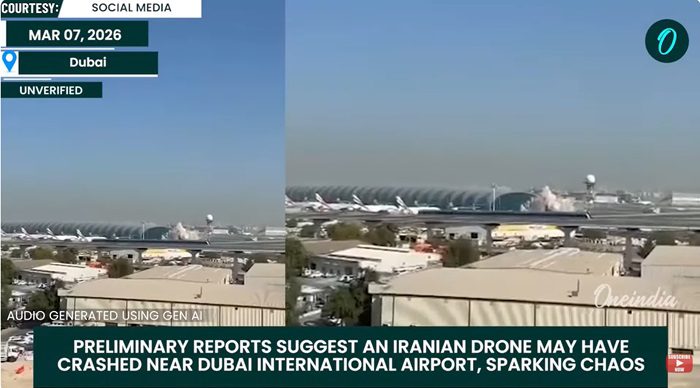
The aviation world is once again learning the uncomfortable truth that geopolitics and flight paths are never far apart.
Across the Middle East this week, airlines, airports and aviation authorities have been scrambling to manage an unfolding airspace crisis that has triggered cancellations, emergency repatriation plans and major operational changes for travellers moving between Europe, Asia and the Gulf.
For global carriers such as British Airways, Qatar Airways, Finnair and Thai Airways International, the situation has become a test of operational resilience and a reminder that the aviation industry’s finely tuned networks can unravel quickly when airspace suddenly disappears from the map.
From London to Bangkok, the message has been the same: stay calm, stay flexible and, above all, stay informed.
British Airways Mounts Emergency Flights From Oman
Among the airlines dealing with the immediate fallout is British Airways, which has suspended flights to several key Middle Eastern destinations while organising contingency operations to bring stranded passengers home.
The carrier confirmed it remains unable to operate services from Abu Dhabi, Amman, Bahrain, Doha, Dubai and Tel Aviv, effectively cutting off several of its regular Gulf gateways.
Instead, the airline has turned to Muscat, Oman, as a temporary evacuation hub.
Additional flights from Muscat to London Heathrow have now been scheduled for 9, 10, 11 and 12 March, departing at 02:30 local time, primarily for customers currently stranded in Oman or the United Arab Emirates.
Passengers with existing bookings are being encouraged to contact British Airways via a dedicated hotline or await direct email communication from the airline.
The carrier emphasised that safety considerations remain paramount as the situation evolves.
“We are constantly reviewing the situation and will continue to do everything we can to support our customers and colleagues in the region,” the airline said in a statement.
British Airways also issued a familiar but necessary warning for travellers: do not head to the airport without a confirmed booking.
Such caution reflects the fluid nature of the situation. Even carefully scheduled rescue flights can change rapidly if airspace conditions shift.
The airline’s Muscat flight on 8 March has already filled to capacity, a sign of the pent-up demand among passengers eager to leave the region.
More services may be added if conditions allow.
Thai Airways Keeps Flying But Takes The Long Way Around
While several carriers have suspended operations entirely, Thai Airways International has opted for a different approach.
The airline confirmed that all flights are continuing to operate as scheduled, albeit with revised flight paths designed to avoid sensitive airspace.
For long-haul European services, this means detours and slightly longer travel times.
The carrier explained that routes are now being carefully plotted to bypass areas affected by the regional unrest.
“THAI confirms that all flights continue to operate as scheduled,” the airline said, while acknowledging that the alternative flight paths may extend journey durations.
For passengers, the operational change may mean a longer night in the sky, but at least the aircraft is still flying.
Travellers have been advised to monitor their flight details via the airline’s 24-hour contact centre or through its official channels.
More information is available via Thai Airways: https://www.thaiairways.com.
Qatar Airways Plans Limited Return To Doha
At Qatar Airways, the situation remains delicate.
Commercial operations remain temporarily suspended due to the closure of Qatari airspace, but a limited number of flights are now being planned under a temporary safe corridor approved by the Qatar Civil Aviation Authority.
If conditions hold, the airline intends to operate flights to Hamad International Airport on 8 March from several major cities:
-
London Heathrow
-
Paris Charles de Gaulle
-
Madrid
-
Rome
-
Frankfurt
-
Bangkok
However, these services come with an important caveat.
They are not a full resumption of scheduled operations, but rather carefully controlled flights intended primarily for passengers whose final destination is Doha.
Passengers have been reminded not to travel to their departure airport unless they hold a valid confirmed ticket.
For updates, travellers can check the airline’s website: https://www.qatarairways.com.
Dubai Airports Slowly Restart Operations
Meanwhile, in the United Arab Emirates, the region’s busiest aviation hub is cautiously reopening.
Dubai Airports confirmed that operations at Dubai International Airport (DXB) and Dubai World Central – Al Maktoum International (DWC) began to partially resume on 7 March, following temporary airspace restrictions.
Even so, airport authorities have urged passengers to exercise patience.
Flight schedules remain highly volatile, and travellers are strongly advised not to travel to the airport unless contacted directly by their airline.
A spokesperson for Dubai Airports said the organisation was coordinating closely with government authorities to manage the evolving situation.
“Dubai Airports confirms partial resumption of operations from today, with some flights operating out of Dubai International and Dubai World Central.”
The spokesperson added that the priority remains the safety, security and well-being of passengers and staff.
In a separate advisory, authorities also confirmed that operations at DXB had been temporarily suspended for safety reasons, with all procedures conducted in accordance with established aviation protocols.
Updates can be found via Dubai Airports: https://www.dubaiairports.ae.
Hamad International Handles Limited Repatriation Flights
In neighbouring Qatar, Hamad International Airport is preparing to handle a small number of repatriation flights for stranded travellers.
The airport confirmed that the partial reopening of flight movement follows authorisation from the Qatar Civil Aviation Authority, although the wider airspace closure remains in effect.
For now, the airport is operating under strict limitations.
Passengers have been advised not to travel to the airport and instead to contact their respective airlines directly for updates.
Finnair Launches Muscat Rescue Operation
Perhaps the most elaborate contingency plan comes from Finnair, which is preparing a series of special flights from Muscat to Helsinki.
Approximately 1,200 Finnair passengers are currently stranded in Dubai following widespread cancellations caused by the heightened security situation.
The airline plans to begin evacuation flights on 10 March, provided that Omani airspace is deemed safe.
Finnair Chief Operating Officer Jaakko Schildt acknowledged the emotional strain facing travellers caught in the disruption.
“Safety is always our top priority, also in this exceptionally challenging situation, and there is still uncertainty regarding the planned flights,” Schildt said.
“Nonetheless, we want to offer this option to our customers, who have been waiting for a long time, and the situation is distressing for them.”
The first flight is expected to carry around 300 passengers, prioritising vulnerable travellers, including children, the elderly, and those requiring assistance.
Additional flights may follow if conditions stabilise.
The operation involves considerable logistical complexity.
Because Finnair does not normally operate flights from Muscat, the airline must coordinate aircraft positioning, passenger transfers and government support, including bus transport from Dubai to Oman, organised in cooperation with Finland’s Ministry for Foreign Affairs.
Finnair has also cancelled flights to Dubai and Doha until 28 March.
Details are available via Finnair: https://www.finnair.com.
A Test For Global Aviation
For airlines and airports alike, the unfolding situation in the Middle East has become a real-time test of operational agility.
Route planners, safety teams and crisis managers are working around the clock to keep aircraft moving while avoiding sensitive airspace.
For travellers, the lesson is familiar but worth repeating: plans may change quickly.
The aviation industry has weathered its fair share of turbulence over the years, including pandemics, volcanic ash clouds, political conflicts and airspace shutdowns.
Each time, the sector adapts.
And while the skies over parts of the Middle East remain uncertain for now, history suggests that airlines will do what they have always done best: find another way through.












