

There comes a point in every destination’s story when it quietly decides to show a different side of itself. Not the headline act, not the hero shot, but the bit that lives in the margins, where real life happens.
Nepal may well be at that point.
Long framed through the lens of summits and snowlines, the country is now nudging the trade to look more closely at ground level. Kitchens instead of camps. Courtyards instead of base camps. And at the centre of that shift sits the Community Homestay Network (CHN), a Nepal-born social enterprise that has spent the better part of a decade proving that tourism doesn’t need to tower over people to change lives.
After what founder Shiva Dhakal describes as its most significant year yet, the organisation is inviting the trade to see things for themselves, launching two tightly curated fam trips for 2026 aimed squarely at agents and operators.
It’s less a sales push than an open door.
“We’ve seen strong growth and awareness over the past year,” Dhakal says. “Now the focus is on working more closely with agents and operators and helping reshape perceptions of both Nepal and the experiences we offer.”
Those perceptions, it’s fair to say, have been stubborn. For years, Nepal has been marketed as a proving ground, a place to conquer peaks, collect trekking stats, and come home with wind-burned bragging rights. But for travellers increasingly seeking meaning over mileage, that narrative feels incomplete.
CHN has built its model around filling in the gaps.
Instead of lodges and lookouts, it places travellers inside local homes. Instead of staged encounters, it leans into the everyday shared meals, slow conversations, and rituals that unfold without performance. It’s tourism that trades spectacle for substance.
“Travelling with us means seeing a completely different side to the country,” Dhakal says. “Beyond trekking and climbing, it’s about experiences that support and empower local people, especially women, in lesser-known parts of Nepal.”
That last point is doing a lot of heavy lifting in today’s market. Advisors are fielding more questions about impact than ever before, including who benefits, where the money goes, and whether the experience gives back as much as it takes. Community tourism, once a niche footnote, is edging closer to the centre of the conversation.
And from a commercial standpoint, it makes sense. A product that feels genuine tends to travel further than a product that feels manufactured.
CHN is now leaning into that momentum, opening the door to agents looking for something with a bit more texture. Homestays, community-led itineraries, hands-on experiences, the sort of inclusions that turn a program from pleasant to memorable.
Importantly, the model isn’t rigid. CHN works alongside existing destination management companies, weaving community experiences into established itineraries. When operators lack a local partner, the network can step in and handle on-the-ground logistics, a practical touch that reduces friction for international sellers.
“CHN is collaborative and flexible,” Dhakal says. “We work with agents and operators to deliver experiences that benefit local communities and leave travellers with memories that stay with them.”
For advisors, that also comes with a quieter advantage: stories. Not the polished, brochure-ready kind, but the sort gathered over lentils and laughter, the kind clients repeat long after they’re home. In a business still built on trust, those stories remain gold.
Of course, the surest way to understand a product is still to walk it, which is where CHN’s 2026 fam departures come in.
Two itineraries are now open for application, both designed to immerse travel professionals in the country’s social fabric rather than skim its surface.
The first, Stories from our Himalayas (10–19 May 2026), runs for 10 days and gently weaves together landscape and lived experience. It begins in Kathmandu with a soft landing, a wellness welcome, and dinner before shifting to Pokhara and then on to the Magar village of Narchyang, where waterfalls, hot springs and mountain air set the tone.
From there, the route pushes further north into Mustang, with time in Jomsom and the option to reach the remote village of Thini. A visit to Lubra, home to one of the last remaining Bon monasteries, offers a glimpse into belief systems older than the mountains themselves. The return south brings Gurung hospitality in Hemjakot, complete with a homestay cooking workshop that leans firmly into participation over observation.
The second journey, Valley of Festivals (25 August –1 September 2026), swaps altitude for atmosphere. Anchored in the Kathmandu Valley, the eight-day itinerary unfolds during one of the region’s most culturally layered periods.
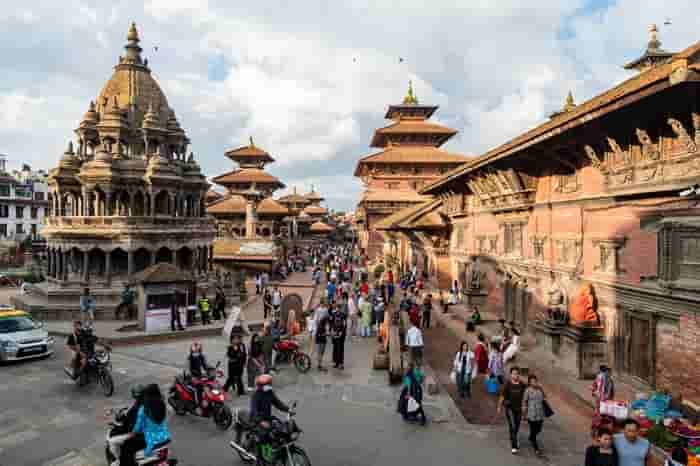
Agents will witness Gunlā, the Newar Buddhist pilgrimage month, before moving through heritage-rich towns including Patan, Kirtipur, Bhaktapur and Panauti. There are tactile experiences throughout Paubha painting, momo-making with local women, but the emotional centrepiece may well be Gai Jatra in Bhaktapur, a festival that blends humour, remembrance and social satire in a way few events manage.
It’s the sort of moment that reminds you travel still has the capacity to surprise.
Both departures lean into the same underlying idea: that understanding a place comes less from what you see than from who you meet. In a sector still recalibrating after years of disruption, that notion feels oddly reassuring.
For the trade, the timing is astute. Demand for purpose-led travel continues to grow, and destinations that articulate real community benefits are attracting a more attentive audience. Nepal, with its long tradition of hospitality and resilience, is well-positioned to capitalise on this shift.
Applications for both fam trips close on 27 February 2026, with places expected to be limited.
Agents interested in a closer look can explore details on the official Community Homestay Network website at https://communityhomestay.com or contact [email protected] for partnership information.
Because sometimes the most powerful way to sell a destination isn’t through altitude or accolades, it’s through the simple act of sitting down and being welcomed in.
And Nepal, it seems, is ready to pull up another chair.
by Charmaine Lu – (c) 2026.
Read Time: 5 minutes.
About the Writer.
Charmaine has always carried a quiet kind of courage. She grew up in Shanghai, a city that never slows, yet found her own balance there, studying accounting for  discipline and the arts for beauty. She needed both, and she knew it.
When she arrived in Sydney in the 1980s, she brought little more than a degree, a suitcase and the resolve to begin again. The harbour breeze felt like permission. She met Stephen, and together they built a life that bridged two cultures, a family, a home, and plenty of laughter.
Work was never just work. Long before search engines ruled the day, Charmaine was helping businesses be found by telling stories people wanted to read. That remains her quiet gift.
Her life isn’t a résumé. It’s grace under change structure and creativity, held together by a generous heart.











