

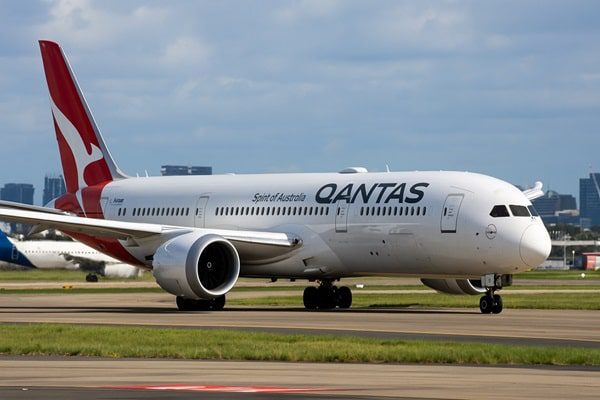
Australia is set to open fresh skies with the ratification of air-services treaties linking the country for the first time with Saudi Arabia, Colombia and Peru, under recommendations tabled by the Joint Standing Committee on Treaties (JSCOT) in Parliament last week.
The move signals a confident step by Canberra to strengthen the nation’s aviation reach and, by extension, its tourism, education and trade links with three fast-growing markets that have long been considered “missing from the map.”
“These agreements play an important role in enhancing Australia’s global connectivity,” said Committee Chair Lisa Chesters MP, adding that the deals were expected to deliver “economic benefits, particularly in tourism, education and trade.”
Three pacts, one strategy
Each agreement establishes the legal framework for airlines to operate between Australia and the partner nation, spelling out reciprocal rights in relation to safety, security, and commercial access. Until now, Australia has had no treaty-level aviation relationship with these countries.
In practical terms, the pacts will let Australian carriers fly direct to Riyadh, Bogotá or Lima once airlines consider the routes commercially viable and give those nations’ airlines access to Australian gateways such as Sydney, Melbourne and Perth.
The Department of Infrastructure said the deals will “expand opportunities for Australian travellers and exporters,” while offering new options for inbound tourism and international students.
Why it matters
The timing is notable. With Middle Eastern hubs tightening their grip on long-haul traffic and Latin America emerging as a growth corridor, the agreements open a new chapter in Australia’s global aviation story.
Saudi Arabia alone is investing heavily in aviation as part of its Vision 2030 strategy. Colombia and Peru, meanwhile, are positioning themselves as gateways to South America’s Pacific coast. For Australia, the treaties are both pragmatic and symbolic proof that the country can look beyond its familiar circles in Asia and the US.
“Formal air arrangements build trust and predictability,” one aviation analyst noted. “They’re the scaffolding behind every successful international route.”
From treaties to take-off
The Committee’s report, available at aph.gov.au, will now go to the Government for ratification. Once completed, carriers will be able to negotiate schedules, frequencies, and pricing, the groundwork for actual flights.
Public hearings were held in October, drawing evidence from the Department of Infrastructure and the Department of Foreign Affairs and Trade. Both endorsed the move, describing it as “consistent with Australia’s long-term aviation policy to expand access and competitiveness.”
The final view
For all the bureaucratic phrasing, this is aviation diplomacy in motion. Treaties like these may not quicken the pulse, but they quietly redraw the map. They’re the patient work of committees that make future travel stories possible.
If all goes to plan, Australians could soon be ordering coffee in Bogotá, sampling ceviche in Lima or connecting through Riyadh on the way to Europe, all under the fine print of these freshly minted agreements.
By Jill Walsh – (c) 2025
Read Time: 2 minutes.
About the Writer
 Jill Walsh has always had a pen within reach and a suitcase not far behind. She cut her teeth on media releases, then honed her craft shepherding press trips across half the globe—learning which stories travel well and which need a firmer edit.
In time, she wasn’t merely promoting places; she was representing them, translating civic ambition and local pride into words people wanted to read. Semi-retired now, Jill has swapped departure boards for deadlines, joining long-time colleague and friend Stephen at Global Travel Media on a casual basis.
Her beat is the business end of wanderlust: balance sheets, route maps, tender wins, the quiet numbers that decide where travellers actually go. She writes with tidy prose, dry humour and an old-school respect for facts, giving readers clarity without the clutter. In short, Jill brings seasoned judgement to travel’s moving parts—and a steady voice when the market gets noisy.
===================================











