

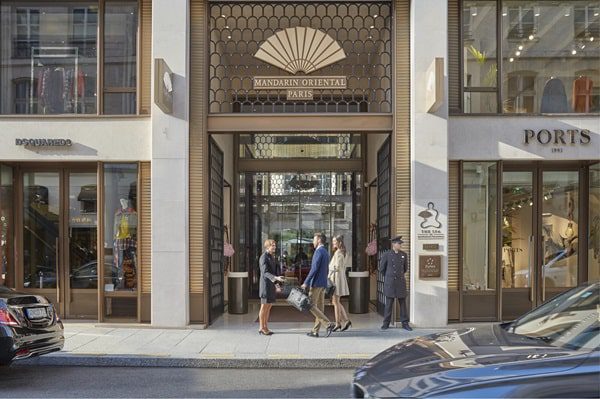
There are victories in life that are worth a polite round of applause. Then there’s Mandarin Oriental’s triple triumph, which deserves a standing ovation, a bouquet of orchids, and perhaps a gold-plated gong the size of a Bentley’s wheel hub. For the third year running, Mandarin Oriental has been named the World’s Best Luxury Hotel Brand, and the rivals are no doubt gnashing their bespoke Italian cufflinks in despair.
This is not a beauty contest for gleaming lobbies. The annual Luxury Travel Intelligence (LTI) report is a feared and admired assessment that takes a magnifying glass (and possibly a scalpel) to the DNA of luxury hotel brands. It isn’t about whether the butter arrives at breakfast in sculpted swans or whether the concierge can produce a helicopter at five minutes’ notice. It’s about consistency, management grit, staff quality, ethos, values, reinvestment, and the fine art of delivering perfection without making it look like effort.
And Mandarin Oriental, with a clinical 81.8% score, has outshone all others.
The 2025 Leaderboard: Elites at Elbows
This year’s rankings were less a polite dinner party and more a heavyweight title bout. Here are the top 15, complete with last year’s placings in brackets for those who enjoy scorecards:
-
Mandarin Oriental – 81.8% (1)
-
Aman – 80.7% (5)
-
Bulgari – 80.6% (2)
-
Oetker Collection – 80.0% (3)
-
Rosewood – 78.3% (8)
-
Four Seasons – 77.5% (12)
-
Six Senses – 77.2% (4)
-
Auberge Resorts – 76.1% (10)
-
Rocco Forte – 75.8% (7)
-
One&Only – 75.4% (6)
-
Belmond – 72.9% (9)
-
Dorchester Collection – 71.9% (11)
-
Peninsula – 70.8% (13)
-
Banyan Tree – 69.7% (New Entry)
-
Raffles – 69.0% (15)
The real drama lies in the movement. Four Seasons, once languishing at 12th, has rocketed to 6th, proof that even legends occasionally need to tighten their belts and polish their chandeliers. Meanwhile, Banyan Tree debuted on the 14th, showing that the luxury hotel scene is no club for the complacent.
Mandarin Oriental: A Class Apart
What sets Mandarin Oriental apart? It isn’t just the Asian sensibility stitched into its DNA, or the perfumed calm that seems to follow you through its marble corridors. It’s a relentless focus on quality, loyalty, and investment. The brand has quietly but firmly improved its standing for three consecutive years. That’s not luck; that’s graft and vision.
Mandarin Oriental isn’t chasing a fad. It is building an empire of loyalty, cultivating guests who wouldn’t dream of checking in anywhere else, and doing so without losing its understated poise. Other brands can only peer through the keyhole and take notes.
A Crisis Beneath the Surface
Yet amid the glitter and applause, a warning bell is tolling, one that LTI’s founder, Michael Crompton, is keen to hammer home.
“In 2023, we raised a concern about the evident global shortage of exceptional management and staff to match the substantial investments in increasingly impressive ultra-luxury properties,” he said. “This mismatch between capital investment and human resource development is now becoming critical and, if not addressed, it could threaten the reputation of several top-tier brands.”
The problem is not the lack of money. In fact, billions are being thrown at spas, rooftop pools, and chandeliers that could double as minor planets. The problem is people, or, instead, the lack of experienced, trained professionals to run these cathedrals of luxury. Too often, well-meaning but green staff are presented as part of some “authentic local experience”. The reality? Guests spending $5,000 a night aren’t signing up for amateur hour.
Crompton is blunt: “Brands must proactively invest from the outset, ideally during the construction phase, to recruit and train management and staff. This investment would allow them to align with the brand’s ethos and service expectations by gaining experience at more established properties. As part of our commitment to tracking excellence, LTI will significantly update its algorithm from 2026 onward to monitor how brands are confronting this challenge.”
Translation: build your staff bench as carefully as your infinity pool, or risk watching your hard-won reputation swirl down the plughole.
Why LTI’s Verdict Matters
LTI is not in the business of free trips and glossy spreads. It does not sell hotel rooms, run a booking engine, or cosy up to advertisers. Its income comes solely from its affluent membership base. That independence is rare in travel reporting, meaning the results land with a thud of credibility.
Its methodology, too, keeps brands honest. Each year, the algorithm is reset from scratch. No brand can rest on last year’s laurels; it’s a clean slate. It’s a system that mirrors luxury hospitality’s dynamic, ever-shifting landscape.
This is why when LTI names a brand the best in the world, executives in glass towers from Geneva to Hong Kong pay attention.
Access All Areas (Well, Almost)
Luxury Travel Intelligence is not the sort of club where you wander in wearing thongs and demand a table. It is discreet, selective, and operates on an invitation-only basis — a little like the world’s most exclusive drawing room, but with better Champagne and a sharper guest list. For those wishing to peek behind the velvet curtain, you may direct your audience to www.lti-members.com/invite-login. By using the invitation code INVITE350, they can unlock a US$350 value attached to membership. Think of it as a discreet key slipped into your pocket that opens the door to the most meticulously curated intelligence in luxury travel.
The Final Word
So, where does this leave the luxury hotel sector? Mandarin Oriental is setting standards that others are scrambling to match. With Aman and Bulgari breathing down its neck, hungry for next year’s crown. Four Seasons reminds everyone that it can still pull off a comeback worthy of a Broadway encore.
Most importantly, it leaves the industry facing its most human challenge: ensuring enough skilled people to deliver the experience guests demand. Marble bathtubs and Michelin-starred menus may dazzle, but luxury, in the end, is only as good as the hand that provides the room key.
By Alison Jenkins











