

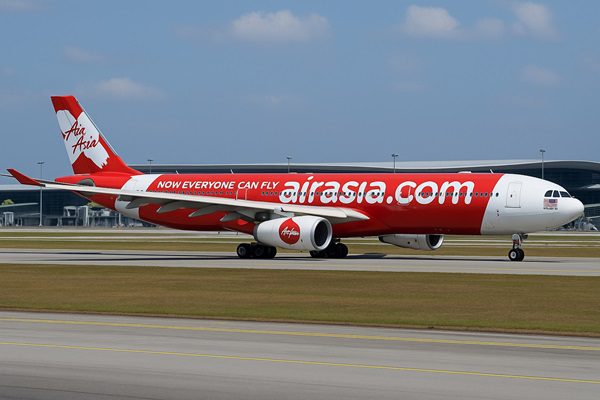
Aviation has a few certainties: fuel prices rise and fall like a drunken uncle at a wedding, passengers moan about legroom, and accountants wield their calculators with more drama than any Shakespearean stage. Yet, against this backdrop, AirAsia X has pulled off a quarter that will leave its rivals sniffing the air for whatever magic potion the long-haul low-cost carrier has been sipping.
The airline’s net profit soared to RM35.22 million for the second quarter of 2025, a sevenfold leap from last year’s RM4.82 million. Credit, in no small part, goes to favourable foreign exchange gains and a little help from the gods of cheaper jet fuel. Net operating profit, the nuts-and-bolts measure that excludes those handy forex wins, still managed a respectable 26% rise year-on-year to RM1.38 million.
It’s not bad for a quarter; it’s usually about as exciting as a wet Tuesday in Pahang.
Traffic holds steady, despite softer fares.
Passenger numbers grew in step with capacity, up 6% year-on-year, keeping the airline’s Passenger Load Factor steady at 83%. That’s aviation-speak for “bums on seats,” with nearly 935,000 passengers carried, AirAsia X seems to have cracked the delicate art of matching supply with demand.
Average base fares, however, dipped to RM405, reflecting a low-season slump and jittery travellers wary of earthquakes in Japan and elsewhere. The airline’s solution? A “load-active, yield-passive” strategy. Translation: Fill the plane first, and worry about profit per seat later, a tactic made palatable by lower fuel bills.
On the brighter side, ancillary revenue (think baggage, duty-free, and merchandise) rose 10% year-on-year, with revenue per passenger climbing 4% to RM257. That’s the modern airline model: if the fares don’t get you, the snacks and souvenirs will.
Cost discipline meets fuel fortune.
The carrier’s Cost per Available Seat Kilometre (CASK) fell 13% year-on-year to 12.05 sen, thanks to lower jet fuel prices. Strip out the fuel savings, however, and CASK crept up 9% to 6.38 sen, reflecting higher maintenance and operational costs. In other words, cheap fuel is available, but spare parts shortages disappear.
AirAsia X ended the quarter with 19 Airbus A330s, of which 18 are operational. The lone laggard remains grounded and awaits its turn in the global MRO (Maintenance, Repair and Overhaul) backlog queue. This logjam has turned mechanics into minor celebrities and spare parts into the aviation equivalent of gold dust.
Thailand subsidiary hit by Bangkok quake jitters.
While the Malaysian operation hummed along, AirAsia X’s Thai associate TAAX had a rougher ride. Revenue clocked in at RM372.8 million, but the unit posted an operating loss of RM13.2 million as passenger traffic fell 12% year-on-year to just over 318,000 travellers. Capacity also shrank 5%, leaving TAAX with a load factor of 78%.
The culprit? A widely reported earthquake in Bangkok and ensuing security jitters that spooked tourists faster than you can say “cancellation fee.” Still, with average fares holding firm at RM690, TAAX managed a net profit of RM10.58 million, thanks to forex gains. Sometimes luck plays a bigger role than load factors.
The CEO keeps eyes firmly on Europe and Central Asia
AirAsia X chief executive Benyamin Ismail quickly stressed resilience amid the seasonal softness.
“AirAsia X delivered resilient performance this quarter with a sound PLF of 83%, in line with capacity growth despite the seasonally softer second quarter,” he said. “The Group’s operations remained profitable even as one aircraft is pending reactivation and fares are softer as the market tries to boost demand taking advantage of the lower fuel price environment in 2Q25.”
Expansion is clearly the name of the game. With China roaring back to life, routes there hit load factors nudging 90%. The airline has added extra services to Australia for winter demand, launched flights to Karachi, Pakistan, and confirmed Tashkent, Uzbekistan, as its next Central Asian conquest in October.
But the real jewel in the crown will come later this year when AirAsia X returns to Istanbul, Türkiye, after more than a decade’s absence. The move isn’t just a romantic rekindling of East-West ties; it’s also a canny way to boost the airline’s lucrative Fly-Thru connections, which already account for 20% of passenger traffic and link over 140 destinations across ASEAN and beyond.
Ancillary revenue: the silent hero
Ismail was also upbeat about the carrier’s evolving menu of add-ons.
“Ancillary revenue continued to drive the Group’s margins as we enhanced product personalisation and improved value bundling,” he said. “Combined with disciplined management of cost and operational efficiencies, we are confident these efforts position us well for the busier quarter of the year.”
With duty-free trolleys clinking, bundled fares multiplying, and loyal flyers snapping up everything from seat upgrades to branded merchandise, AirAsia X seems to have found the formula: keep the fares low, then sell passengers everything short of the cabin crew’s uniforms.
Outlook: currency smiles, fuel favours, Europe beckons
Looking ahead, AirAsia X is banking on three tailwinds:
-
Favourable fuel prices
-
A stronger Malaysian ringgit
-
Fresh markets in Central Asia and Europe
It’s a bold bet, but AirAsia has never been known for timidity. The airline that once put Southeast Asia on the budget long-haul map now wants to redraw it, stretching its wings from Karachi to Kazakhstan, and soon, Istanbul.
If the forex winds keep blowing in its favour and passengers keep tolerating the cramped economy seat for 10 hours at a stretch, AirAsia X may prove that low-cost long-haul is more than a passing fancy.
After all, in aviation as in life, fortune favours the bold and occasionally, those with a decent hedge against currency swings.
By Prae Lee











