

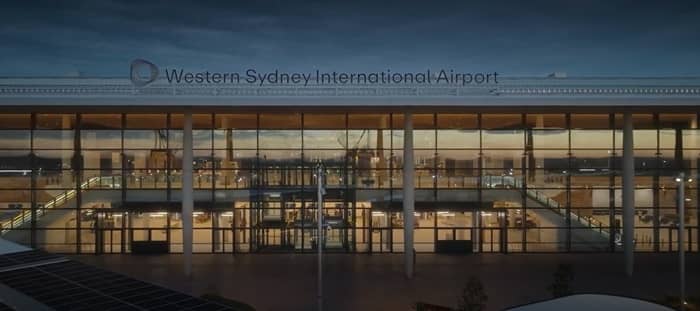
Western Sydney’s new gateway is flying, Kingsford Smith’s overnight rules have tightened, and the battle for airlines, passengers and tourism dollars has entered a new phase.
Sydney has spent about 40 years debating its second major airport. Now it has one; the conversation has changed rather abruptly. The question is no longer where to put it, but which airlines and passengers will use it.
Western Sydney International (Nancy-Bird Walton) Airport opened to commercial passengers on 25 October 2026, adding a 24-hour gateway to Australia’s largest aviation market. One week later, changes to overnight flying exemptions at Sydney Kingsford Smith took effect.
For the travel trade, this is more than a second set of check-in counters. It is the start of a different aviation system, with new routes, new ground transport choices and no shortage of commercial ambition.
Forty years in the making
Jetstar’s JQ362 to the Gold Coast became Western Sydney International’s first commercial passenger departure on 25 October. Air New Zealand flight NZ165 arrived from Auckland the following morning, opening the airport’s international passenger operations. Its Auckland service operates three times a week.
But the airport was already operating before passengers arrived. Freight operations began on 26 July, with regular Qantas Freight services starting the following evening.
Designed initially for up to 10 million passengers annually, the airport has room to grow. It also offers something Kingsford Smith cannot: unrestricted 24-hour operations.
Sydney’s long-running second-airport debate has finally progressed beyond maps and ministerial announcements. Airlines now get to make the important decisions.
The curfew changes the equation
Kingsford Smith’s legislated curfew continues from 11 pm to 6 am. From 1 November 2026, certain exemptions previously available to some freight aircraft, propeller-driven aircraft and business jets ceased to apply, following the formal recognition of Western Sydney’s availability for night flying.
That does not mean Kingsford Smith closes completely at 11 pm. Emergency and safety-related movements remain possible, and exceptional ministerial dispensations can still be granted. The legislation also permits certain limited movements.
Western Sydney, meanwhile, can schedule passenger and freight flights around the clock. That flexibility matters to international airlines trying to connect aircraft, crews and passengers across several time zones.
It matters to freight operators, too. Deliveries cannot always be persuaded to arrive before bedtime.
Airlines make their opening moves
Jetstar has moved quickly. Strong demand prompted it to increase its Gold Coast service from four weekly flights to daily operations before opening day. It also offers up to 14 weekly Melbourne services and three weekly Brisbane services, a total of up to 24 return services a week across the three routes.
Qantas is scheduled to follow on 28 March 2027, using QantasLink Embraer E190 aircraft on four weekly services each to Melbourne and Brisbane.
International airlines are assembling a more diverse timetable. Singapore Airlines plans daily Airbus A350-900 flights from 23 November 2026, subject to regulatory approval. Its published schedule includes a departure from Western Sydney just before midnight: a neat demonstration of the new airport’s operating advantage.
Vietjet has scheduled Ho Chi Minh City services from 9 January 2027, initially twice weekly, increasing to three a week in March. Its Thai affiliate also plans four weekly Bangkok services from November 2027, subject to regulatory approval.
Fiji Airways plans three weekly Nadi services from 19 March 2027. Qatar Airways is scheduled to add Doha from 15 December 2027 with three weekly flights, and says it intends to reach daily frequency by the end of 2028.
These are airline announcements, not guarantees of future traffic or profitability. Airports may celebrate a new route with cake and ribbon-cutting; keeping that route commercially viable takes considerably longer.
Kingsford Smith has plans of its own
Sydney’s established airport is not about to surrender the international market. Kingsford Smith retains an extensive airline network, established connections and proximity to the central business district, major hotels and the harbour’s visitor attractions.
Its Master Plan 2045, approved in August 2026, provides for expansion of international Terminal 1, redevelopment of domestic Terminals 2 and 3, and increased freight capacity.
Sydney Airport Corporation forecasts 72.6 million passenger movements a year by 2045. That is a forecast, not a measure of existing demand, and it demonstrates that the older airport is planning for growth rather than retreat.
The two gateways could ultimately complement one another as much as compete. Whether they generate lower fares or attract entirely new services remains to be seen.
The trip to the terminal matters
One of Western Sydney’s strongest selling points is geography. For many residents and businesses across the west, Badgerys Creek is a more practical departure point than the traditional journey across Sydney to Kingsford Smith.
The toll-free M12 Motorway opened in March 2026, providing a new road connection to the airport precinct and the wider motorway network. Taxis, rideshare services, parking and local buses are also available.
Public transport has an important interim arrangement. Transport for NSW operates the free WSI Link between St Marys Station and the airport every 30 minutes. It runs from 4.30 am until midnight Sunday to Thursday and until 1 am on Fridays and Saturdays. Other bus routes connect the terminal with centres including Penrith, Liverpool and Mount Druitt.
The 23-kilometre Sydney Metro Western Sydney Airport line is targeted to open in 2027. Until then, the shuttle and road network must carry the load.
For travel advisors, the practical advice is simple: check the airport code, transfer time, and total cost before recommending a flight. Western Sydney International is WSI; Kingsford Smith is SYD. They are not interchangeable, particularly for travellers making connections. Travellers should consult their travel advisor first to compare fares, transfers and onward flights.
Tourism’s opportunity, not yet its dividend
A new gateway brings fresh prospects for Western Sydney hotels, conference venues, attractions, transport providers and businesses extending towards the Blue Mountains.
The Australian Government says the airport project generated more than 12,800 jobs and directed over $500 million in construction expenditure to more than 360 Western Sydney businesses. Those figures describe the construction phase, not an established post-opening tourism windfall.
The real test will be visitor spending, sustained passenger growth, viable air services and whether international travellers venture beyond the usual Sydney itinerary.
For tourism operators, the next task is straightforward: turn better access into reasons to visit.
Two airports, one bigger challenge
Western Sydney International brings expansion capacity, a growing local catchment and the ability to operate through the night. Kingsford Smith brings scale, established networks and a city-centre advantage.
Neither airport can claim victory after little more than a week of passenger operations. What matters now is how airlines, travellers and businesses respond over the months and years ahead.
Sydney spent decades debating whether it needed a second major airport. It now has two. The argument has moved from the planning office to the departure lounge and, for once, the departure is actually happening.
By: Michelle Warner – © 2026.
Read Time: 6 minutes.
Author Bio:
 Michelle Warner has always carried stories the way others carry passports lightly, faithfully, and with purpose. She learned her craft in newsrooms, shaping sentences with care, before swapping deadlines for departures as a flight attendant with some of the world’s great airlines. Years aloft sharpened her eye for character and deepened her fondness for the small, dignified rituals of travel, the quiet kindness of strangers, the poetry of arrival, the patience learned between time zones.
Now grounded by choice, Michelle has come home to writing with the same calm authority she once brought to turbulent cabins. Her prose blends an editor’s discipline with a traveller’s wonder, tinged with humour and reverence for travel’s golden age. Each piece feels like a handwritten boarding pass, gracious, observant, and unmistakably alive.











