

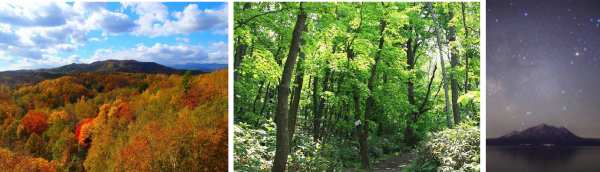
Hokkaido, Japan’s largest prefecture and northernmost island, is a dramatic land fit for both physical and mental exploration. Its capital, Sapporo, a city rich in history and culture is also known for its spectacular nature, making this particular area of Japan an essential destination for any visitor to Japan – at any time of year.
Mount Moiwa: A Bird’s Eye View of the City: Rising approx. 531m above Sapporo, Mt. Moiwa is one of the city’s most striking natural landmarks. Located surprisingly close to the downtown area, the mountain combines forest, hiking trails and glorious views across the capital and the Ishikari Plain. Mt. Moiwa has long held significance for the indigenous Ainu, who call it Inkarsipe – meaning a place from which to keep watch – and the summit is renowned for its after-dark views when the 360-degree panorama transforms Sapporo into a sea of neon stretching across the plain. Much of the mountain is covered by Moiwa Primeval Forest, a protected natural monument with a myriad of tree and plant species. In spring the wildflowers start to bloom; summer is an excellent time for hiking with cool and comfortable daytime temperatures; autumn sees the entire mountain transformed by vivid red and yellow foliage and the clear air makes it one of the best time to enjoy the night views; and in winter snow-covered Sapporo sets the scene for romantic nightscapes. The easiest way to reach the summit is by taking the Mount Moiwa Ropeway from the base, followed by the small cable car to the top.
Lake Shikotsu: Dramatically Changing with the Seasons: Lake Shikotsu, just an hour south of Sapporo, is a spectacular natural phenomenon surrounded by the mountains of southwestern Hokkaido. Formed in a volcanic caldera around 40,000 years ago, the lake is Japan’s second-deepest and is known for its exceptionally clear water. Its name comes from the Ainu nomenclature Shikot meaning large depression. Part of Shikotsu-Toya National Park, the lake is poetically framed by dramatic peaks including Mount Tarumae, Mount Eniwa, and Mount Fuppushi. The landscape naturally changes with the seasons: lush greenery covers the surrounding forests in summer, autumn brings with it brilliant hues of orange and red while winter transforms the area into a snowy wilderness. The Lake Shikotsu Onsen on the lakeshore is the main base for exploring the area. Visitors can take sightseeing boats, enjoy canoeing and kayaking, hike mountain trails or relax in the local hot springs. Lake Shikotsu is also known for the annual Shikotsu Lake Ice Festival (30 January – 23 February 2027), when illuminated sculptures made from lake water create an ethereal winter landscape. For travellers seeking a quieter alternative to Hokkaido’s better-known destinations, Lake Shikotsu offers pristine scenery, outdoor adventure and a glimpse into the island’s wilderness all within easy reach of Sapporo.
A National Park for All Seasons: Only 30 minutes by car from central Sapporo, Takino Suzuran Hillside National Park covers around 400 hectares and is Hokkaido’s only national government park which is divided into several zones of forests, flower gardens, open hills and streams. In spring, it bursts into life with colourful tulips and woodland flowers, while visitors in summer can look forward to exploring the forests, cycling, playing in the streams and enjoying the flower-filled Country Garden. In fall, vivid foliage surrounds the park’s three waterfalls, including the stunning 26-metre-high Ashiribetsu Falls. Families are well catered for, with expansive playgrounds and outdoor activities, but there are plenty of quieter corners for walking and enjoying the scenery. Come winter, the park becomes Takino Snow World with beginner-friendly skiing, cross-country trails, snowshoeing and a 200m tube-sledding course.
An Intimate Onsen Retreat: Suigan, which is situated in the forested mountains of Jozankei Onsen in southern Sapporo, is an intimate luxury ryokan designed for travellers seeking privacy, nature and onsen relaxation. Located at the foot of the scenic Maizuru no Toro Gorge, the property is surrounded by the mountains and rivers of Shikotsu-Toya National Park, but is only an hour by car from central Sapporo. Established in 2023, the main Suigan space contains just seven suites, creating a curated and secluded atmosphere. Each room has its own private onsen, allowing guests to spend much of their stay without needing to leave their suite. The concept is deliberately focused on creating a self-contained wellness retreat where bathing, dining and relaxation occur in private. The experience, however, is particularly appealing in winter, when snow transforms the surrounding gorge and mountains into a serene snowy landscape. For dining, guests can enjoy Suigan’s signature in-room shabu-shabu, while the newer Suigan Hanare Matsu ha Naoku Ibara ha Magareri, which opened next door in October 2025, offers a 2-hour genre defying full-course dining experience using seasonal Hokkaido ingredients.
Hokkaido Museum of Modern Art – Hokkaido’s seasons, an artist’s impression: For a limited period visitors can experience the changing seasons of Hokkaido through Iwahashi Eien’s Hokkaido Reminiscence – a 29m scroll-style artwork that charts the deep snow of winter to the late arrival of spring, short summer and autumn and back to winter – all portrayed as part of a single day from sunrise to sunset. Situated in central Sapporo, the Hokkaido Museum of Modern Art has been a vital cultural landmark since its inception in 1977. Designed with both regional and international ambitions, it explores Hokkaido’s distinctive artistic identity while placing it within a broader history of contemporary art. The museum’s permanent collection encompasses more than 6,000 artworks and is organized around five principal areas: art connected with Hokkaido, the École de Paris, glass art, modern Japanese art and contemporary art. Other highlights include works by Tamako Kataoka, Eien Iwahashi, Kinjiro Kida and Nissho Kanda, alongside an internationally recognized collection of glass dating from the Art Nouveau period through to the modern era.











