

South Africa’s favourite coastal drive now has an inland encore. From George on the Garden Route, the N9 climbs over the Outeniqua Mountains and into the wide, luminous spaces of the Great Karoo, arriving some 400 km later in Graaff-Reinet. Founded in 1786, the country’s fourth-oldest town celebrates its 240th year this year. At its heart stands Drostdy Hotel, a five-star landmark designed by French architect Louis Michel Thibault, completed in 1806 and welcoming guests as a hotel for almost 150 years.
The timing suits Europe perfectly. South Africa welcomed a record 10.48 million international arrivals in 2025, up 17.6% on 2024, and European arrivals rose 12.6%. Austria grew 15.6%, the UK 15.4%, Germany 14%, Switzerland 13.2% and Belgium 10.9%. Many European visitors already self-drive the Garden Route, and Dutch travellers are especially adventurous: in 2024 the Netherlands was one of only two markets whose visitors reached all nine of South Africa’s provinces. The N9 turns a coastal holiday into a grand tour, adding two or three Karoo nights with a five-star base.
Four passes and a string of surprises
The N9 is a tarred national road, and the stretch to Graaff-Reinet rewards an unhurried pace. It rises over the Outeniqua Pass at around 800 m, then crosses the Potjiesberg, Buyspoort and Perdepoort passes before the Karoo opens up on either side.
Willowmore is the gateway to the Baviaanskloof, part of the Cape Floral Region UNESCO World Heritage Site and much loved by hikers and off-road drivers. Further north, Aberdeen rewards anyone who stops. Terracotta dragons grin down from the roof of its 1898 former post office, and Pagel House, an 1897 ostrich-boom mansion, was renamed by zoo owner Frank Wilke after his hero, the circus strongman Wilhelm Pagel. Wilke bought the Pagel Circus animals, and in 1954 Aberdeen hosted a wedding inside a lion cage, with seven lionesses as bridesmaids.
“There is a psychological shift once you turn onto the N9,” says Tebello Polisane-Casper, Executive Director of Drostdy Hotel and the South African College for Tourism. “The road sets a slower pace. By the time guests arrive, you can see the city has left them.”
A five-star finale with a story
Graaff-Reinet is best explored on foot. Its more than 220 heritage sites, more national monuments than any other town in South Africa, sit within a few streets of one another.
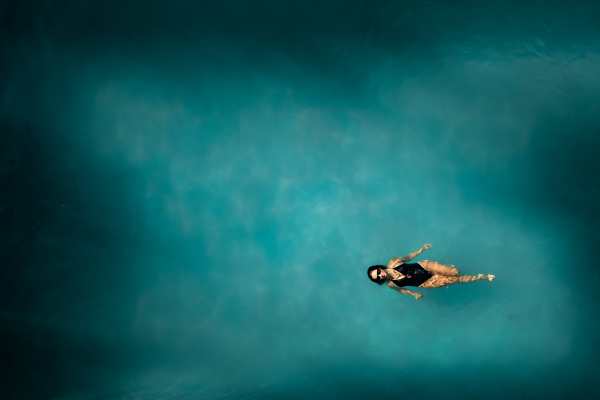
Drostdy Hotel was built between 1804 and 1806 as the seat of the landdrost, the district magistrate. The Rupert Family Foundation bought it in 2012 and reopened it in 2014 after an extensive, sensitive restoration, with interiors by Stephen Falcke. Its 48 rooms are spread across three precincts, including the restored 19th-century cottages of pedestrianised Stretch’s Court. The Ferreira precinct can be booked as a private enclave with its own pool, ideal for families and friends travelling together. Guests also enjoy three swimming pools, a spa and the Imibala Gallery.
Dinner at De Camdeboo celebrates Karoo lamb, which in 2023 became South Africa’s first registered geographical indication, the same kind of protection enjoyed by Champagne and Parma ham. The hotel’s wine shop stocks Rupert & Rothschild.
Every stay has purpose. The hotel was donated to the non-profit South African College for Tourism, which trains young people, particularly women, from rural communities in hospitality.
Fossils, owls and the Valley of Desolation
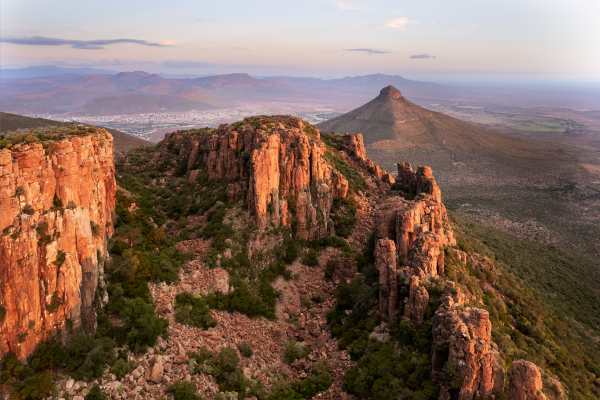
Camdeboo National Park almost surrounds the town. In the Valley of Desolation, 14 km away, dolerite columns rise up to 120 m above the plains, a famous spot for sunset. The park is home to Cape mountain zebra and more than 220 bird species.
Karoo Origins: The Fossil Centre opened in April 2025 and celebrated its first anniversary this year. It displays more than 850 fossil skulls, including all 107 holotypes of the Rubidge Fossil Collection. Holotypes are the original reference fossils used to define new species, and this is the largest number shown in any single exhibition worldwide. The rocks north of Graaff-Reinet hold the best record on land of the end-Permian mass extinction, 252 million years ago.
In the village of Nieu-Bethesda, about 50 km north, the Owl House is filled with outsider artist Helen Martins’ concrete owls, camels and figures.
“Graaff-Reinet used to be a stopover,” says Polisane-Casper. “Now guests book two or three nights, because there is a great deal here that doesn’t fit into an evening.”
Road trip at a glance
|
Route
|
Cape Town and the Garden Route to George, then north on the N9 via Uniondale, Willowmore and Aberdeen to Graaff-Reinet (two or three nights), then south-east to Addo and Gqeberha
|
|
Distance
|
George to Graaff-Reinet about 400 km on tarred roads; Graaff-Reinet to Addo about 250 km
|
|
Car hire
|
George or Gqeberha airports, ideal for a one-way rental
|
|
Detours
|
The Baviaanskloof from Willowmore; the gravel road via Rietbron between Willowmore and Aberdeen; Nieu-Bethesda from Graaff-Reinet
|
|
Highlights
|
Valley of Desolation at sunset, Karoo Origins fossil centre, the Owl House, a guided heritage walk, Aberdeen’s rooftop dragons
|
|
Best seasons
|
Spring (September to November) and autumn (March to May), with mild days and clear skies
|
Road-trip smart
- Plan driving days in daylight and allow time for photo stops on the passes.
- Fill up in each town along the way: Uniondale, Willowmore and Aberdeen.
- Use a high-clearance or 4×4 vehicle for the full Baviaanskloof route.
- Watch for livestock and wildlife on rural roads, especially at dawn and dusk.
- Drostdy Hotel offers secure on-site parking.











