

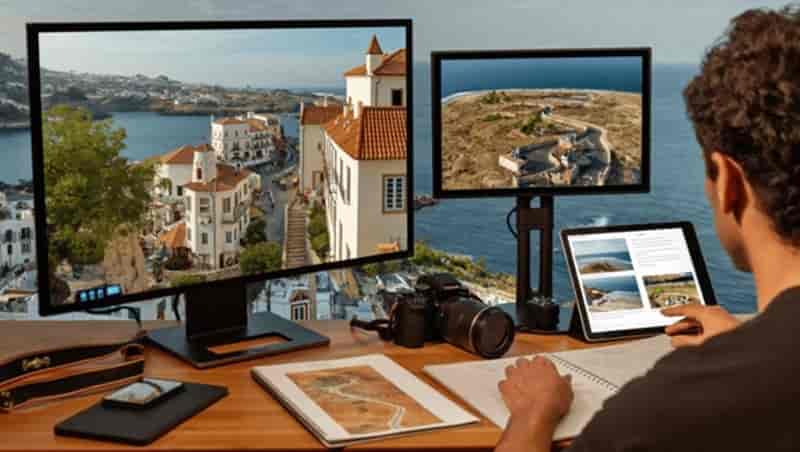
Travel has always sold something the buyer cannot inspect first. A room, a view, a beach, a deck chair in a particular position at a particular hour. The customer hands over money on the strength of photographs and arrives weeks later to find out whether the photographs were honest.
Which is why the single most durable complaint in this industry is some version of the same sentence. It looked nothing like the pictures.
That complaint predates any of the current conversation about generated imagery by decades. Wide lenses that made rooms look larger. Photographs taken in the only week the renovation was finished. Framing that cropped out the motorway. The industry has been managing the gap between image and arrival for as long as it has been selling holidays.
An AI Image Generator does not change that gap. With Higgsfield, creators can explore visual concepts more efficiently, making the existing rules about what may be depicted considerably more important rather than less.
Why is travel the sharpest case?
Because the product cannot be sampled, returned or compared before purchase, and because the customer travels to find out.
Somebody buying a jumper online who receives the wrong colour returns it. Somebody who flies to a resort on the strength of imagery and finds something different has spent the money, taken the leave and is standing in it.
That asymmetry is why accommodation imagery attracts complaints at a rate most product categories never approach, and why review platforms exist in the form they do.
It also means the consequences arrive late and loudly. A misleading image does not generate an immediate refusal to buy. It generates a review, a complaint, a social post and occasionally a regulator’s attention, weeks after the transaction closes.
For a property, an operator or a destination, imagery is therefore the highest-stakes marketing asset there is.
Does Australian consumer law care how an image was made?
No, and that is the useful starting point.
Australian Consumer Law prohibits misleading or deceptive conduct and false representations about goods and services. The test is the impression created in the mind of a reasonable consumer.
Nothing in that depends on whether an image came from a camera, an illustrator, a rendering package or a generative tool. A photograph that misleads breaches the law. An illustration that misleads breaches the law identically.
Which means the question facing a property or an operator is not whether generated imagery is permitted. It is whether the image creates an accurate impression, which is the same question that has always applied.
The ACCC has taken action on representations in travel and accommodation before, and the direction of regulatory attention on synthetic media generally is toward more disclosure rather than less.
Work from the current guidance rather than from a summary, and where a representation is marginal, take advice.
What must never be generated?
Anything a guest will compare against on arrival. That is the whole test and it covers more than people expect.
Never generate a room, a suite, a cabin or any accommodation a customer is booking.
Never generate a view. The outlook from a particular room category is one of the most frequently misrepresented things in hospitality and one of the most noticed.
Never generate a property, a facility, a pool, a restaurant or a public space.
Never generate food as served. A plate presented as what arrives at a table is a representation about the product.
Never generate conditions. Snow cover, water clarity, weather, wildlife presence, crowd levels. Those vary genuinely and showing an atypical version as standard is misleading regardless of how it was produced.
Never generate people and present them as guests, staff or local community.
And never generate a destination in a way that implies a photographic record. A beach that does not look like that, a street that has changed, a landmark with the construction removed.
Where does an AI Image Generator legitimately fit?
In the material that makes no claim about a specific place or product.
AI Image Generator illustration, where an image accompanies an argument rather than depicting a property. This publication’s own practice is the example, with illustrations credited to a named artist and a named tool.
Abstract and atmospheric AI Image Generator material for campaign backgrounds, where nothing specific is being represented.
Explanatory AI Image Generator graphics. Route maps conceptually explained, process diagrams, how a booking flow works, what a loyalty tier actually delivers.
Seasonal and promotional Higgsfield framing around real photography, which is where most operators will use an AI Image Generator and where the production saving is genuine.
And concepts not yet built, which have their own established convention and are covered next.
The distinction holding all of that together is simple. An AI Image Generator may illustrate an idea. Only a camera may depict a place a customer is buying.
Does the industry already have a convention for this?
It does, and it has worked for decades.
Hospitality has always needed to show buildings that do not exist yet. A hotel in development, a new wing, a refurbished restaurant, a cruise ship still in the yard. The answer has always been an architectural rendering, labelled as an artist’s impression.
Everybody in the trade understands that convention. It communicates intent without claiming record, and nobody treats a rendering as a photograph.
Generated imagery slots into that existing convention rather than requiring a new one. An image that shows something not yet real, clearly labelled as an impression, is a familiar artefact behaving in a familiar way.
What breaks the convention is an unlabelled AI Image Generator image that reads as photographic. That is where the problem has always been, with renderings as much as with anything newer.
Which means the industry does not need to invent a position here. It needs to apply the one it already has.
How should generated material be labelled?
Visibly, specifically and without defensiveness.
A caption naming what the image is. Illustration, impression, concept. The vocabulary already exists.
Naming the tool is optional and increasingly common, and publications doing it are generally finding that readers respond well to the transparency rather than poorly.
Platform labelling is arriving independently. Several major platforms now detect provenance metadata and apply labels automatically, which means an operator who has not disclosed may find the platform doing it for them in less flattering terms.
Consistency matters more than the specific wording. A brand that labels some generated material and not other generated material has created a worse problem than either consistent position.
And keep a Higgsfield record of what was produced. When somebody queries an image eighteen months later, the answer should be retrievable.
What about agents reselling supplier imagery?
A genuine exposure, and one the trade should think about more carefully than it does.
An agent or an OTA publishing a supplier’s imagery is making a representation to its own customer. The customer complains to the agent, not to the property.
Most agreements address liability between the parties. That does not prevent the customer complaining, the review appearing, or the regulator taking an interest in the entity that published.
The practical response is to ask suppliers what their imagery policy is, which almost nobody does. A short question about whether any supplied imagery is generated, and how it is labelled, protects the reseller and signals an expectation.
For anybody building a preferred supplier list, it is a reasonable thing to raise alongside the commercial terms.
Do destination marketing organisations face a different question?
A broader one, because they represent places rather than products.
When a destination organisation shows a beach, it represents a public place visitors will travel to see. The accuracy obligation is the same, and the scope is larger, since a destination campaign reaches people making substantial travel decisions.
Conditions are a particular risk. Water clarity, seasonal colour, wildlife, crowd levels and weather all vary, and a campaign built on the best week of the year sets an expectation the other fifty-one cannot meet.
There is also a community dimension. Depicting local people, cultural practice or ceremony requires consent and cultural authority, and generating such imagery removes the community from a representation of itself entirely.
For destinations working with Aboriginal and Torres Strait Islander communities in Australia, that is not a marketing consideration but a protocol one, and the relevant guidance should be followed rather than interpreted.
Where an AI Image Generator fits for a destination body is the same place it fits elsewhere. Campaign framing, explanatory material, atmosphere. Not the place itself.
Does this change anything for operators with small marketing teams?
Considerably, and it is where the practical benefit sits.
A regional tour operator, a boutique property or a single-site attraction has a photography budget that stretches to one shoot every few years and nothing else. Everything between those shoots is produced from the same declining set of images.
What that produces is a brand running winter campaigns with summer photographs, promotional material built from pictures taken before a refurbishment, and seasonal pushes that look identical to last year’s because they are last year’s.
An AI Image Generator addresses the framing around those photographs rather than replacing them. Seasonal treatments, campaign layouts, offer graphics, the visual structure the real pictures sit inside. That is the material a small operator has never been able to produce and has always needed.
It also makes the photography budget go further, since a smaller shoot producing genuinely current images of the property is more valuable than a larger shoot producing images plus campaign artwork that dates within a season.
Higgsfield keeping the stored treatment means a seasonal campaign next year inherits the look rather than being rebuilt by whoever is available.
The line does not move for a small operator. The room still gets photographed. What changes is that everything around it stops looking like it was assembled under time pressure, which for a property competing against larger brands in the same search results is not a small gain.
Where does this leave trade media?
With a position several publications have already reached independently.
Editorial illustration accompanying an argument is not a representation about a property, and labelling it clearly resolves the question. A publication crediting an illustrator and a tool has done what the convention requires.
What trade media should avoid is generated imagery standing in for news photography, since a news image is a record of an event.
And supplied imagery deserves the same scrutiny as supplied copy. A publication running a property’s images is extending its own credibility to them.
The trade press is also where the industry’s norms get set, which gives this publication and others like it more influence on the outcome than any individual operator has.
What would a working policy look like?
Short, written down, and applied consistently.
Define what an AI Image Generator may never produce, using the list in this article as a starting point and adapting it to the business.
Define what may, which for most operators is campaign framing, editorial illustration, explanatory graphics and concept material.
Set the labelling standard in Higgsfield and apply it to everything, not selectively.
Decide who approves the Higgsfield output, since the risk sits with whoever publishes rather than with whoever produced.
Keep the production record, including what came from an AI Image Generator and when.
And review it, because platform requirements and regulatory guidance are both moving.
An AI Image Generator produces the permitted material quickly enough to make all of this worth formalising, and Higgsfield holding the production and the stored brand treatment together as an AI creative suite is what keeps a campaign consistent once several people are producing against the same policy.
Conclusion
The gap between what an image promises and what a traveller finds has been this industry’s central marketing problem since long before anybody could generate anything. What has changed is the speed at which imagery can be produced, which raises the value of having a position rather than discovering one.
An AI Image Generator belongs where illustration has always belonged, which is alongside the argument rather than in place of the record.
The room, the view and the beach stay photographic. Somebody is flying there to check.











