

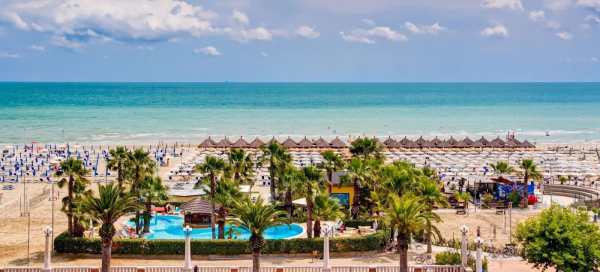
“Family Beach of the Future – What Families Look for at the Beach”, a study conceived and conducted by Area38 for Italy Family Hotels, was presented at TTG Travel Experience during a talk dedicated to the future of family-friendly beaches.The survey involved 228 families with children and teenagers aged 0 to 17, from 16 Italian regions and abroad, through a 15-question questionnaire conducted between 17 and 27 September 2026. The research was complemented by an analysis of 209.508 quotation requests made in 2026 to 106 seaside hotels listed on italyfamilyhotels.it.
The findings reveal that families are increasingly attentive to the tangible quality of their beach experience, viewing the beach establishment and its services as an integral part of their holiday decision.
The beach influences hotel choice
The first finding concerns the relationship between hotels and beaches: for 71.1% of families, the quality of the beach associated with the hotel has a major influence on their choice of accommodation, while for 33.3% it is actually one of the deciding factors. Moreover, 62.3% of families say they rely directly on the hotel where they are staying to choose a beach, ahead of search engines (44.7%) and reviews (34.2%).
The analysis of quotation requests also confirms the value of directly managed beaches: hotels with their own private beach account for 49% of the 106 seaside hotels analysed, but make up 7 of the top 10 and 16 of the top 20 hotels ranked by number of enquiries.
Shade and space take centre stage
One of the main findings of the study is the importance of shade, which emerges as one of families’ most pressing needs. Safe, well-maintained and shaded play areas are considered essential or very important by 67.8% of respondents. At the same time, 39.6% rate the play areas at the beaches they usually visit as inadequate or very poor.
In addition, 61.4% identify insufficiently shaded play areas as one of the main inconveniences of a beach day with children, tied with the lack of space between beach umbrellas. Concern about shade is even greater among families with younger children, reaching 74.7% among those with children aged 3 to 5.
Space and comfort at the family’s spot beneath the beach umbrella are equally important: 66.8% of families consider them essential or very important. Overall, 61.4% cite insufficient space between umbrellas as a major issue, while 89.9% mention at least one of the two problems: inadequate shade or lack of space.
Essential services first, extras second
The research also highlights a clear hierarchy of expectations: above all, families want basic services to be well designed and well managed. Play areas, space and comfort at their beach spot, toilets and showers are considered the most important features, yet these are also among the services showing the largest gaps between expectations and satisfaction.
The largest gap concerns play areas, with a 36-percentage-point difference between the importance assigned to them and positive ratings, followed by toilets and showers, with a 31-point gap.
Willingness to pay a little more for a beach with verified family-friendly standards and services also confirms interest in a high-quality offering: 64% of families say they would be willing to do so, although open-ended responses stress the importance of keeping prices reasonable and treating essential services as part of the standard offering.
A beach for every stage of childhood
There is, however, no single definition of a family-friendly beach. Needs vary significantly according to the children’s ages.
For families with children aged 0 to 5, shade, safety and dedicated facilities are the main priorities. For those with children aged 6 to 9, space and age-appropriate activities become central. Among families with children and teenagers aged 10 to 17, demand increases for tranquillity, quiet zones and greater clarity about costs.
The study therefore highlights the need to move beyond the generic concept of a “kids’ area” and create beaches capable of meeting the needs of children at different stages of development.
Digital solutions work when they are useful
When it comes to technology, families also seem to favour solutions that address practical needs. A smart wristband designed to help prevent children from getting lost is considered essential or very useful by 64.6%, while 57.3% view the option of booking a beach umbrella and its location online positively.
Interest is lower, however, in ordering food and drinks through an app or QR code, which 35.5% of families consider useful. This confirms a clear trend: technology is appreciated when it makes holidays easier, saves time or improves safety, rather than when it is introduced simply as an additional feature.
From research to new ideas for the beach
The final part of the survey gives families a direct voice, collecting 123 open-ended responses about the services they would like to add to their ideal beach. Food and service delivered to the beach umbrella rank first (17.9%), followed by activities, sports and entertainment (16.3%), more shade (14.6%) and a beach spot better suited to the family’s needs (14.6%).
“Family Beach of the Future” thus provides a concrete picture of families’ expectations and offers seaside tourism and hospitality operators useful insights for designing experiences that increasingly reflect the needs of people travelling with children and teenagers.
The full study was presented at TTG Travel Experience and provides hotels and industry operators with data and insights to understand the evolution of family tourism and translate families’ expressed needs into practical services and solutions.











