From emerging Asian food capitals to reinvented hotel restaurants, industry leaders say dining experiences increasingly shape where travellers go and stay.
Food is no longer simply part of the travel experience. It is increasingly becoming the reason for the journey, according to hospitality and culinary experts speaking at a recent industry panel titled Food is the New Destination.
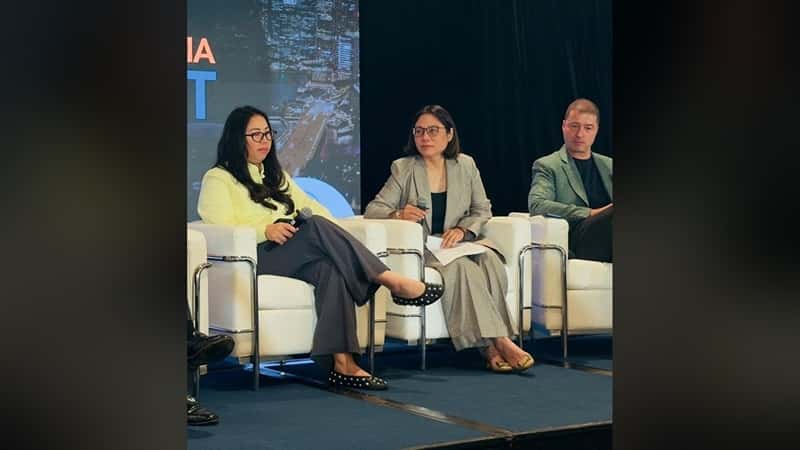
Moderated by Tony Chisholm, Global SVP Food, Beverage & Entertainment for Sofitel, Sofitel Legend, MGallery and Emblems, the discussion examined how culinary tourism is reshaping destination choices, hotel design and consumer expectations.
Panellists included Fontaine Cheng, Regional Dining Editor at Tatler Asia; Nicola Lee, Academy Chair for Southeast Asia (South) at Asia’s 50 Best Restaurants; and Petr Raba, Vice President Food & Beverage, Asia Pacific excluding China, Marriott International.
Raba cited research among high-net-worth travellers across six markets indicating that 88 per cent considered new cuisines and culinary experiences when choosing destinations, while 81 per cent were influenced by award-winning restaurants and bars.
Asia’s culinary landscape is also changing rapidly.
Cheng identified China as an increasingly influential food destination, with social media introducing international audiences to regional cuisines beyond familiar Chinese dishes. Lee highlighted the Philippines, Indonesia and Malaysia, where internationally trained chefs are returning home to reinterpret traditional family recipes.
Raba singled out Bangkok’s established restaurant scene while identifying Manila and Jakarta as emerging culinary hotspots, particularly for innovative restaurants and cocktail bars.
Hotel restaurants face reinvention
One of the discussion’s strongest themes was the changing role of hotel dining.
Raba outlined Marriott’s strategy of developing restaurants with their own identities rather than relying on traditional hotel dining models.
The company’s approach encourages an independent-restaurant mindset, targeting about 80 per cent local customers and 20 per cent international visitors.
Future speciality restaurants may feature just 40 to 60 seats, creating more intimate dining experiences, while conventional all-day dining venues could transition into distinctive restaurant concepts after breakfast.
Marriott is also responding to growing demand for solo dining, with smaller portions and more flexible menus.
Lee noted that independent restaurants have increasingly challenged hotel dining establishments, although hotels are responding by partnering with external operators and introducing more distinctive concepts.
Beyond social media and authenticity
The panel acknowledged the growing influence of Instagram, TikTok, restaurant awards and AI-powered recommendations.
“People are scrolling more than they are reading now,” Cheng observed, although she warned that visually appealing restaurants risk prioritising short-term publicity over lasting customer loyalty.
The panellists also questioned the industry’s overuse of the term authentic.
Raba preferred describing cuisine as locally rooted, encouraging chefs to celebrate regional ingredients and traditions rather than simply adapting dishes to international tastes.
For travellers, the overall dining experience remains paramount, encompassing atmosphere, service, storytelling and a genuine connection to the destination.
The message for tourism operators and travel advisors was clear: culinary experiences are becoming an increasingly important selling point, while hotels must recognise that their restaurants are competing not just for overnight guests, but for the attention of the wider dining community.
As food becomes a destination attraction in its own right, the distinction between hospitality, dining and cultural tourism is becoming increasingly blurred.
By: Roderick Eime – © 2026.
Read Time: 2 minutes.
Author Bio:
 Widely published, multiple award-winning specialty travel and tourism journalist and photographer with a broad general knowledge.
Rod’s professional media experience spans four decades, giving him a firm grounding in traditional media and insight into the evolution of digital and online communications.
A natural storyteller, Rod seeks to entertain, inspire, and engage readers while also informing and educating. Whether it is an adventure travel story among reindeer herders in Siberia or a potentially stodgy end-user account for an industrial lubricant manufacturer, Rod believes readers should leave enriched and motivated.
His photography has won several awards, including a rare double ‘Travel Photographer of the Year’ gong from the Australian Society of Travel Writers in 2011 and 2013.
An early adopter of digital and online publishing, he launched his first web pages in 1994.
Learn more at www.traveloscopy.com or contact him at [email protected].