

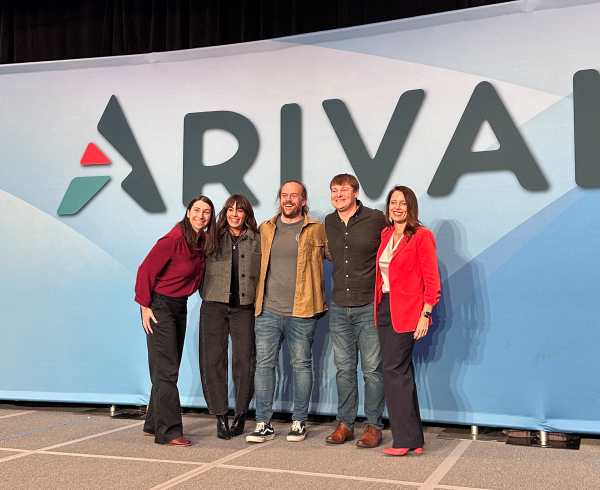
Day 2 of Arival 360 focused on the practical side of growing an experiences business, from choosing technology and hiring guides to selling through travel advisors. New research on what drives bookings gave operators plenty to take home
Distinctive experiences are 12% more likely to be booked, study finds
Travelers are 12% more likely to book when the experiences in front of them look clearly different from one another, according to a study of 1,800 travelers in the U.S. and the U.K. presented by Tilly Hemperger.
The effect held whether travelers saw eight options or 200, showing that sameness, not the number of choices, is what holds bookings back. When options look alike, travelers take longer to decide and are more likely to put off booking altogether. Hemperger said clear titles, strong photos, detailed descriptions and great guides all help an experience stand out.
Younger travelers swap bar crawls for house parties, data from 2,000 operators shows
Gen Z and millennial travelers are moving away from bar crawls toward parties in private homes and other more personal experiences, according to data from 2,000 operators and 3 million users on the Batch platform. Mike Petrakis, CEO of Batch, and Brian Cain, founder of Crawl Entertainment Group, said younger travelers also prefer to book direct. They urged operators to use OTA data to spot shifts in demand, optimize for AI answer engines and use AI chatbots and voice tools to convert more leads, while collecting as many guest photos, ratings and reviews as possible.
Travel advisors offer multi-day operators a route to scale, with commissions of 10% to 20%
Multi-day tour operators typically pay travel advisors commission of 10% to 20%, with overrides and marketing support on top, a panel on selling multi-day travel through the trade said.
Sean Hebert, vice president, the Americas at Goway Travel, Stephanie Piano of By Iris Representation, Sahara Rose de Vore of The Travel Coach Network and Dan Christian of the Travel Trends Podcast said consortia such as Virtuoso, host agencies and platforms like TourRadar give operators access to large advisor networks. Training those advisors well, and matching products to travelers’ appetite for meaningful, transformative trips, were named as the keys to repeat business.
OCTO cuts integration time from months to days and launches AI advisory board
OCTO, the open API standard for tours and attractions, is cutting the time it takes to connect suppliers and distributors from months to days, speakers said during an update on the standard. The nonprofit, member-led standard is now expanding into bundling and AI, and has set up an AI advisory board to guide how AI-assisted booking should work. Robin Harnish, co-founder of OCTO, was joined by Carrie Keplinger of Groupon Things to Do and Haley Ward of Hudson Yards Experiences, who both said adopting OCTO has lifted bookings and conversion, alongside Peter Muttitt of PM Consulting and Arival’s Martin Harlow.
Tour leaders say growth needs founder hustle and enterprise discipline
The tour and attraction businesses that grow fastest pair a founder’s hands-on drive with the structure of a larger company, a panel of operators and technology leaders said. Aaron Fessler, founder and CEO of TripWorks, Mario Noble, vice chairman of Maui Snorkeling, Brett Soberg, co-founder and general manager of Eagle Wing Tours, and Martin Harlow of Arival shared how they have scaled their own businesses.
Founders’ relentless involvement is what gets a company off the ground, the panel said, driving early customer engagement and fast iteration. Scaling beyond that depends on solid infrastructure, streamlined operations and teams that share information rather than working in silos. Speakers also highlighted customer data as a growing advantage, helping operators understand how guests behave and personalize what they offer.
Multi-day operators urged to map their workflows before buying new technology
Multi-day tour operators should map how their business really works before choosing a reservation system, or risk expensive mistakes, said Betsy Harbison, CEO of Nivo, Susan Sanderson, founder of Rezometry, and Dan Christian of the Travel Trends Podcast.
Multi-day is harder to automate than most of the experiences sector because of complex workflows, supplier contracts and bespoke pricing, the panel said, so there is no one-size-fits-all platform. AI and rapid development tools have made building in-house more tempting, but speakers said the complexity of multi-day operations still generally favors technology partners with long experience in the sector. Operators switching systems were advised to phase the move in, with a clear cutover plan, a rollback option and in-house expertise to manage it.
Hire guides for emotional intelligence, not experience, operators advised
Operators should hire guides for emotional intelligence and passion rather than experience, because those skills cannot be replicated by AI while facts can be taught, said Sahara Rose de Vore of The Travel Coach Network, Dale Schober, founder and CEO of Radventures, and Arival co-founder Bruce Rosard. Asking applicants to submit a video helps spot people skills early, while a clear company culture, regular recognition and space for feedback help keep seasonal guides from burning out.
Experiences become meaningful chapters in peoples’ lives
Arival’s first-ever Ignite session, presented by Tahnee Perry of Perryco, brought a fresh addition to the program, with fast-paced, concise storytelling exploring business reinvention, lasting memories and personal change. Alison Mathes of The Outlaw Group shared AVA Rafting’s evolution into a year-round, multi-brand, multi-state company; Katrina Demers of Pursuit explored how experiences become meaningful chapters in people’s lives; Dale Schober of Radventures challenged operators to leave room for transformation rather than script it and Sean Hebert reflected on comedy, belonging and a changing Hong Kong.
Retargeting wins back ticket buyers who don’t convert first time
Attractions can sell more tickets by following up with people who showed interest but did not buy, said Seth Orozco, vice president of travel and tourism at Elite Media Group. The key is a planned sequence of messages across social media, email and programmatic ads that builds trust step by step, rather than a single reminder.
Orozco advised operators to map every stage of their booking funnel to find where buyers drop off, and to segment audiences by behavior so each group sees a relevant message. He also pointed to dynamic creative optimization, which uses real-time data and machine learning to tailor ads to each viewer, and to bringing booking, website and marketing data together in one place. Regular A/B testing of creative and timing keeps campaigns improving.
Today’s experience travelers want tailored, authentic and sustainable trips, says Arival’s Quinby
Experience travelers are turning away from generic packages, Arival co-founder Douglas Quinby said during an Insider Pro session on the modern experience traveler. They want itineraries built around them, real connection with local culture and trips that support personal growth, and they increasingly look for eco-friendly options.
Technology has also raised the bar, with travelers expecting seamless, personalized and real-time service. Quinby said businesses that use data to anticipate what travelers want will be best placed to win their loyalty.











