

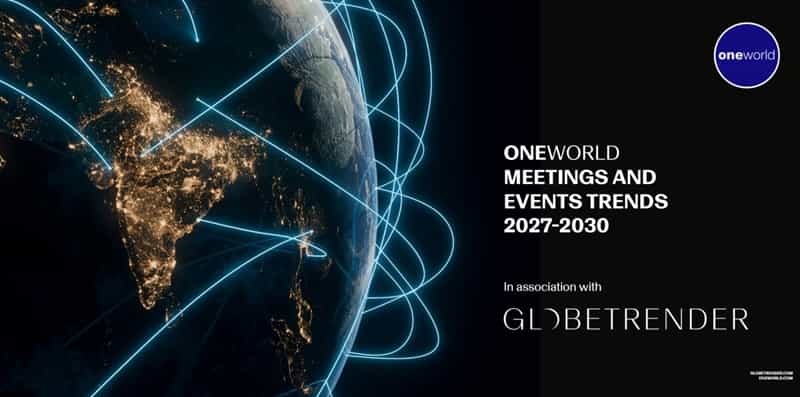
A major airline alliance relaunch and seven powerful trends are rewriting the rules of international conferences. The message is unmistakable: face-to-face meetings are back in business, but the days of expensive gatherings with little to show for them may be numbered.
The humble business conference is undergoing a remarkable transformation. This time, the revolution comes with boarding passes, preferential airfares, and a distinctly human touch.
Global airline alliance oneworld has relaunched its Meetings & Events programme, offering conference organisers access to preferential fares across 15 member airlines serving nearly 1,000 destinations worldwide.
Announced at IMEX America in Las Vegas on 13 October 2026, the initiative arrives alongside new research forecasting seven significant changes to international meetings and events between 2027 and 2030.
For an industry that has spent years debating whether virtual meetings might permanently replace international conferences, the findings offer reassurance.
Apparently, shaking hands, sharing ideas and occasionally enduring somebody’s rather lengthy conference speech still have considerable commercial value.
But the cost of bringing people together is rising, and organisations increasingly demand results rather than simply counting name badges.
The relaunch signals that international business events remain an important market for airlines, hotels, destinations and convention organisers.
One booking link, 15 airlines, but read the fine print
The updated programme aims to reduce the administrative gymnastics of organising international events. Planners register their event through oneworld’s online portal, supplying details such as dates, destination and expected passenger numbers. Once approved, they receive a unique booking link to share with delegates or post on the event website.
Travellers then arrange their own flights from their departure cities, while organisers can monitor bookings through the portal. It is a sensible alternative to attempting to herd dozens of independent travellers into a single group itinerary.
However, there are important conditions. According to oneworld’s published FAQs, at least 50 travellers must book using the unique link. In return for potential savings, the organiser must nominate oneworld as the event’s exclusive airline alliance.
Travel dates also have boundaries: inbound journeys may begin up to seven days before the event, while outbound journeys can take place up to seven days after it ends. Check actual fares and suitability with the alliance rather than assuming.
Seven trends giving global conferences a shake-up
The accompanying oneworld–Globetrender report, Meetings & Events Trends 2027–2030, argues that the value of a gathering will increasingly be measured by the quality of the experience, not the size of the registration queue.
1. The Human Premium: When artificial intelligence can produce a polished briefing in seconds, human contact becomes the scarce commodity. The chance conversation over coffee may be worth more than another hour of slides.
2. The ROI of Presence: With travel budgets under scrutiny, organisers need evidence of worthwhile meetings, new business and professional development. A crowded auditorium alone is no longer a convincing business case.
3. Experience-First Events: Think less passive listening and more hands-on participation. The report sees conferences borrowing ideas from festivals and immersive entertainment to keep delegates involved.
4. Destination as Content: The host city is no longer merely a dot on the itinerary. Local culture, food and experiences can provide an extra reason to travel — and a sharper selling point for tourism boards.
5. Geo-compression: New long-haul connections and shifting geopolitics may change which cities are practical meeting points. That creates opportunities for some destinations while leaving others with more work to do.
6. Loyalty Ecosystems: Airline and hotel partnerships are making recognition and rewards part of a broader journey. Frequent travellers may increasingly judge an event by the airport-to-hotel experience, not just the conference programme.
7. Meet Me Airside: Airport hotels and connected venues could become attractive event locations in their own right, particularly when delegates are short on time and arriving from several countries.
The forecast does not mean every conference will turn into a music festival or that every airport hotel will suddenly become a convention capital. It does suggest that convenience and genuine experiences will have to earn their place in the budget.
Why the timing matters
Globetrender chief executive Jenny Southan describes the outlook with a memorable declaration:
“We are entering a new golden age of gathering.”
Her central argument is that easy access to information makes physical presence more valuable — but only when delegates have a persuasive reason to travel.
None of that guarantees every business conference will prosper. The Globetrender publication is a forward-looking industry trends report produced with oneworld, not proof that each predicted shift will occur. Its value lies in giving planners and suppliers practical questions to ask.
An opportunity for Australian travel and tourism
Australia’s meetings, incentives, conferences and exhibitions sector has a direct interest in the changes. Long-haul travel makes cost, convenience, and purpose especially important when organisers persuade international delegates to make the journey.
Airlines can simplify access. Hotels can compete on seamless service and location. Convention bureaux and tourism operators can show why the destination itself is worth the trip.
For event organisers, the challenge is equally plain: make the time away from home count. A strong programme, useful connections, and a memorable host city matter more than a glossy tote bag and a lukewarm buffet.
The future conference, it seems, will still require a flight. But delegates will increasingly want a very good reason to take it.
Event organisers can review eligibility and enquire through the official oneworld Meetings & Events portal. The oneworld × Globetrender Meetings & Events Trends 2027–2030 report is available from Globetrender.
By: My Thanh Pham – © 2026.
Read Time: 5 minutes.
Author Bio:
 My Thanh Pham has lived more of a life of travel than most people ever do. After studying tourism, she went straight into the work of building journeys across Southeast Asia, temples, beaches, night trains, and all, quietly fixing the messy bits so others could enjoy the ride.
She was never meant to stay behind a desk. Airline life followed, dividing her days between reservations and the airport floor, right where travel shows its true colours. Missed flights, tight hugs, frayed tempers, sudden joy, she saw it all, close up.
Now at EGT Media, My Thanh has traded ticket stubs for a keyboard. She writes the way she once worked: steady, clear-eyed and respectful of the road’s unpredictable rhythm, guiding readers through a world she knows from the inside.











