

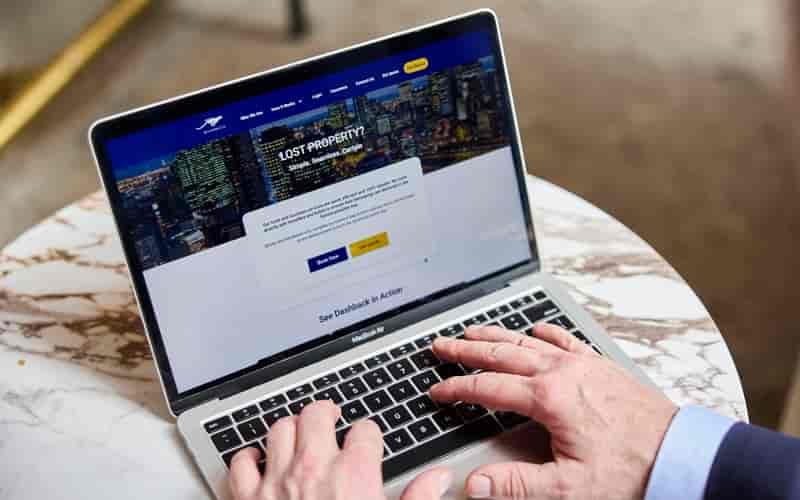
From a friendship and a Melbourne hotel corridor to international ambitions, Dashback is proving that the finest hospitality sometimes begins with returning something precious to its rightful owner.
Few holiday disasters are as distressing as discovering, halfway home, that a much-loved teddy bear is still enjoying an extended stay at the hotel.
For a child, it can be the end of the world. For parents, it is the start of frantic phone calls. And for the hotel receptionist, it is another challenge in a job where the unexpected is practically part of the uniform.
A forgotten watch or laptop can provoke the same anguish among grown-ups. Sentimental value, after all, does not appear on a courier’s price list.
Enter Melbourne entrepreneur Andy Brain, whose business, Dashback, is turning the thoroughly unglamorous task of returning lost property into an increasingly ambitious hospitality service.
Founded in 2022, the Australian operation now works with more than 300 hotels and processes over 1,000 returns each month, the company says. International returns are already offered, and the company plans to launch in New Zealand in early 2027.
It is an appealingly simple proposition: reunite people with what matters to them, without leaving hotel employees drowning in paperwork.
A Friendship, a False Start and a Walk Down Collins Street
The story began with an idea Brain discussed with his friend and business partner, the late Jake Kogakis: a service moving urgent items between cities.
That initial proposition failed to find its audience. But it pointed towards a problem hiding in plain sight. Hotel guests were leaving belongings behind, and staff were spending valuable time arranging their return.
Brain put on a suit and began calling on hotels along Melbourne’s Collins Street. By the time he reached The Westin Melbourne, the solution had become clearer. Hotels didn’t need a complicated new responsibility; they needed a reliable way to hand over an existing one.
There is something wonderfully traditional about that beginning. No theatrical product unveiling, no grand promises about changing civilisation. Just a businessman knocking on doors, asking questions and listening to the answers.
The personal history matters, too. What began in conversations between two friends has become a growing enterprise, while Kogakis’s place in its origins remains part of the story.
The Little Things That Mean Everything
Lost property is easy to dismiss as an administrative nuisance until the missing object belongs to you.
A child’s toy may have little resale value but enormous emotional worth. A misplaced set of keys can derail a working day. A forgotten family keepsake can cast a shadow over an otherwise splendid trip.
Brain understands the human stakes.
“There’s a hotel version of this story everywhere you look: a lost watch, a set of keys, a kid’s toy that a whole family is losing sleep over,” he said. “We built Dashback so hotels could hand that problem to us, and guests could get on with their day instead of chasing an item down themselves.”
It is a useful reminder that hospitality does not end at check-out. Sometimes a hotel’s lasting impression isn’t the thread count or the breakfast buffet, but what happens when a guest needs help after leaving.
How Dashback Takes the Hassle Out of Getting Things Home
The system begins with the guest contacting the hotel to check whether an item has been found. Once the hotel confirms it is holding the property, the guest can use Dashback’s online process to enter delivery details and arrange payment.
Dashback coordinates collection through its courier network, while the hotel prepares the item for dispatch. The guest receives tracking details once the shipment has entered the carrier’s system.
Some metropolitan shipments may qualify for overnight delivery, but that is not guaranteed. Dashback’s published guidance says delivery can take up to five business days depending on the address, selected service and whether the hotel has the parcel ready. International shipments may also attract customs duties or restrictions.
For hotels, fewer courier arrangements mean more time for guests who are actually in the building. For travellers, it means less time pleading with a telephone and more confidence that their missing possession is on its way.
Big Names, Small Details and Patient Persistence
Dashback says its participating hotels include W Sydney, The Langham, The Ritz-Carlton Perth, Crown Promenade and Crown Metropol in Melbourne. It also reports national partnerships with car-rental operators Avis Budget and Europcar.
Those are substantial names, but Brain says a smaller property can be every bit as satisfying to bring aboard.
“I get as excited switching on a 40-room hotel as I do a 400-room one. Hotels now come to us before they have even opened, so Dashback is running from day one. It is becoming the first port of call for lost property across the sector, and the fact that we are still here and growing every week, four years on, still amazes me.”
His account of securing a Meriton rollout reveals the patience behind the growth.
“Some doors take longer to open than others,” Brain said. “We spent three years talking to Meriton before going live across all 24 of their properties, and that patience is how this business has grown, one relationship at a time.”
Three years is a long courtship in any business. Yet in hospitality, trust is rarely won by a flashy presentation alone. A hotel is being asked to put part of its guest experience in somebody else’s hands. Reliability matters.
Across the Tasman, With Bigger Ambitions Beyond
The next step, according to Dashback, is a New Zealand launch with PACK & SEND at the start of 2027, potentially followed by expansion through the logistics provider’s wider international network.
The distinction matters: international returns are already available, but establishing an overseas operating market is a separate step. Beyond New Zealand, further launches remain ambitions rather than confirmed openings.
Nor does a border crossing make a missing item any easier to move. Customs rules, restricted goods, insurance and courier arrangements all require attention. A sentimental keepsake might be priceless to its owner, but the shipping paperwork still needs to be right.
For all that, the opportunity is obvious. Guests forget things in Auckland as surely as they do in Melbourne, Singapore or London. Hotel reception teams everywhere have better things to do than spend the afternoon chasing a parcel.
A Very Human Lesson for Modern Hospitality
The travel industry is full of talk about artificial intelligence, frictionless journeys and the next great digital breakthrough. Some of those innovations are genuinely remarkable. Others seem designed to make a simple task require three passwords and an app update.
Dashback’s attraction is rather more old-fashioned: it solves a real problem and gives people one less thing to worry about.
Its commercial future will depend on execution, dependable partners and whether the Australian model can be reproduced abroad. The company’s reported growth is encouraging, but the proposed overseas rollout still has to prove itself.
Even so, there is something heartening about a business that began with a conversation between friends and grew through personal visits to hotels. It brings together perseverance, practical thinking and the enduring belief that good service should make somebody’s day better.
And somewhere, perhaps, a child will open a parcel to find a much-missed teddy bear back where it belongs.
The bear will have no idea it has travelled by courier. The parents will simply be grateful. And the hotel might have earned something no advertising campaign can guarantee: a family’s lasting goodwill.
That, surely, is hospitality worth delivering.
By: Yves Thomas – © 2026.
Read Time: 6 minutes.
Author Bio:
 There’s a quiet pull about Yves Thomas, the kind you only notice after a moment. It comes from living and travelling from both sides of the reception desk. A graduate of Bangkok University International, she stepped straight into Thailand’s tourism industry, learning early how much care goes into making someone else’s holiday feel effortless.
She worked with some of the country’s best destination management teams, polishing the details most travellers never see but always remember. Eventually, the road began calling louder than meetings and schedules. Yves packed a bag and went looking again, trading conference calls for compass points.
Somewhere between Chiang Mai and Copenhagen, she started writing it down. Those reflections became a warm, observant blog.
Now based in Hua Hin and writing for Stephen’s EGT Media, Yves shares travel not as a publicist, but as a traveller attentive, thoughtful, and deeply human.











